Reviewed · NEW YORK CITY TOURS
New York City Slavery and Underground Railroad Tour
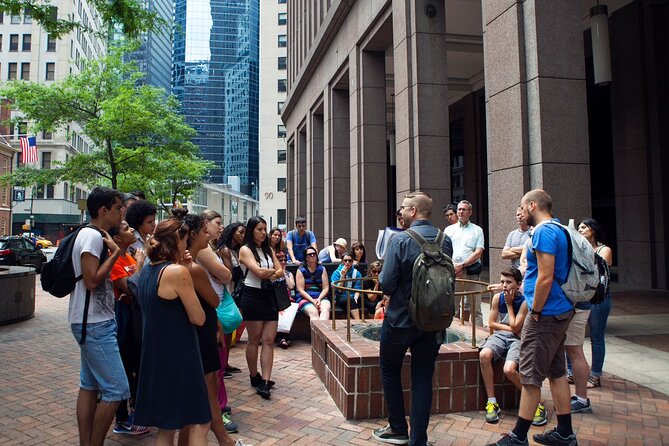
New York’s early wealth and its fight for freedom share the same streets. On this 2.5-hour walk, you’ll connect familiar places such as Wall Street and Battery Park to the people enslaved there, the abolitionists who aided escape, and the African Burial Ground, a solemn memorial at the tour’s end.
I like that the route makes Lower Manhattan’s slavery story visible in places many visitors pass without a second thought. I also like the guides’ use of photographs and personal stories to put names and human lives alongside broad historical events. Past guides named Ludie, Maia and Sean have been praised for making difficult material clear and engaging.
The main consideration is the format: this is an outdoor walking tour with plenty of standing while the guide speaks, not a succession of indoor exhibits. Construction can block views, and cold, rain or wind can make the stops uncomfortable. Wear comfortable shoes and dress for the forecast.
At a glance
- A route through Lower Manhattan’s African-American Freedom Trail: Start at Bowling Green and finish at the African Burial Ground National Monument.
- History beneath familiar streets: Wall Street and the site of New York’s first slave market help show how slavery shaped the city’s growth.
- A guide-led account: Learn about abolitionists, escape routes and notable figures, with historical images used by some guides.
- A powerful final stop: The African Burial Ground offers a quiet place to consider the lives and deaths of enslaved Africans in colonial New York.
- Two and a half hours on foot: Expect outdoor stops, standing and sustained walking, with a group capped at 30 people.
Start at Bowling Green, then look toward the harbor
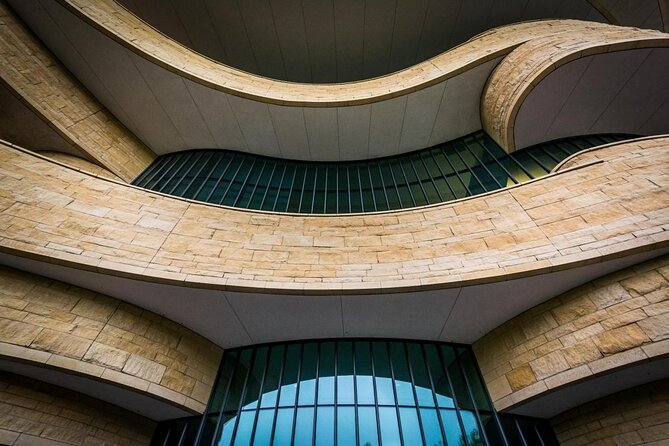
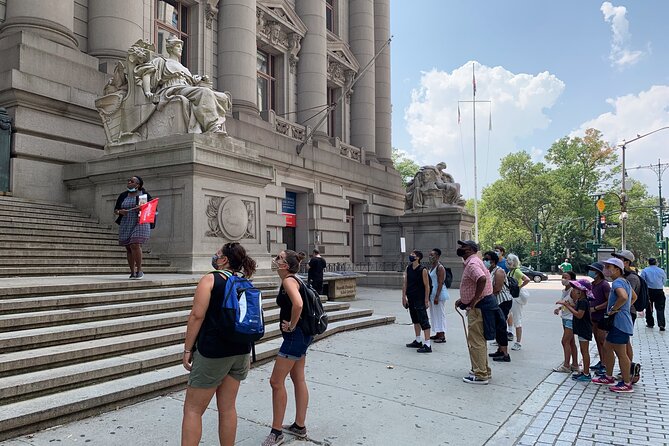
Meet your group outside the National Museum of the American Indian, housed in the former Alexander Hamilton U.S. Custom House at 1 Bowling Green. The building is worth a look even if the tour only pauses outside: its grand Beaux-Arts exterior reflects the trade and commerce that helped shape New York. The stop is brief, about 10 minutes, and admission to the museum is not included.
This is a useful starting point because the tour puts the city’s story in a broad frame before narrowing to slavery and resistance. The Custom House celebrates commerce, but the growth of New York’s economy cannot be separated from the labor of enslaved people. A good guide helps you hold both ideas in mind rather than treating the city’s prosperity as a story with only one cast of characters.
The meeting point is near public transportation, but hotel pickup and drop-off are not provided. Arrive ready to walk, and check the exact meeting instructions on your ticket before setting out.
More tours and experiences in New York City:
- NYC: SUMMIT One Vanderbilt Tickets
★ 4.7 · 51,195 reviews - NYC: 9/11 Memorial & Museum Timed-Entry Ticket
★ 4.8 · 31,428 reviews - NYC: Empire State Building Tickets – Observatory & Museum
★ 4.7 · 25,757 reviews
Battery Park and the city’s first routes of arrival
At Battery Park, the guide links New York’s waterfront to centuries of arrivals. Long before Ellis Island or the Statue of Liberty became the familiar symbols of immigration, newcomers reached the city through this part of the harbor. The stop is around 10 minutes, so expect context rather than a long visit.
That setting also helps you think about movement through the city: who arrived by choice, who was brought by force, and who tried to escape bondage. The Underground Railroad was not a literal railway but a network of routes and safe houses supported by enslaved people, abolitionists and allies. New York was part of that network, and the tour traces how escape and aid unfolded in a city often remembered mainly for finance and immigration.
Battery Park is an open-air stop, which can be pleasant in good weather and exposed in bad weather. If wind or rain is in the forecast, dress for standing outdoors as well as walking.
Fraunces Tavern and the layers of Lower Manhattan
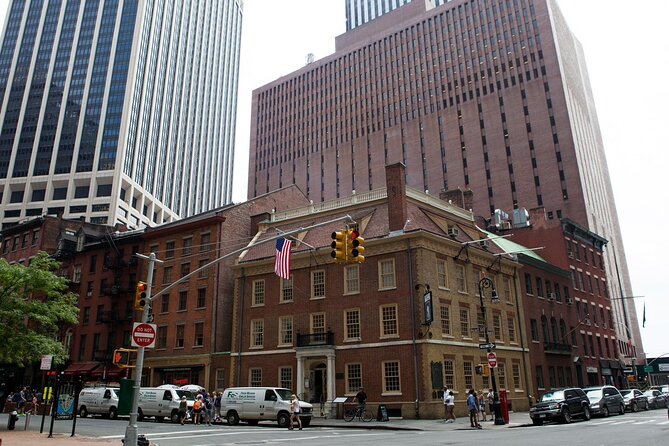
The tour pauses outside Fraunces Tavern for about 15 minutes. The site is closely associated with the American Revolution and the years around it, giving the guide a chance to place the struggle over slavery within the wider political history of the new United States.
The stop is exterior-only, so don’t expect a museum visit or time inside the tavern as part of the tour. Still, the location gives the guide a useful point from which to discuss the gap between revolutionary language about liberty and the reality of slavery. That contrast is central to understanding the era, and a guide can make it more tangible than a quick glance at a plaque.
If the stories spark your interest, you can make a separate visit to Fraunces Tavern after the tour. One local participant described returning for dinner and drinks, but that is an independent plan, not part of the ticket.
Wall Street: wealth built with enslaved labor
Wall Street gets the longest listed stop, about 30 minutes, and for good reason. The street takes its name from a wall that stood here between 1685 and 1699. Enslaved people helped build it, and the tour connects that labor to the development of the financial district and New York’s early slave market.
This is one of the tour’s most important lessons: slavery was not a distant Southern story. It was embedded in Northern commerce, civic life and the making of New York. The guide also explains how people who had escaped slavery could hide in the city while making their way toward free states, aided by abolitionists and other allies.
There may be less to see here than the subject’s weight suggests. You are looking at a living financial district, not a preserved historical set, and some of the key sites are understood through explanation rather than visible remains. I’d come prepared to listen closely. Some guides bring photographs of historical people and places, which can help you picture what the modern street has covered over.
Want a different angle on the city?
- NYC: Empire State Building Observation Deck Tickets
★ 4.7 · 22,072 reviews - New York City: Statue of Liberty & Ellis Island with Ferry
★ 4.6 · 18,683 reviews - New York City: American Museum of Natural History Ticket
★ 4.5 · 15,447 reviews - Statue of Liberty and Ellis Island Tour: All Options
★ 5.0 · 13,571 reviews
Foley Square and the African Burial Ground
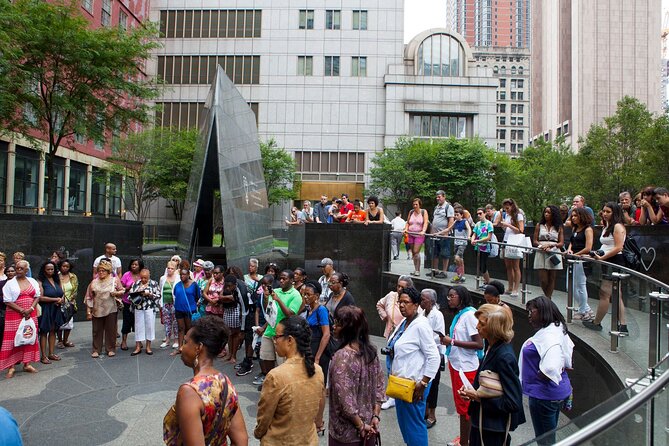
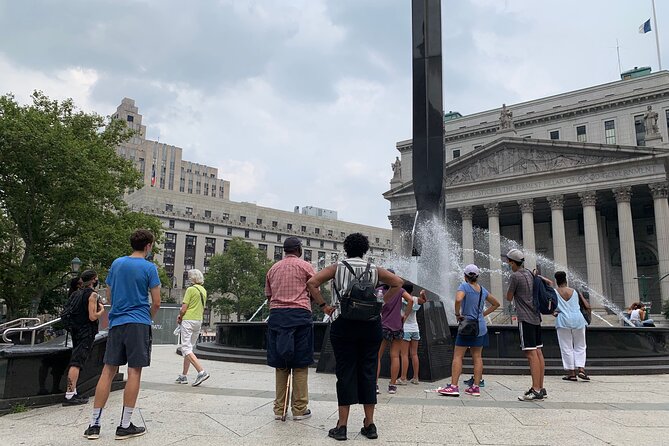
At Foley Square, the group stops by the Triumph of the Human Spirit sculpture, a memorial honoring enslaved people in New York. This brief pause, about 15 minutes, shifts the focus from systems and buildings to the people whose labor and lives made the city possible.
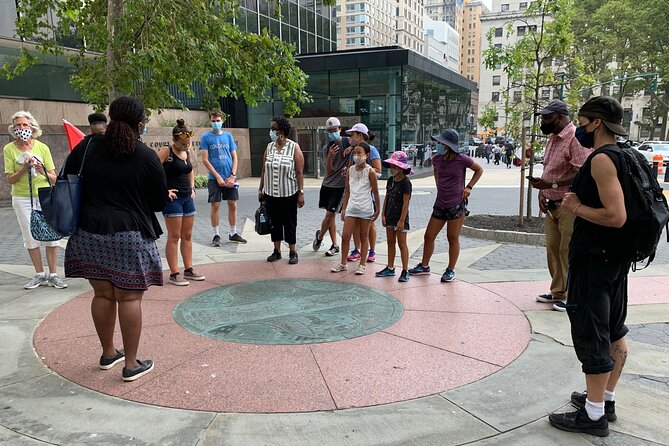
The walk then reaches the African Burial Ground National Monument at 290 Broadway. It is the oldest and largest known excavated burial ground in New York documenting the lives of enslaved people in the city. The memorial is the emotional center of the experience for many people, and the tour ends here after about 10 minutes at the stop.
The site rewards a slower look. Guides may explain details and symbols in the memorial, and the place offers a moment to take in what the route has been building toward: the lives of people too often left out of the city’s public story. The memorial area has sometimes been affected by construction or closures. If access is restricted, the tour has at times gone into the African Burial Ground museum instead, but conditions can change, so don’t assume every part of the site will be open on your date.
The route also covers the former site of New York’s first African-American church, described as an Underground Railroad stop. The church is no longer there, so this is another case where the guide’s account supplies what the street itself cannot show. The precise sequence of stops may vary, but the end point is the African Burial Ground.
What the guide adds to the walk
A self-guided walk can bring you to these locations, but it is harder to connect them into one account of slavery, escape and abolition. The guide’s job is to explain not only what happened at each site, but why it matters to the city you see today.
The guides associated with this tour include Ludie, Maia and Sean. Past tour descriptions point to different strengths: Ludie has used photographs of historical figures and places, while Sean has been described as a former history teacher who adds context to the memorial’s symbols. Maia has been praised for clear, lively explanations. You cannot count on a particular guide when booking, but the overall appeal is the chance to ask questions and hear a human voice carry a complicated story.
Expect serious subject matter, including enslavement, racial injustice and the lasting effects of those systems. The strongest approach is neither to soften the facts nor reduce the people in the story to victims. The tour’s focus on individual lives, abolitionists and escape attempts can help you understand the agency and courage involved, alongside the violence and exploitation.
The walking pace, weather and group size
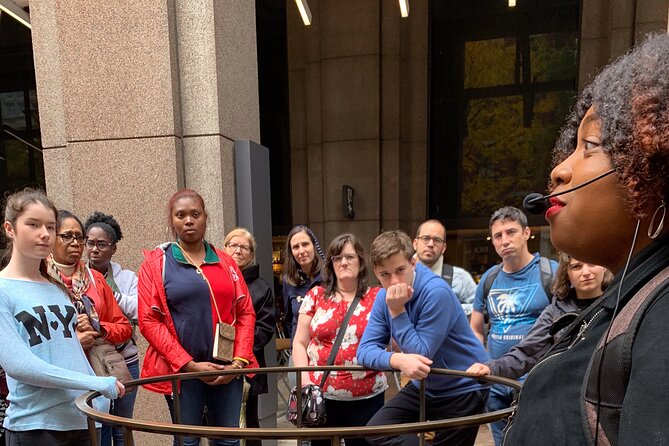
The tour lasts about two hours and 30 minutes, with a maximum of 30 people. That is small enough for a guide-led conversation, though a full group can make it harder to hear if you are standing near the back. One participant found that a microphone would have helped; if you have trouble hearing, speak up early rather than trying to follow from several rows away.
This is not a nonstop march. The guide stops at street corners and landmarks to talk, so you should expect periods of standing as well as walking. One person found the standing tiring, while another suggested allowing for a few miles of walking. Comfortable shoes matter, and anyone with a moderate fitness level should consider whether they are comfortable being on their feet for the full tour.
Weather affects the experience. A cold, rainy or windy day can make listening outdoors a chore, and the operator may cancel if poor weather creates safety concerns. The tour also requires a minimum number of participants. If it is canceled for weather or because the minimum is not met, you are offered another date or a full refund.
Is $49 a fair price?
At $49 per person, you are paying for about two and a half hours of guided interpretation, not admission to a series of museums. The Custom House and Fraunces Tavern stops are exterior visits, and admission to the African Burial Ground is free. The value lies in the guide’s research, the route between sites and the links that make these locations part of a coherent story.
If you already know a great deal about slavery in New York, the tour can still add specific names, local sites and connections you may not have encountered. If you are new to the subject, it gives you a structured introduction and ideas for further reading and museum visits. Guides have sometimes offered book and museum recommendations, a useful bonus if you want to continue learning afterward.
The trade-off is that you pay for conversation and context rather than a large number of interior attractions. If you want a museum-heavy experience or dislike standing outdoors, this is not the best match. If you value a thoughtful guide and a walk that changes how you read familiar streets, the price is reasonable.
Who should book this walk?
I’d recommend the tour to history-minded visitors, New Yorkers who want to understand the past beneath familiar streets, and anyone interested in the Underground Railroad or abolition. It also suits families with older children who are ready for a serious account of slavery and its consequences.
This is not a light sightseeing stroll. The subject is emotionally demanding, and the route gives you time to listen and reflect rather than chase photo stops. You may find the physical format less appealing if you need frequent places to sit or shelter, or if you prefer to explore at your own pace.
You can cancel for a full refund up to 24 hours before the start time. Changes or cancellations made inside that 24-hour window are not accepted for a refund. The cut-off uses local time.
Should you book?
Book this tour if you want to understand how slavery, resistance and abolition shaped New York, and you are willing to spend much of the time listening outdoors. Its best feature is the connection between the city’s grand commercial landmarks and the people whose labor helped build them. The African Burial Ground makes a fitting, sobering final stop.
Skip it if you want an indoor, highly visual tour or a relaxed walk with little standing. Otherwise, bring comfortable shoes, check the weather and arrive ready to hear a more complete account of Lower Manhattan.
FAQ
How long is the New York City Slavery and Underground Railroad Tour?
The tour lasts approximately two hours and 30 minutes.
How much does the tour cost?
The listed price is $49 per person.
Where does the tour start?
Meet outside the National Museum of the American Indian at 1 Bowling Green, New York, NY 10004.
Where does the tour end?
The tour ends at the African Burial Ground National Monument, 290 Broadway, New York, NY 10007.
What language is the tour offered in?
The tour is offered in English.
Is the tour ticket mobile?
Yes. A mobile ticket is offered.
How many people can join the group?
The tour has a maximum group size of 30 people.
Is admission to the stops included?
Admission to the National Museum of the American Indian and Fraunces Tavern is not included. Foley Square and the African Burial Ground National Monument are listed as free stops.
Is hotel pickup included?
No. Hotel pickup and drop-off are not included.
What happens if I cancel or the tour is called off?
You can cancel at least 24 hours before the start time for a full refund. If poor weather or the minimum group size causes the tour to be canceled, you are offered a different date or a full refund.
New reviews from New York City
- 3 Hour Session at Williamsburg’s Adventure Park Area 53★ 3.5 · 6 reviews
- 3-Day Immersive Photography Workshop in New York City★ 5.0 · 5 reviews
- Midtown Manhattan: Times Square & Skyscrapers Walking Tour★ 5.0 · 18 reviews
- 3 Hour NYC Photography Workshop★ 5.0 · 45 reviews
- Central Park Private Pedicab Tour (2hrs)★ 5.0 · 37 reviews
- Niagara Falls, Toronto and 1000 Islands, 3 Day Tour from NYC★ 4.5 · 114 reviews
- Central Park Pedicab Guided Tours – 1, 1.5 & 2Hrs★ 5.0 · 24 reviews
- New York Day Sail to the Statue of Liberty on Schooner America★ 5.0 · 66 reviews
New York City Tours, compared.



Empire State Building Tickets – Observatory & Museum
Read our review →
Empire State Building Observation Deck Tickets
Read our review →


Statue of Liberty and Ellis Island Tour: All Options
Read our review →