
Reviewed · 9/11 MEMORIAL TOURS
9/11 Museum Workshop: 100 Images and Artifacts “Hands-On”
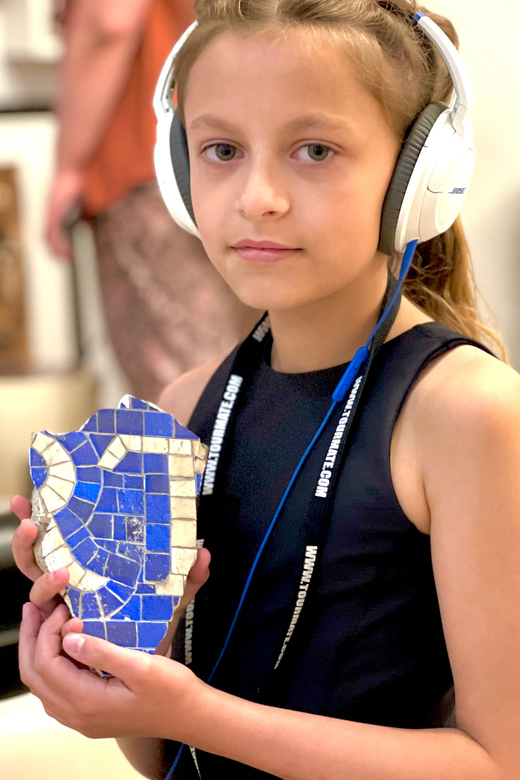
The most unusual part of this 9/11 experience is simple: you can hold select artifacts recovered during the Ground Zero recovery effort. Instead of seeing every object behind glass, you get a closer, more personal look at items connected to the nine months of work at the site.
I like two things about the format. Gary Marlon Suson’s rare photographs pair with audio stories that explain the people and events behind each image, and the small workshop setting gives you time to listen, look, and ask an on-site guide questions. The 12-minute film offers a useful starting point before you set out on your own.
One thing to plan for: this workshop is not at the World Trade Center. It’s in Manhattan’s Meatpacking District, and listening to all 100 audio stories can take longer than the advertised 90 minutes. If you want to hear every one, allow extra time.
What makes this visit different
- Hold select recovery artifacts: Staff guidance lets you handle some objects tied to the Ground Zero recovery effort.
- Hear 100 stories on a BOSE audio guide: The self-guided narration adds personal context to the images and objects.
- See photographs by Gary Marlon Suson: He was the official photographer at Ground Zero and had round-the-clock access to areas of the World Trade Center site.
- Start with a 12-minute film: It gives you an introduction before you begin the audio tour.
- Visit in the Meatpacking District: The workshop is in Manhattan, not at the World Trade Center site.
- Plan for more than 90 minutes if needed: The visit is timed for 90 minutes, but listening to every story may take longer.
A small workshop, not the World Trade Center site
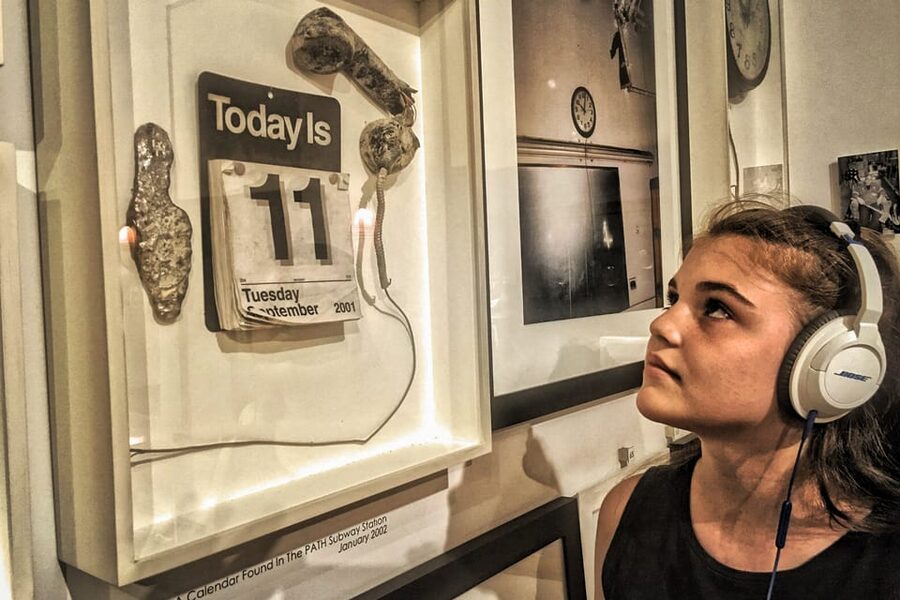
Set your map for Manhattan’s Meatpacking District, not the World Trade Center. The workshop is a separate museum space focused on photographs and objects from the Ground Zero recovery, so it offers a different kind of visit from a memorial or a large museum at the site itself.
That distinction matters. You won’t be walking through the remains of the towers or visiting the Ground Zero memorial as part of this activity. Instead, you’ll spend time with images, artifacts, and first-person accounts connected to the recovery effort.
The location can be easy to misunderstand if you expect to arrive at the World Trade Center. One visitor found the museum difficult to locate because it was in an ordinary apartment-style setting. Give yourself time to find the entrance, and check the address carefully before setting out.
The workshop is reachable by the A, C, or E train to 14th Street, or by the 1, 2, or 3 train to 14th Street. That makes it straightforward to reach by subway, but the name and subject can still lead you to the wrong part of Manhattan if you assume it is at Ground Zero.
More 9/11 memorial tours in New York City:
- NYC: 9/11 Memorial & Museum Timed-Entry Ticket
★ 4.8 · 31,428 reviews - 9/11 Memorial, Ground Zero Tour with Optional 9/11 Museum Ticket
★ 5.0 · 6,381 reviews - 9/11 Memorial Museum Admission Ticket
★ 4.5 · 6,376 reviews
Begin with a short film and a personal account
The visit starts with a 12-minute film on a large screen. It is a brief introduction, not a full history of the attacks, but it gives you context before you move into the images and audio stories.
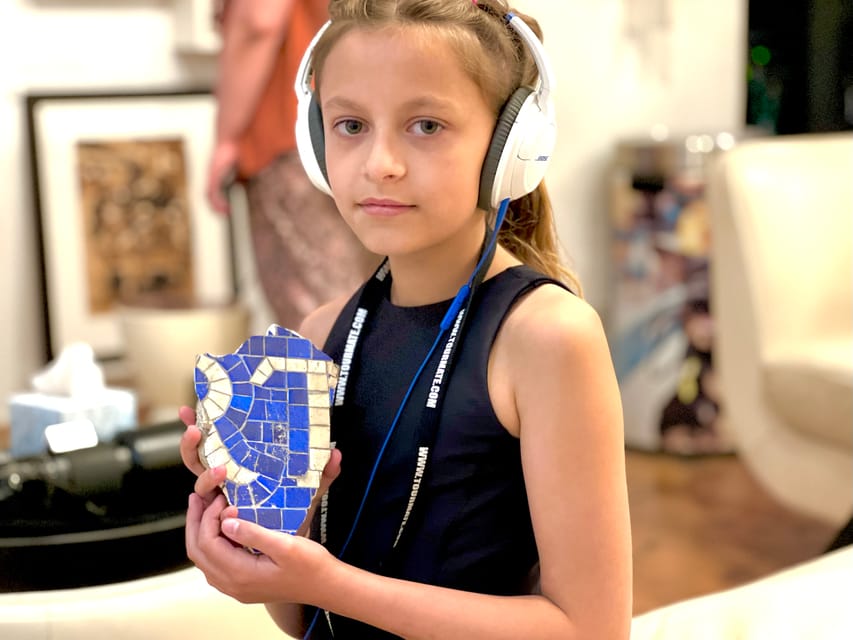
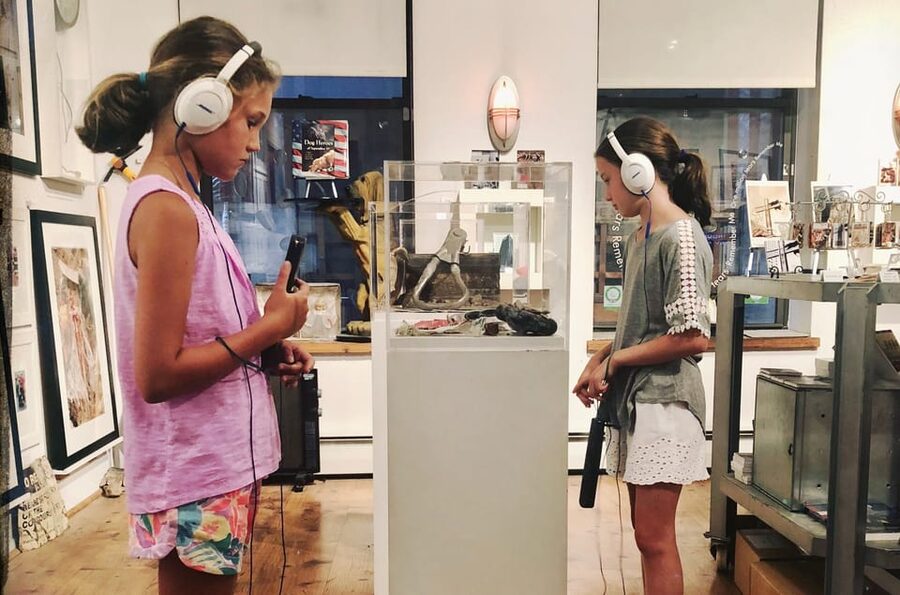
Then you take a BOSE audio system and headset for a self-guided tour. The narration is available in English, French, Italian, and Spanish, so you can follow the stories in the language that works best for you.
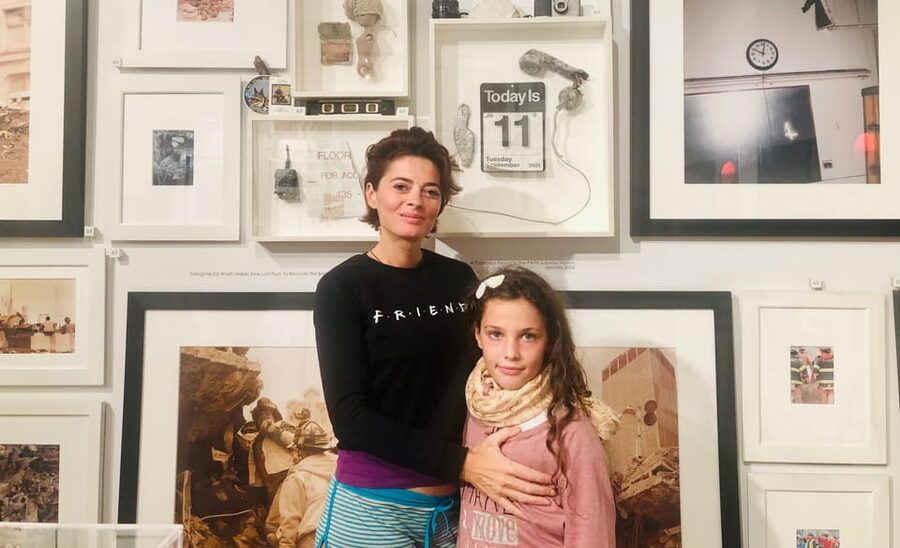
The photographs are by Gary Marlon Suson, the official photographer at Ground Zero. He was allowed round-the-clock access to every area of the World Trade Center site, including dangerous subway tunnels below Ground Zero. That access gives the images an unusual point of view: they document the recovery work from inside places most people could not enter.
The focus is not only on the scale of the site, but also on the people connected to it. The narration tells the stories behind the photographs and artifacts, including the lives lost and the recovery effort that followed. It is a respectful presentation, but it can be upsetting. You should be ready for a subject that deals directly with loss and the aftermath of a national tragedy.
One hundred audio stories, at your own pace
The audio guide features 100 stories tied to images and artifacts. You can move through the exhibit at your own speed, pausing when something catches your attention or moving on when you need a break.
That freedom is useful because the subject can feel heavy. A fixed, fast-paced group tour might leave little room to absorb what you are seeing. Here, you can take a moment with an image, listen closely, or ask the on-site guide for help or clarification.
The 90-minute duration gives you a useful planning estimate, but it may not be enough if you want to hear every story. One visitor spent about two hours listening to all the audios. You don’t need to treat the number 100 as a checklist. If you have less time, choose the stories that draw you in and leave the rest for another visit.
The audio is a major part of what makes this workshop work. The photographs show the setting; the narration explains the people, objects, and recovery work behind them. If you prefer a short visit with no headset, this format may feel slow. If you like to stop and listen, it gives the exhibit more depth than a quick walk past display cases.
Select artifacts you can handle
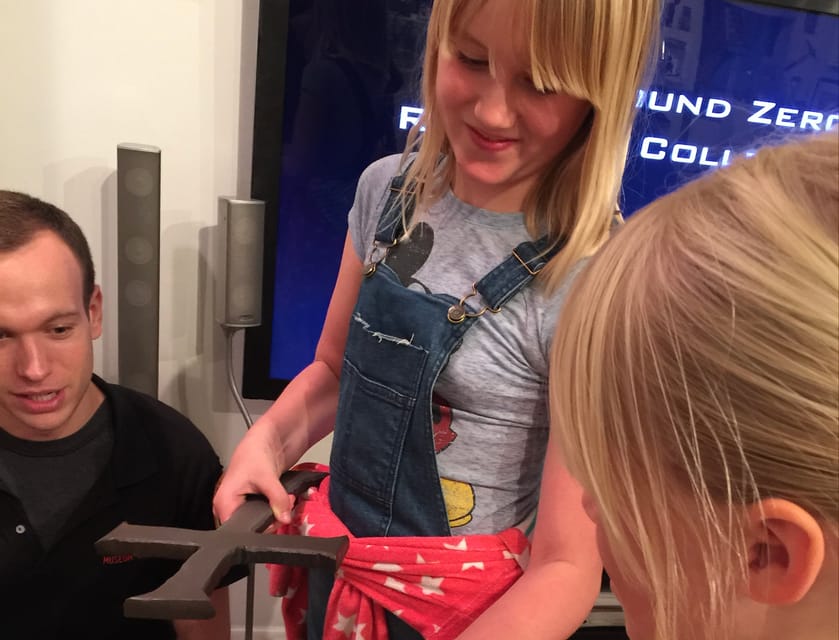
The chance to hold rare artifacts is the workshop’s most hands-on feature. Items donated by survivors and family members sit alongside objects connected to the recovery effort, with stories that explain their significance. You may also encounter rare pieces of World Trade Center window glass and steel.
You can’t assume every object is available to handle. The experience is subject to staff guidance, so ask before picking anything up. That small point is worth keeping in mind: the opportunity is to handle select artifacts, not to freely handle everything in the exhibit.
Seeing an object at close range is different from reading a label about it. Its material and scale can make the recovery effort feel less abstract, while the audio adds the personal story that a physical object alone cannot tell. The combination is powerful, but the subject matter remains serious. This is not a hands-on activity in the playful museum sense.
More museum visits in New York City:
- NYC: Empire State Building Tickets – Observatory & Museum
★ 4.7 · 25,757 reviews - New York City: American Museum of Natural History Ticket
★ 4.5 · 15,447 reviews - NYC: Museum of Modern Art (MoMA) Entry Ticket
★ 4.6 · 12,540 reviews - All-Access 9/11: Ground Zero Tour, Memorial and Museum, One World Observatory
★ 5.0 · 4,886 reviews
The recovery effort behind the images
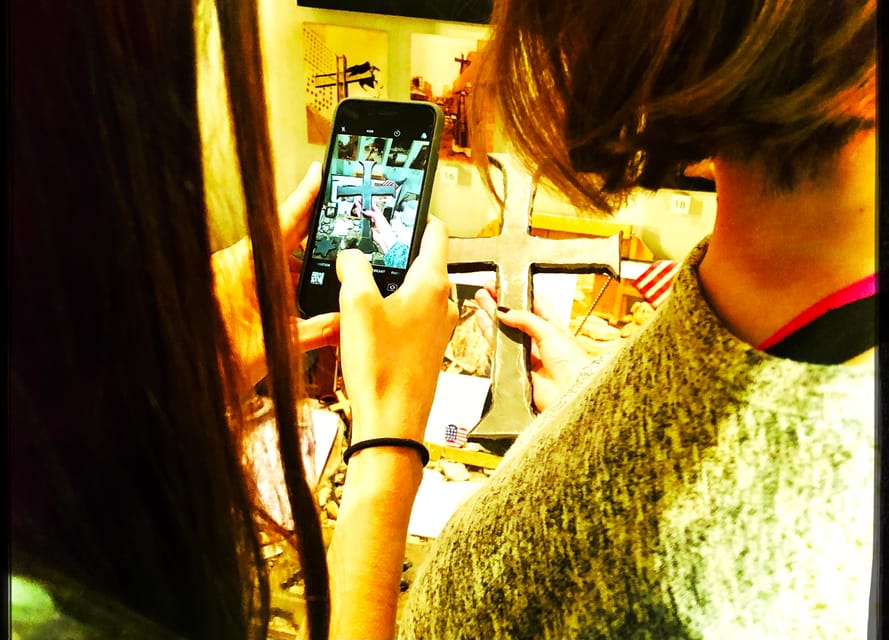
The exhibit centers on the nine-month search and recovery effort in Lower Manhattan. That time span helps explain why the photographs and artifacts tell a story that extends well beyond the attacks themselves. They document the long, difficult work that followed.
Suson’s access to the site is a key part of the exhibit’s value. Images from areas such as the subway tunnels below Ground Zero provide a rare record of the recovery effort in places that were dangerous and out of public view. The audio narration gives those images a human frame, connecting scenes and objects to the people affected.
The workshop also includes intimate items donated by survivors and family members. These personal belongings shift the focus from the scale of the disaster to its effect on individual lives. That approach is one reason the visit can feel more personal than a broad historical overview.
It is a compact setting, so the experience depends on your willingness to listen and reflect. You are not simply moving through a large hall of displays. You are spending time with specific images and stories, one at a time.
Family-friendly in format, serious in subject
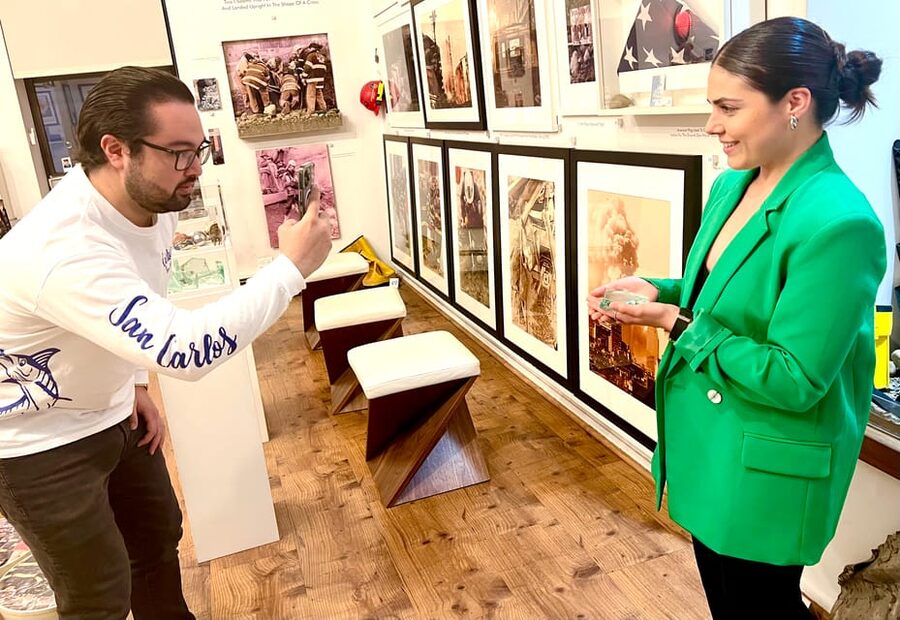
The audio guide can hold children’s interest, and the experience is described as family-friendly. The headset gives younger visitors a clear way to engage with the exhibit, while the objects and images offer something to look at beyond a block of text.
Still, family-friendly does not mean light. The stories address death, the attacks, and the recovery effort. Parents should decide what is suitable for their children and be prepared to answer questions afterward. The self-guided format helps because you can choose how long to stay with each story.
For adults, the same flexibility is useful. You can spend more time with a story that matters to you or take a pause if the material becomes difficult. The on-site guide is there to answer questions, which can help if you want context that the audio does not provide.
Is $36 fair for 90 minutes?
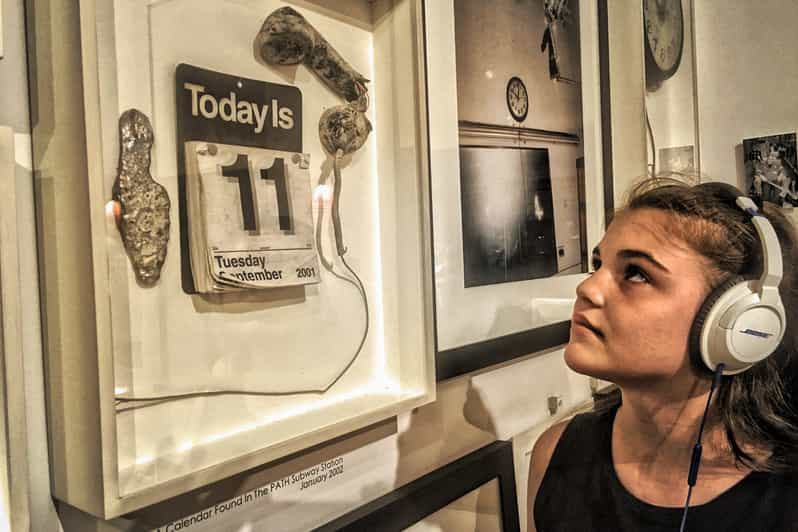
At $36 per person, the value depends on how much time you give the exhibit and what you want from a 9/11 visit. You’re paying for admission, the BOSE audio tour with 100 stories, access to Suson’s photographs, the short film, and the chance to handle select artifacts. That is a substantial amount of content for a focused museum visit.
If you listen to only a few stories and leave after 90 minutes, the price may feel high compared with a quick attraction. If you take your time, hear more of the narration, and engage with the artifacts, the visit offers a more personal experience. A free 5-by-7 museum mini-print is included, one per party, though it is a small extra rather than the main reason to go.
This workshop works best as a complement to other 9/11 sites, not as a replacement for the World Trade Center memorial or museum. One visitor preferred its personal approach to the larger 9/11 museum, while another visited it before going to the memorial and museum. Your own preference may depend on whether you value first-person stories and a smaller setting, or want a broader visit at the World Trade Center site.
A rating of 4.8 from 25 reviews points to a strong overall response, though the small number of ratings is worth keeping in perspective. The main appeal is clear: the exhibit feels personal, the artifacts are unusual, and the audio carries much of the story.
Timing, access, and a few practical notes
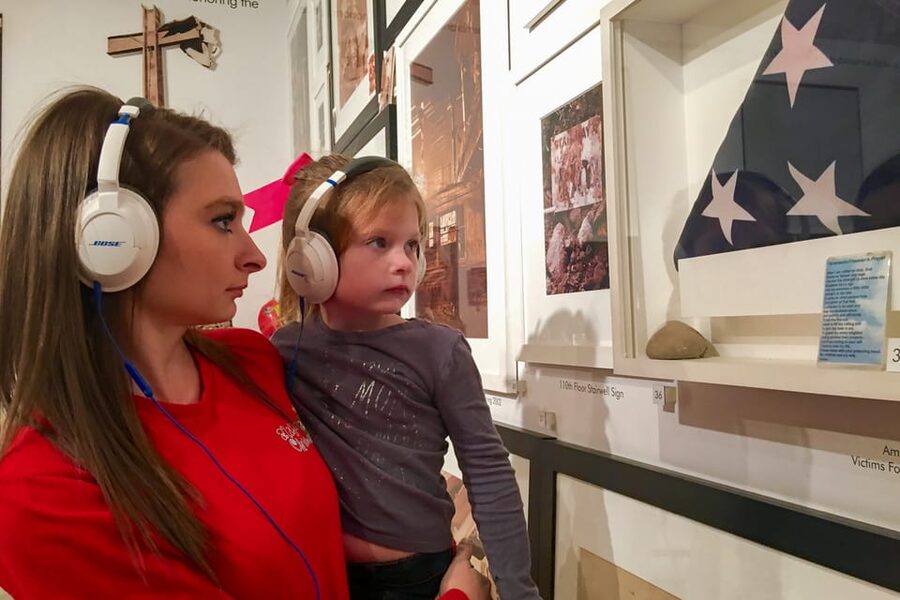
The stated visit length is 90 minutes, with starting times depending on availability. If your schedule is tight, allow for the full 90 minutes and don’t expect to hear all 100 stories. If you like to listen to everything, build in extra time.
The workshop is wheelchair accessible. Audio tours are available in English, French, Italian, and Spanish, and an on-site guide can answer questions.
The photography rules need a little care. Photos are allowed, but video recording is not; the activity information also says cameras are not allowed. Since those rules can be read in different ways, check with the workshop before bringing a dedicated camera. Avoid video recording.
Bookings can be canceled up to 24 hours in advance for a full refund, and a reserve-now, pay-later option is available. Those terms are useful if your New York plans are still shifting, but the more important planning detail is the location: the workshop is in the Meatpacking District, not at the World Trade Center.
Who should book this workshop?
I’d consider this visit if you want a thoughtful, personal account of the recovery effort, especially if photographs, first-person stories, and physical artifacts help you connect with history. It is also a good choice if you have already visited the World Trade Center site and want another perspective on what happened afterward.
You may want to skip it if you have little time, prefer a broad overview rather than a self-guided audio experience, or are not ready for emotionally difficult material. It is not a substitute for visiting the World Trade Center memorial or museum, and it is not located there.
For a focused visit with a rare chance to handle select artifacts, $36 is reasonable if you give yourself time to listen. Book it for the personal stories and Suson’s images, and plan your route carefully so you arrive at the right Manhattan address.
FAQ
Is the workshop at the World Trade Center?
No. It is in Manhattan’s Meatpacking District, not at the World Trade Center.
How long does the visit take?
The stated duration is 90 minutes. Listening to all 100 audio stories may take longer; one visitor spent about two hours.
What does the audio tour include?
The BOSE audio guide features 100 stories about the images, artifacts, and Ground Zero recovery effort.
Which languages are available for the audio tour?
The audio tour is available in English, French, Italian, and Spanish.
Can I handle artifacts?
You can handle select artifacts with staff guidance. Ask before picking anything up.
Who took the photographs?
The images are by Gary Marlon Suson, the official photographer at Ground Zero.
Is photography allowed?
Photos are allowed, but video recording is not. The rules also say cameras are not allowed, so check with the workshop before bringing a dedicated camera.
Is the workshop wheelchair accessible?
Yes, the activity is listed as wheelchair accessible.
Can I cancel my booking?
Yes. You can cancel up to 24 hours in advance for a full refund.
More hands-on workshops in New York City
- Ground Zero Museum Workshop Tour
★ 4.5 · 463 reviews - Brooklyn Graffiti Workshop
★ 5.0 · 287 reviews - Central Park: Highest Rated Yoga Class in New York City!
★ 4.8 · 56 reviews - 3 Hour NYC Photography Workshop
★ 5.0 · 45 reviews
New reviews from New York City
- 3 Hour Session at Williamsburg’s Adventure Park Area 53★ 3.5 · 6 reviews
- 3-Day Immersive Photography Workshop in New York City★ 5.0 · 5 reviews
- Midtown Manhattan: Times Square & Skyscrapers Walking Tour★ 5.0 · 18 reviews
- 3 Hour NYC Photography Workshop★ 5.0 · 45 reviews
- Central Park Private Pedicab Tour (2hrs)★ 5.0 · 37 reviews
- Niagara Falls, Toronto and 1000 Islands, 3 Day Tour from NYC★ 4.5 · 114 reviews
- Central Park Pedicab Guided Tours – 1, 1.5 & 2Hrs★ 5.0 · 24 reviews
- New York Day Sail to the Statue of Liberty on Schooner America★ 5.0 · 66 reviews
9/11 Memorial Tours, compared.
9/11 Memorial, Ground Zero Tour with Optional 9/11 Museum Ticket
Read our review →
All-Access 9/11: Ground Zero Tour, Memorial and Museum, One World Observatory
Read our review →
NYC City Tour: Statue of Liberty, 9/11 Memorial, Wall Street
Read our review →
9/11 Memorial Tour and Optional Observatory Ticket
Read our review →
New York 9/11 Memorial Tour with Optional One World Observatory
Read our review →Browse the lists this tour appears in