
Reviewed · NYC WALKING TOURS
Brooklyn: 2-Hour Brooklyn Navy Yard Walking Tour
The Brooklyn Navy Yard is not a preserved relic behind glass. It is a working 300-acre waterfront site where an 1851 dry dock still repairs ships, while hundreds of businesses make things in buildings once tied to naval production. This two-hour walk connects those eras at street level.
I like two things in particular: the chance to see the Yard’s old infrastructure still at work, and the focus on the people who designed, built, and repaired ships here. Audio clips from WWII-era workers add human voices to a place that could otherwise feel like a collection of big buildings.
The main consideration is the format. This is a walking tour with stops and explanations, not a ride around the full complex or a chance to board an old ship. If you want active access to ships or prefer to cover ground quickly, the pace and viewpoint may feel limited.
- The dry dock dates to 1851 and remains in use for ship repair.
- The Yard built famous fighting ships, including the USS Maine and USS Missouri.
- A WWII food-manufacturing space was once the site’s nerve center.
- Today’s businesses make and design goods inside historic Yard buildings.
- The walk lasts two hours, with exhibits, public art, infrastructure, and stories about workers.
A working yard, not a museum set
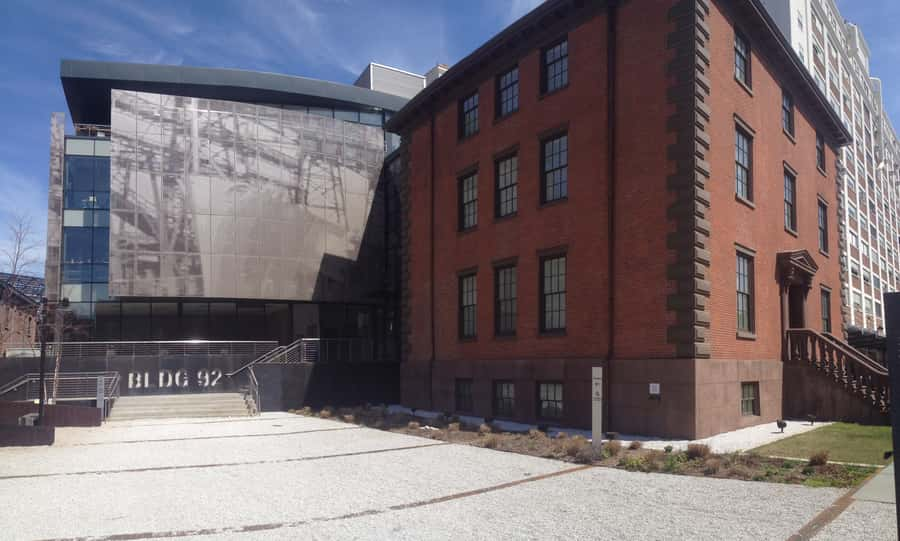
For more than 150 years, the Brooklyn Navy Yard was a major shipbuilding and repair site. Its output included well-known US Navy vessels, but the Yard’s story is not only about ships. It is also about the labor, skills, and systems that kept them moving, from design and construction to repair.
That history has not been sealed off from the present. Hundreds of creative and manufacturing businesses now operate across the site. The contrast is the point: old industrial buildings continue to serve practical purposes, and a place once organized around naval work now supports a wider range of makers.
The tour gives you a way into this large, secure complex that you cannot get by simply wandering in. The Navy Yard has more than 70 buildings, and visitors need to meet at the public entrance rather than try to enter through security gates. Once inside with your guide, you can see parts of the Yard on foot and understand how its spaces fit together.
I find that mix of history and ongoing work more useful than a tour that treats an old site as a finished story. You are not just looking backward at shipbuilding. You are also seeing how industrial buildings, infrastructure, and workspaces remain part of the city’s present.
The 1851 dry dock still earns its keep
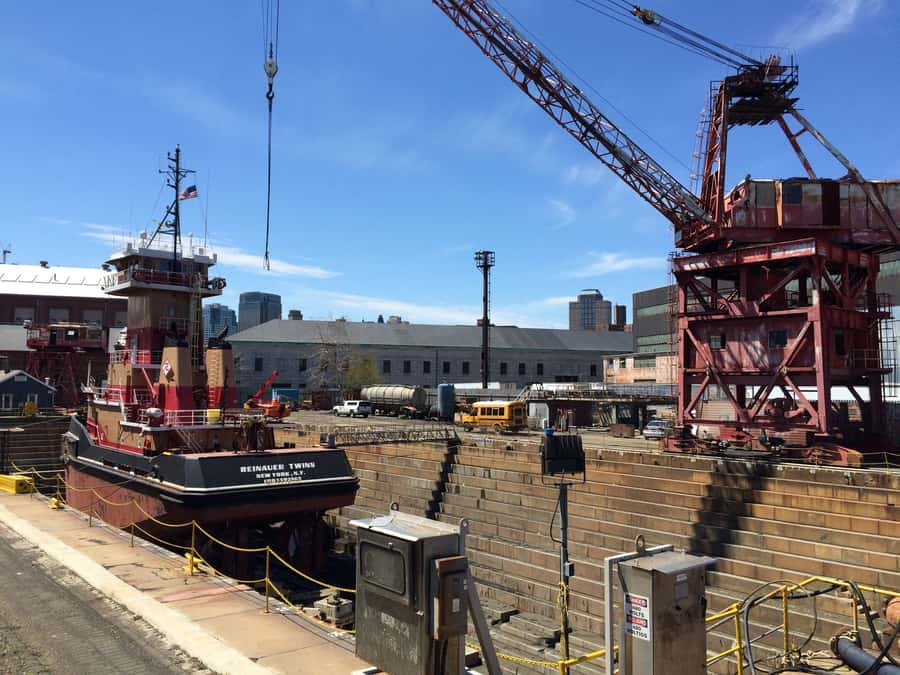
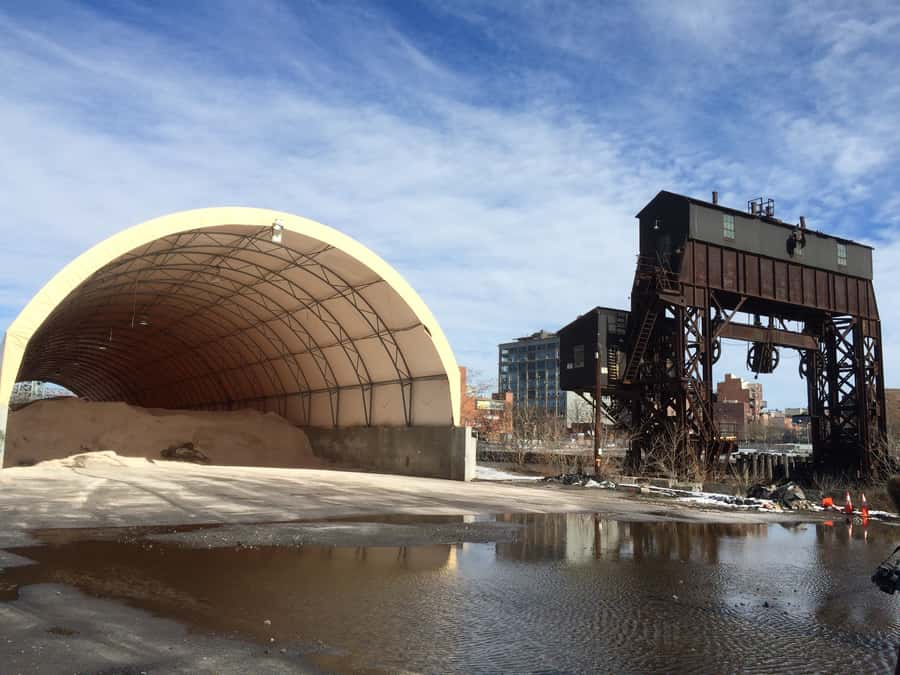
The dry dock is the tour’s clearest link between past and present. Dating to 1851, it is still used for ship repair. That ongoing use gives the structure a practical significance that a retired relic cannot match: the same basic industrial purpose remains visible across generations.
A dry dock is a place where a vessel can be brought out of the water for work on its hull and other parts below the waterline. Seeing one in an active repair setting helps you picture the scale and labor involved in maintaining ships. The tour does not promise that a particular ship will be in dock, so treat the site itself, rather than a guaranteed vessel, as the main draw.
The Yard’s size matters here. This is not a small waterfront exhibit where you can take in the whole operation at a glance. You are looking at a large industrial site through selected stops and the guide’s explanations. The walk offers context for what you see, but it is not a complete circuit of every building or work area.
If you like working infrastructure, the dry dock is likely to be the most memorable stop. If you are mainly hoping to climb aboard a historic ship, this tour does not advertise that access. Go for the scale, the continuing repair work, and the stories that explain what the Yard has done.
More Brooklyn tours in Brooklyn:
- NYC Bus Tour of Brooklyn, Bronx, Queens: Art, Food & Sports
★ 5.0 · 3,805 reviews - NYC Highlights Tour: Bronx, Brooklyn, Harlem, Queens & Coney
★ 4.5 · 2,846 reviews - NYC: Contrasts Tour of Harlem, The Bronx, Queens & Brooklyn
★ 4.5 · 2,167 reviews
Shipbuilding history told through its workers
The tour covers ships such as the USS Maine and USS Missouri, but its focus extends beyond famous names and launch dates. It looks at the workers who designed, built, and repaired vessels at the Yard. That human focus helps make sense of how an enormous industrial operation functioned day after day.
Audio clips from WWII-era workers bring in voices from a period when the Yard played a major role in wartime production. These recordings can give a stop more texture than a plaque alone: you hear people connected to the work, rather than only a summary of what happened. The available details do not specify how many clips you will hear or where they are played, so think of them as part of the tour’s storytelling rather than a full audio program.
The WWII connection also appears in a food-manufacturing space that once served as the Yard’s nerve center. The building’s earlier function may be less obvious than a dry dock, which is exactly why it helps to have a guide explain how the site operated. A place’s history is often written into its less dramatic spaces as much as into its landmark structures.
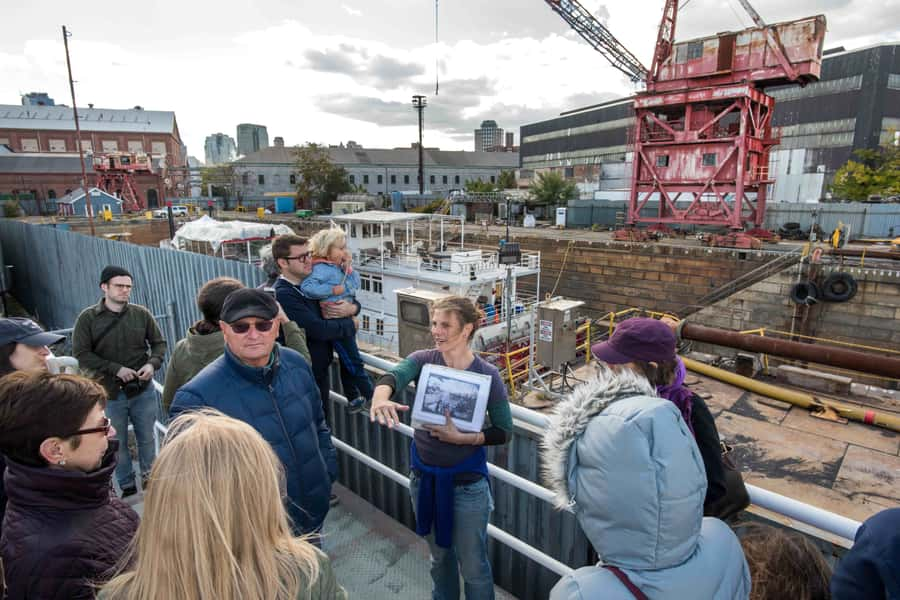
The guide is central to the experience. Past participants have especially praised the guides, and one called a guide fabulous. That matters on a tour where much of the value comes from interpretation: the buildings are large, the site is complex, and a good explanation can turn a view into a story about work, technology, and change.
Old buildings, new makers
The Navy Yard’s current businesses give the walk a useful present-day angle. Hundreds of companies work in design and manufacturing at the site, using buildings that have been preserved and adapted for modern industry. The tour is not just a look at vacant warehouses; it asks how an old industrial complex can keep serving practical needs.
You may also hear about artists and farmers working at the Yard today. Those examples show the range of activity without turning the walk into a simple before-and-after story. Shipbuilding has changed, but making and growing things remain part of the site’s identity.
The buildings themselves are part of the lesson. Adaptation is more than saving a facade. It means finding a useful role for a structure and its infrastructure, while preserving enough of its earlier character to understand what it was built to do. On this walk, you can look for the contrast between the historic fabric and the work happening around it.
Do not expect to step into every business or see production in full swing. The tour describes the businesses and the site’s current role, but does not promise access to individual workplaces. Its strength is the broader view: you learn that a major industrial site can house many kinds of work while retaining its connection to manufacturing.
What the two-hour walk feels like
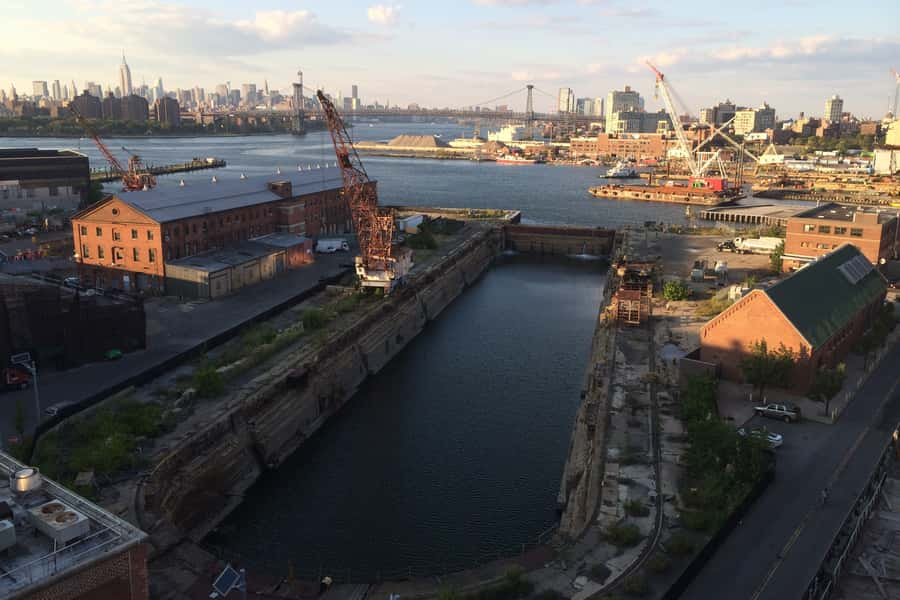
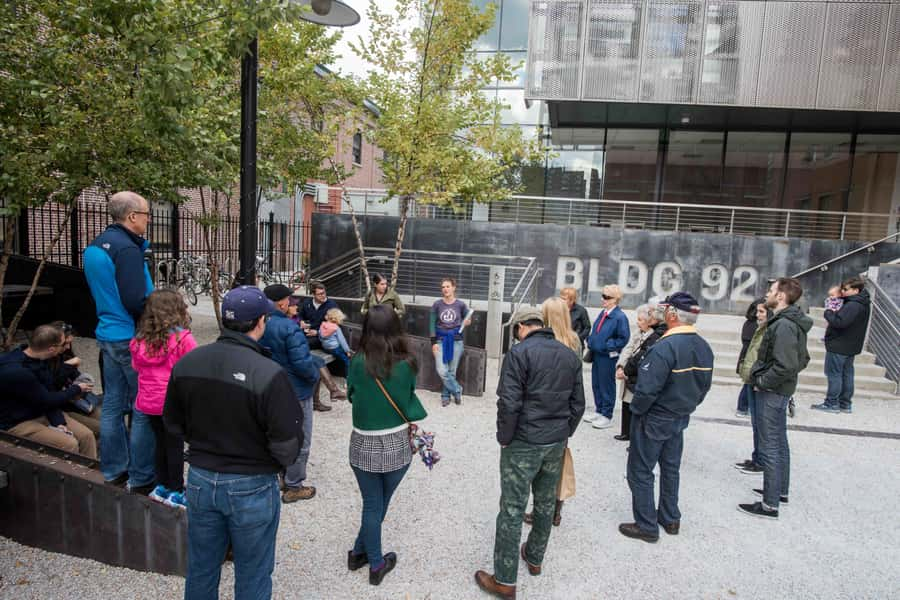
Plan for two hours on foot, with the guide stopping to point out buildings, views, exhibits, public art, and infrastructure. The experience is more about looking carefully and listening than about constant activity. One past participant described it as walking and stopping to view the Yard from different angles while hearing useful information. That is a fair way to set your expectations.
The format suits you if you enjoy a guide-led walk and want the meaning behind what you see. It may feel less engaging if you prefer frequent hands-on activities, vehicle transport, or interior access at every stop. A past participant wished for a bus around the complex or a chance to board an old ship. Those are not part of the stated experience, so do not book expecting them.
The tour also includes exhibits and public art, but the available details do not promise a particular gallery or a set order of stops. The route can be understood as a guided selection of interesting places within a very large site, not a fixed promise to cover every corner. That distinction matters if you are trying to compare it with a museum visit or a broad overview by vehicle.
Comfortable shoes are the one essential item listed, and they are sensible for a two-hour walk through an industrial site. The tour is wheelchair accessible. Assistive listening devices are available with advance notice, a useful option if hearing access would make a guide’s commentary easier to follow.
More walking tours in Brooklyn:
- Brooklyn Food Walking Tour: Local Eats & Family‑Run Shops
★ 5.0 · 592 reviews - NYC: Brooklyn Graffiti & Street Art Walking Tour in Bushwick
★ 4.8 · 492 reviews - Brooklyn: Bushwick Street Art Walking Tour
★ 4.7 · 462 reviews - Graffiti & Street Art Walking Tour in Brooklyn
★ 5.0 · 255 reviews
Getting to Building 77 without a wrong turn
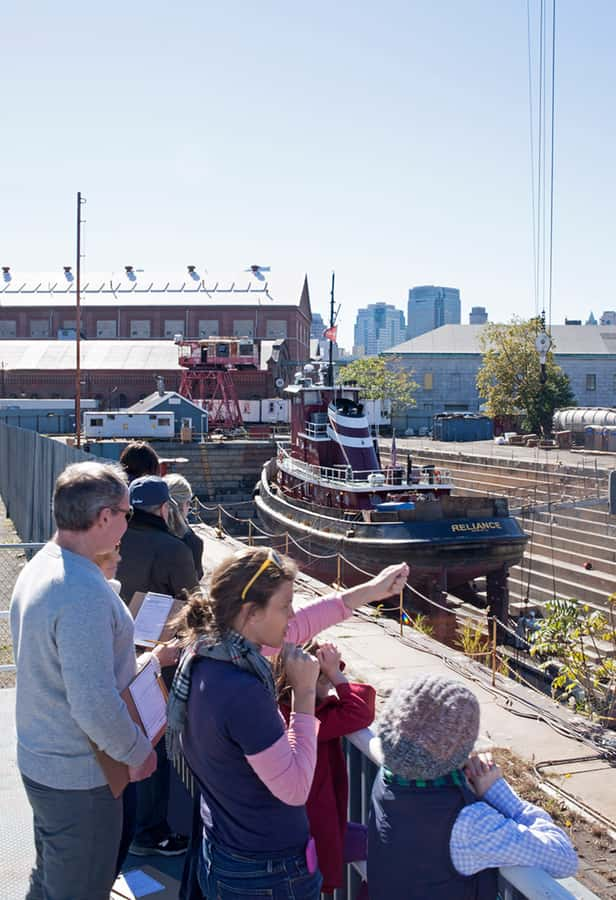
Meet the guide in front of Russ & Daughters bakery in the ground-floor public space at Building 77, 141 Flushing Avenue, at the intersection of Flushing and Vanderbilt Avenues. Building 77 is accessible from Flushing Avenue and the Brooklyn Navy Yard NYC Ferry stop.
Use that exact address. The Yard is a large, secure facility, and trying a security gate instead of the public meeting point can end with you being turned away. The tour is the way to explore the Yard on foot with a guide; it is not permission to enter independently through restricted entrances.
There is no hotel pickup or drop-off. That is worth factoring into your plans, especially if you are building the tour into a day with other Brooklyn stops. The stated meeting point gives you two clear reference points, the bakery inside Building 77 and the NYC Ferry stop, but check your route to the address before setting out.
Is $25 a good use of two hours?
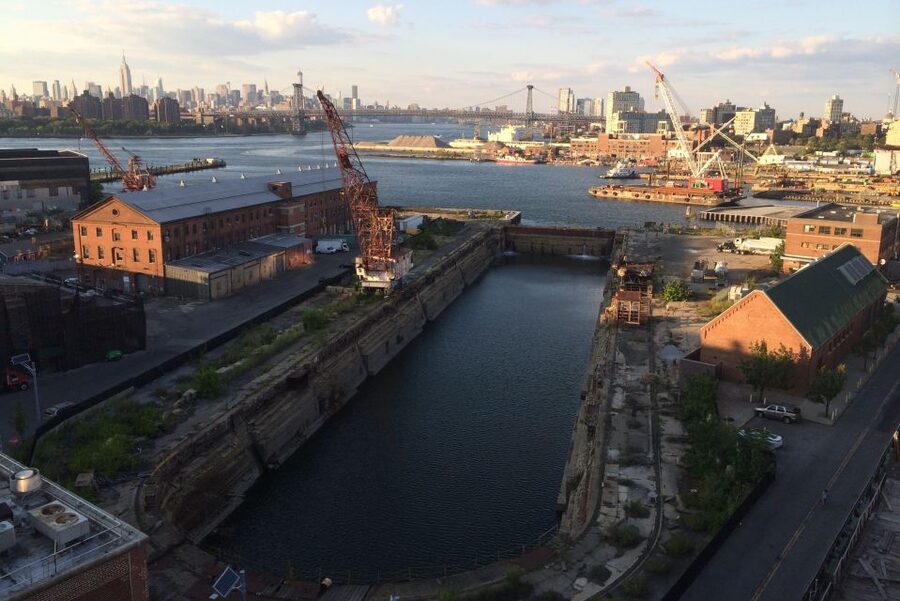
At $25 per person, the value depends on whether you want interpretation as much as access. You are paying for a guided walk through a complex site, with stories about shipbuilding, workers, wartime activity, modern manufacturers, public art, and infrastructure. The dry dock’s continuing use and the audio clips from WWII-era workers give the tour material that is hard to reproduce by simply looking at buildings on your own.
The price is easier to justify if you are curious about industrial history, urban infrastructure, or the way old workplaces find new uses. It is less compelling if your main goal is to board a ship, cover the whole 300 acres quickly, or enter a series of workshops. The tour does not promise those things, and the two-hour walking format sets a narrower scope.
The strongest praise for the experience has focused on the guides and its educational value. At the same time, one person found the stops informative but not especially engaging, which is a useful warning: this is a talk-and-look outing, and your enjoyment will depend on how much you like listening and reading a place through its details. It is a good fit for curious walkers, not necessarily for anyone seeking spectacle.
You can reserve now and pay later, and cancellation is free up to 24 hours in advance for a full refund. Those terms add flexibility, but the bigger decision is whether a guided look at a working industrial site sounds more appealing than a conventional museum or ship visit.
Should you book the Brooklyn Navy Yard walk?
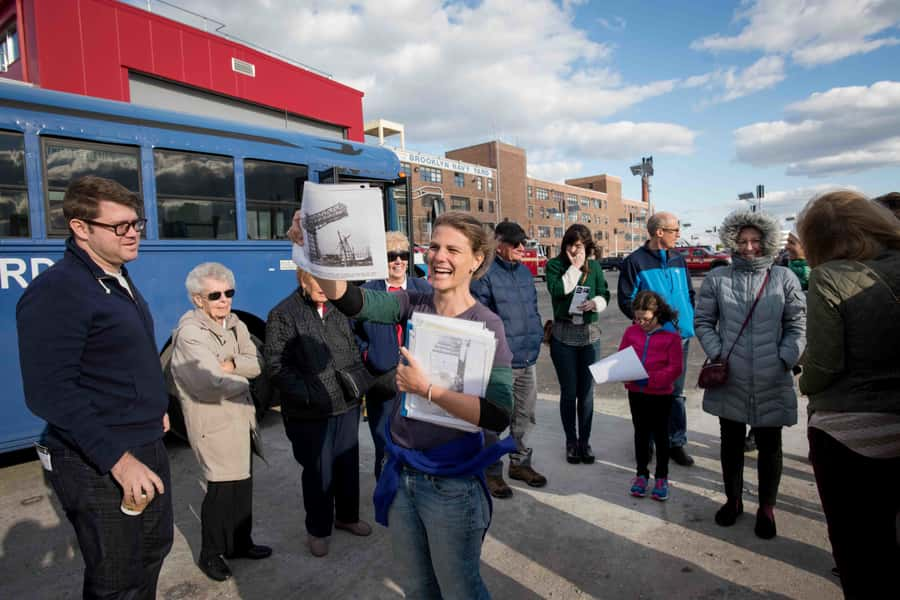
Book it if you want to understand how the Navy Yard connects shipbuilding, wartime labor, modern manufacturing, and city infrastructure. The still-working 1851 dry dock is a strong reason to go, and the WWII audio clips and stories about today’s makers add human and current-day context.
Skip it if you want to board a ship, ride around the full complex, or spend most of your time inside exhibits. This is a two-hour walking tour, and its best moments come from paying attention to the buildings and hearing why they matter. For a modest price, it offers a distinctive look at a working piece of Brooklyn, provided that is the kind of outing you want.
FAQ
How long is the Brooklyn Navy Yard walking tour?
The tour lasts two hours.
How much does the tour cost?
The listed price is $25 per person.
Where do I meet the guide?
Meet in front of Russ & Daughters bakery in the ground-floor public space at Building 77, 141 Flushing Avenue, at Flushing and Vanderbilt Avenues.
Can I reach the meeting point by NYC Ferry?
Yes. Building 77 is publicly accessible from the Brooklyn Navy Yard NYC Ferry stop.
Is the tour wheelchair accessible?
Yes, the activity is listed as wheelchair accessible.
Are assistive listening devices available?
Yes. Assistive listening devices are available to improve hearing access, with advance notice.
Are pets allowed on the tour?
No. Pets are not allowed.
More two-hour experiences in Brooklyn
- From Manhattan: 2-Hour Brooklyn Bridge Bike Tour
★ 4.4 · 230 reviews - Brooklyn Bridge and Waterfront 2-hour Guided Bike Tour
★ 4.5 · 184 reviews - From Manhattan: 2-Hour Brooklyn Bridge Sightseeing Bike Tour
★ 4.4 · 125 reviews - Brooklyn: 2-Hour Best of Brooklyn Walking Tour -Williamsburg
★ 4.3 · 120 reviews
New reviews from Brooklyn
- NYC New York Airport JFK Private Transfer to Manhattan | Brooklyn★ 3.5 · 8 reviews
- Delicious Donuts of Brooklyn: Fun, Food, History and Culture Tour★ 5.0 · 84 reviews
- Underground Brooklyn Walking Brewery Tour★ 4.5 · 31 reviews
- [Taro’s Origami Studio] 30-Minute Origami Experience – Brooklyn, New York★ 5.0 · 4 reviews
- Vintage + Secondhand Shopping Walking Tour through Brooklyn, NYC★ 5.0 · 3 reviews
- Around the World in a Day: Brooklyn’s Q Train Tour★ 5.0 · 3 reviews
- Private Sail New York with Brooklyn Sail (Reserve the entire boat)★ 5.0 · 125 reviews
- Brooklyn’s Oasis: Audio Guide to Prospect Park★ 5.0 · 3 reviews
NYC Walking Tours, compared.
SoHo, Little Italy, and Chinatown Walking Tour in New York
Read our review →
Secrets of Grand Central Station Walking Tour New York City
Read our review →
Greenwich Village Walking and Food Tasting Tour
Read our review →
Artistic, Alternative Greenwich Village Walking Tour
Read our review →
True Crime NYC: Mafia Walk w/Ret. NYPD Detective and Local Food
Read our review →

Browse the lists this tour appears in