
Reviewed · BROOKLYN TOURS
Brooklyn: Discover Hidden NYC Subway Secrets – Private
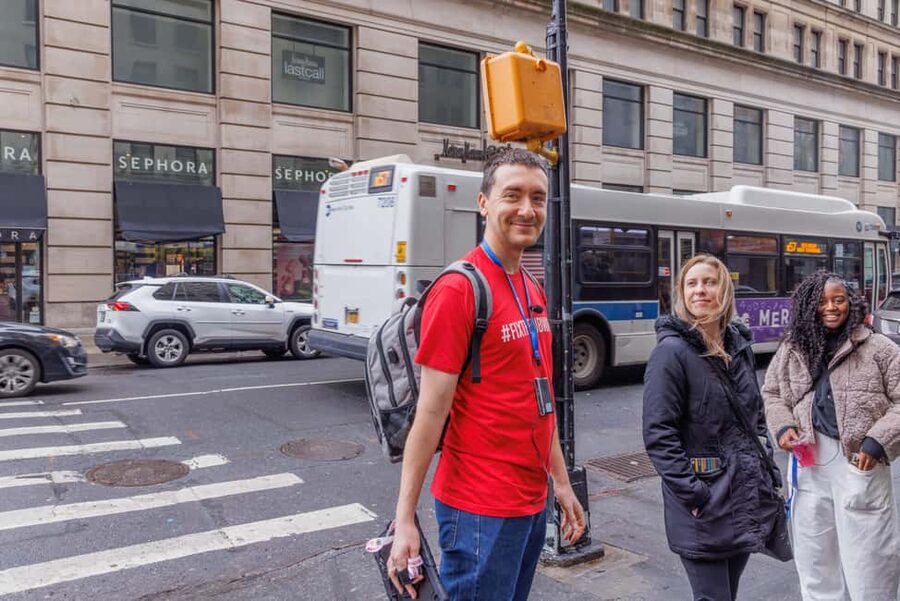
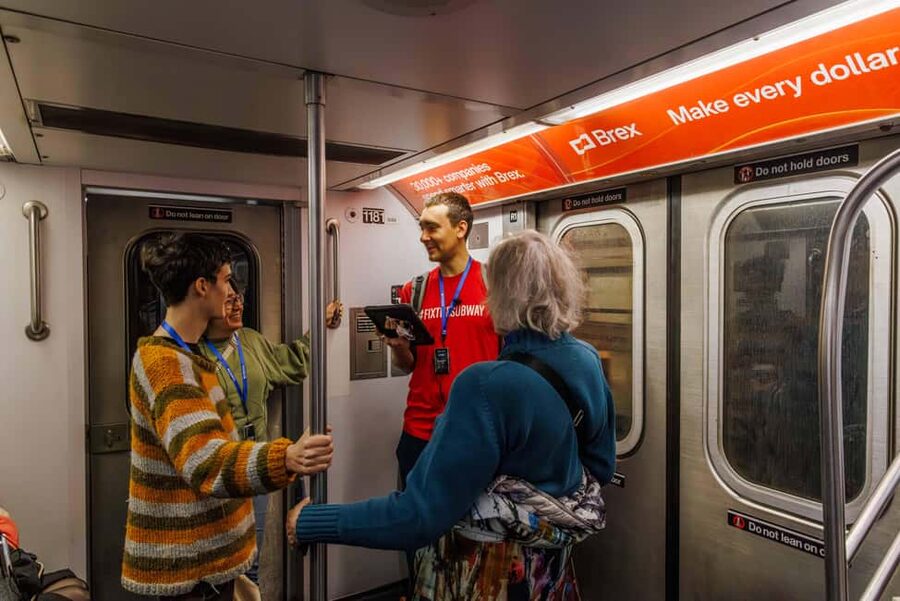
Brooklyn’s subway secrets are not all sealed behind locked doors. On this private tour, Rayn Riel shows you how to spot traces of abandoned stations and platforms from places the public can visit, while explaining how the choices made a century ago still shape your ride today.
I like two things in particular: the mix of subway history and present-day clues, and the chance to see Brooklyn from the elevated Smith-9th Street station, high above the Gowanus Canal. Rayn is a licensed guide, certified urban planner, and former MTA worker, so the details come with useful context, not just dates.
One consideration: this is a walking tour through an underground system, with stairs and train rides. It does not enter restricted areas, and the precise route can shift with train schedules. Wear comfortable shoes and expect to keep moving.
- Abandoned infrastructure, viewed from public areas: Look for unused platforms, tunnels, and the lower level at Nevins Street without entering closed spaces.
- A high perch over the Gowanus Canal: Smith-9th Street is the highest rapid transit station in the Western Hemisphere.
- Old station design with a modern-day purpose: Rayn connects early subway architecture and planning choices to the system you use now.
- Several lines, several eras: A route may include the 4/5, D, G, F, and R trains, reflecting the city’s once separate subway companies.
- Brooklyn art and a famous film location: See public art projects and the spot where Michael Jackson filmed the Bad music video.
- Private group, fares included: The $200 price covers up to 15 people, plus subway fares and personal ear pieces.
Brooklyn’s subway tells its story in layers
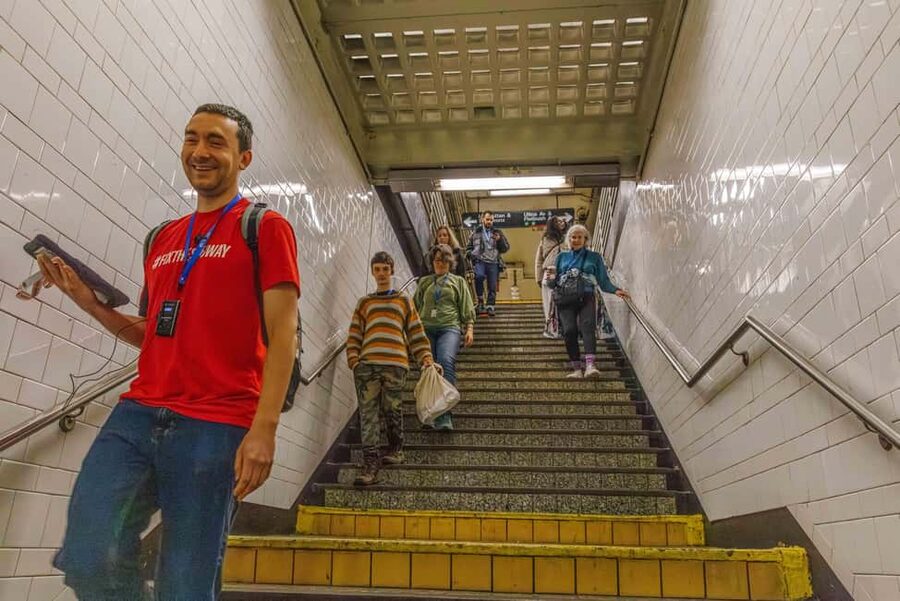
A New York subway ride can feel like a simple matter of getting from one stop to the next. This tour makes the journey itself the subject. You’ll look at station details, routes, and pieces of infrastructure that are easy to hurry past when you’re focused on the platform display.
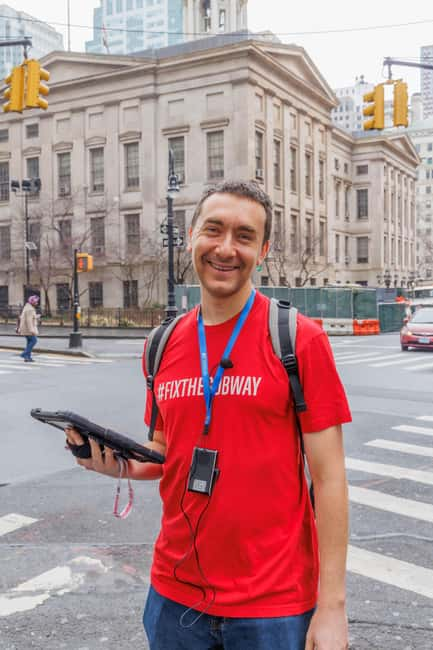
Rayn Riel brings a useful combination of backgrounds to the subject. He is a licensed NYC tour guide and certified urban planner, and he has worked for the MTA. That mix matters: he can explain not only what is old or unusual, but also how transit planning decisions continue to affect the system.
The tour covers two hours and begins outside the Starbucks at 50 Court Street. From there, you explore Downtown Brooklyn and nearby subway stations before finishing at Barclays Center. You travel by subway as well as on foot, and the fare during the tour is included.
The format is especially appealing if you like learning by looking. Rather than hearing a long account of subway history in one place, you move through the system and connect the explanation to what is in front of you: a station’s layout, a glimpse of unused infrastructure, or a train line whose history reaches back to a different operating company.
Starting at 50 Court Street
Meet Rayn outside the Starbucks at 50 Court Street. The start is straightforward, but allow yourself enough time to get there and find the group before the tour begins. The meeting point is in Downtown Brooklyn, an area with plenty of transit activity, so keep the address handy.
This is a private tour, which gives your group a more direct conversation with the guide than a large public outing would. You can ask questions as you go, and Rayn can adjust the pace or explanation to the group. One family group with fifth-graders found him patient and attentive to the children, while adults in the group also found plenty to learn. That makes the tour a reasonable choice for a mixed-age party, particularly one with subway enthusiasts.
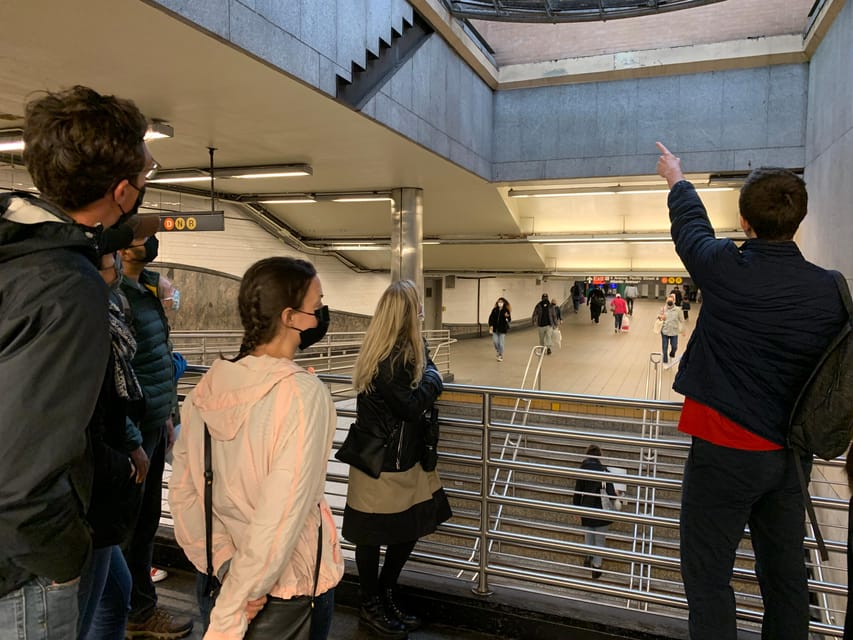
Rayn provides personal ear pieces so you can hear him even when the group spreads out. In a station, where announcements, trains, and crowds compete for attention, that small practical detail can make a real difference. It also lets you focus on the surroundings instead of trying to stay close enough to catch every word.
More Brooklyn tours in New York City:
- NYC Bus Tour of Brooklyn, Bronx, Queens: Art, Food & Sports
★ 5.0 · 3,805 reviews - NYC Highlights Tour: Bronx, Brooklyn, Harlem, Queens & Coney
★ 4.5 · 2,846 reviews - NYC: Contrasts Tour of Harlem, The Bronx, Queens & Brooklyn
★ 4.5 · 2,167 reviews
Reading Brooklyn’s oldest station design
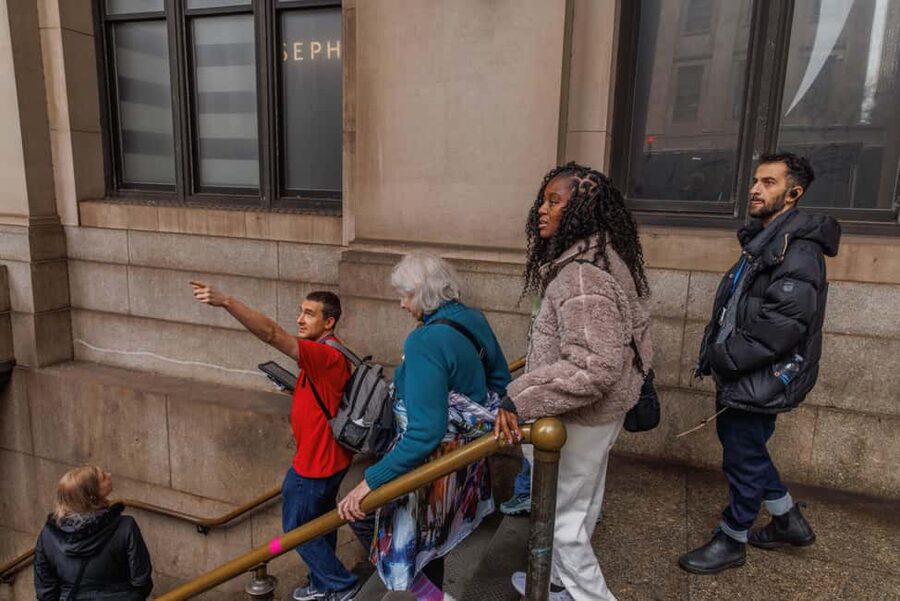
One of the tour’s themes is the design of Brooklyn’s oldest subway station. The point is not simply to admire old tile or architecture. Rayn explains how the system was built underground in the early 20th century, and how station design reflects the needs and ideas of that period.
That context helps you notice things you might otherwise treat as decoration or clutter. The older stations are working parts of a system, and their physical details can show how transit builders handled movement, access, and the limits of the city above them. Rayn also connects older choices to present-day operation, giving you a better sense of why the subway feels the way it does now.
You’ll also encounter public art throughout the borough. The experience includes a look at art projects around some of Brooklyn’s older stations, where creative work adds another layer to spaces built for daily travel. The tour’s focus remains transit, but the art helps show how stations are also public places, not just passages between street and train.
Do not expect every station to be a museum piece or every stop to involve a long visit. This is a route through a live transit system. The value lies in learning how to read what is there, including the ordinary details that become more interesting once someone explains their purpose.
Spotting abandoned platforms from public space
The promise of abandoned stations can bring to mind secret doors and off-limits tunnels. That is not what this tour offers, and the distinction is important. The group visits public areas only. You may see traces of abandoned stations, platforms, or tunnels hidden in plain sight, but you do not enter restricted spaces.
One example mentioned on the route is the lower level at Nevins Street. Unused infrastructure can sit just beyond the spaces passengers use every day, a reminder that the subway has grown through changes in plans, service, and demand. Rayn’s explanations help make these glimpses legible, even when the old platform itself is not open for exploration.
The tour’s appeal is partly in seeing what remains visible without crossing a barrier. You get the thrill of noticing an overlooked piece of the system, but within the rules of an active transit network. This is a good fit if you enjoy urban history and appreciate the difference between a genuine public-access tour and an unauthorized trespass.
The subject also gives the tour a practical edge. A closed platform is not just a spooky relic. It can reveal how the subway was built, what changed, and how earlier plans still influence the routes and spaces in use today. Rayn’s focus on the connection between past decisions and current operations is one of the strongest reasons to choose this tour over a simple station-by-station history walk.
Riding across several subway histories
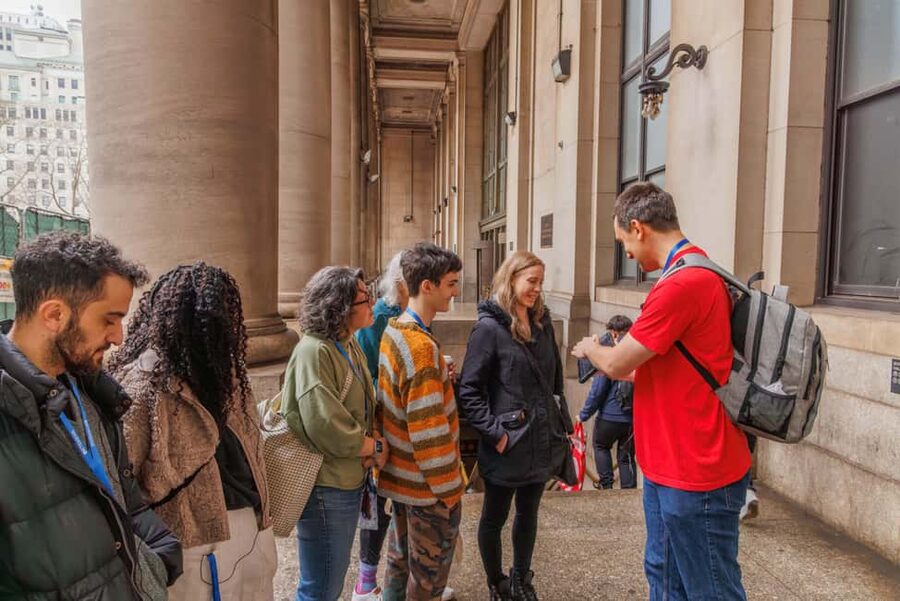
You may ride a number of different train lines during the tour. One route has included the 4/5, D, G, F, and R, representing all three of New York’s former subway companies: the IRT, BMT, and IND. The exact sequence can be affected by train schedules, so treat the lines as a useful sense of the variety rather than a guaranteed checklist.
That variety is more than a chance to collect train letters. The system began under separate companies, and their routes and infrastructure became part of the network riders use today. A ride between stops can help you see how different pieces of the subway fit together, while Rayn explains why the system developed as it did.
The tour keeps its feet in the present as well as the past. You may learn small operational details, such as why some bulbs appear a slightly different shade of blue or why a vertical cable hangs between train cars. Those are the sort of observations that can change the way you look at a familiar ride. The subway remains a working system, and the tour does not pretend history stopped when the stations opened.
Train timing can shape how the route unfolds. Rayn has adapted the order of stops to suit schedules, continuing to explain the subject along the way. That flexibility is useful, but it also means you should not expect a rigid museum-style sequence with every segment timed to the minute.
More tours and experiences in New York City:
- NYC: SUMMIT One Vanderbilt Tickets
★ 4.7 · 51,195 reviews - NYC: 9/11 Memorial & Museum Timed-Entry Ticket
★ 4.8 · 31,428 reviews - NYC: Empire State Building Tickets – Observatory & Museum
★ 4.7 · 25,757 reviews - NYC: Empire State Building Observation Deck Tickets
★ 4.7 · 22,072 reviews
Looking down from Smith-9th Street
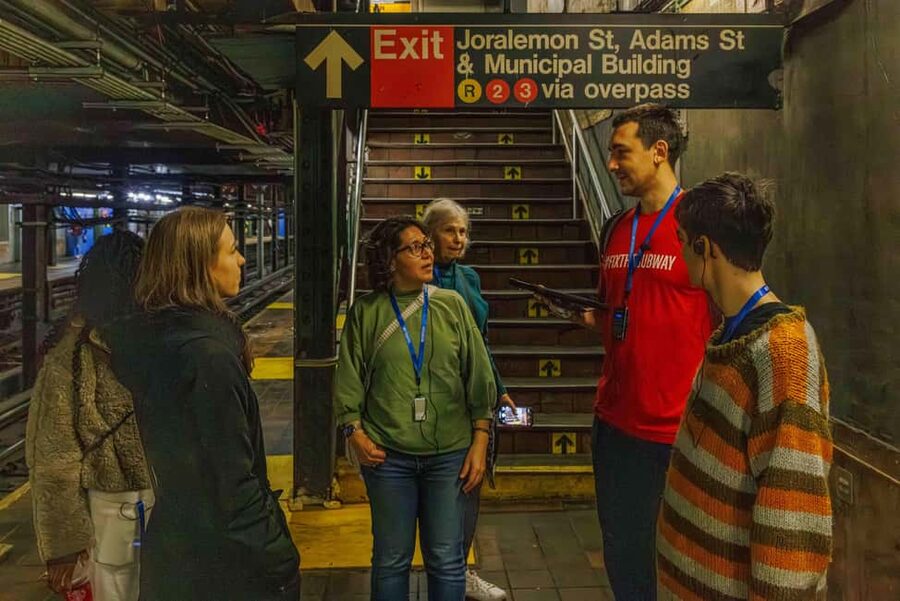
Smith-9th Street is the tour’s big change in perspective. The station is identified as the highest rapid transit station in the Western Hemisphere, and from it you can look down toward the Gowanus Canal. It is a striking contrast to the underground spaces that form much of the tour.
The height is not simply a record to repeat. It gives you a chance to see Brooklyn’s transit system in a different way, with the station’s position and surroundings visible from above. The view toward the canal is a particular highlight, and a useful reminder that subway construction is shaped by the geography around it.
Rayn also explains why such a high rapid transit station was built in Brooklyn. That question fits the tour’s wider purpose: to connect a feature you can see with the planning decisions behind it. If you enjoy understanding why a city works as it does, this stop is likely to be more satisfying than a quick photo break.
You will need to be comfortable with stairs and walking between stations. The tour involves going up and down steps in an underground environment, so it is not a sit-and-listen outing. Comfortable shoes are a sensible choice, especially if you plan to continue exploring after the tour.
A moonwalk, public art, and Barclays Center
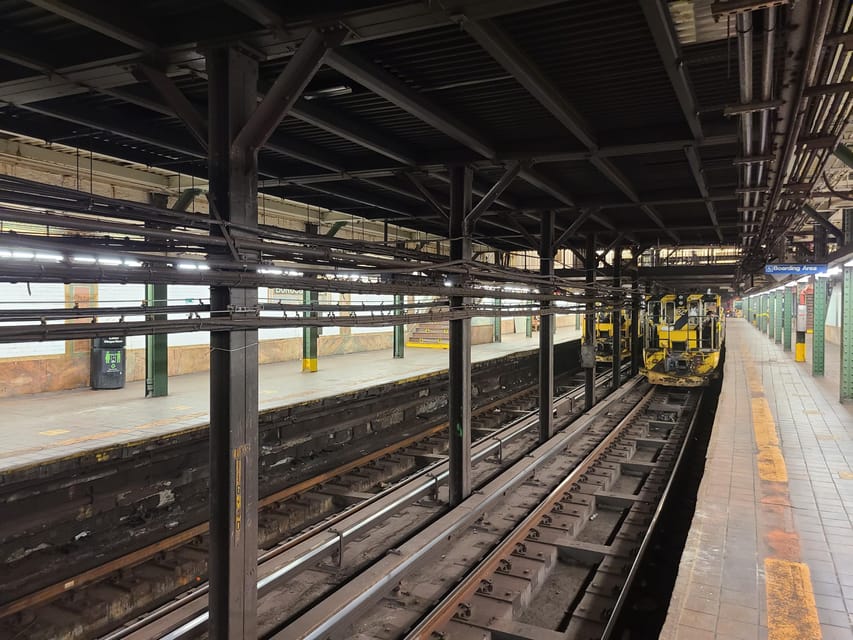
The tour also visits the spot where Michael Jackson filmed the Bad music video. You get the chance to try a moonwalk in the same location, a lighter moment amid the stories of infrastructure and planning. It is an unusual bit of pop-culture history, and it gives the tour a playful note without changing its focus on Brooklyn’s transit.
Public art appears along the way as well. Rather than treating it as a separate gallery visit, the tour brings it into the setting of the stations and borough streets. That makes it easier to see how artworks interact with places people use every day.
The walk ends at Barclays Center subway station in Downtown Brooklyn. It is a practical finish, with local food options nearby if you want to eat after the tour. The endpoint also leaves you in a useful location for continuing your day, though the tour itself does not include a meal.
What the $200 private price buys
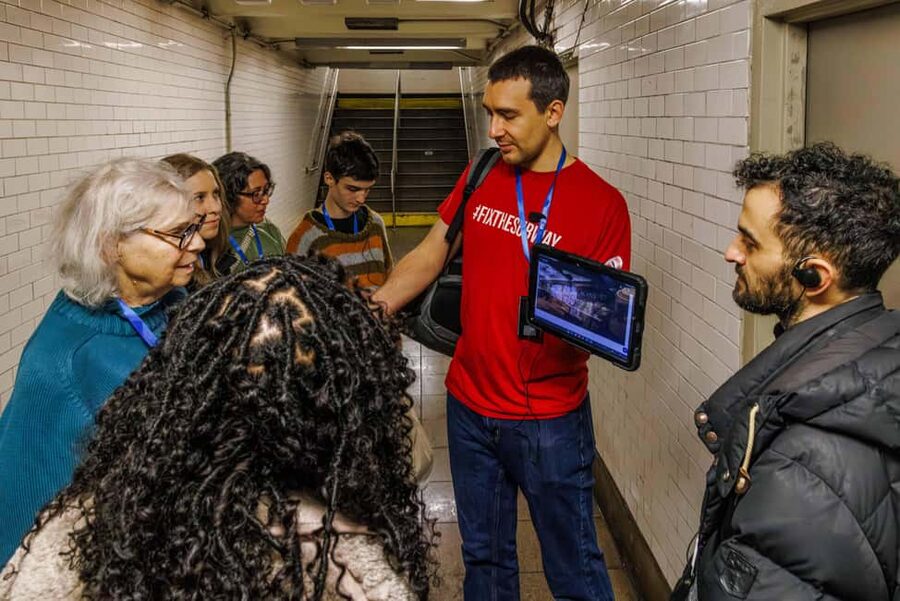
The price is $200 per group of up to 15 people. For a full group, that works out to about $13.33 per person, with subway fares during the tour included. For a smaller party, the per-person cost rises, but you are paying for a private guide rather than joining a shared group.
The value depends on how much you want the interpretation. If you already use the subway daily, Rayn’s explanations can make familiar stations feel newly legible. If you are visiting New York, the tour offers more than a ride between attractions: it gives you context for a public system that shapes how the city works.
The included ear pieces also help justify the private format. The guide can speak to the group without requiring everyone to cluster around him in busy stations. And because the route uses several subway lines, the included fare removes one small planning task during the experience.
You can reserve now and pay later, and cancellation is available up to 24 hours in advance for a full refund. Starting times depend on availability. The tour is in English, and it visits public areas only.
Who should book this Brooklyn subway tour
I’d choose this tour if you’re curious about how cities are built and run, or if subway stations hold more interest for you than they do for most people. It suits first-time visitors, New Yorkers who think they already know their system, and families with older children who can manage the walking and station environment.
It is especially well suited to subway enthusiasts. The tour links old stations, unusual infrastructure, current operations, and train lines in a way that rewards close attention. If you are mainly looking for a broad overview of Brooklyn landmarks, or want access to closed tunnels and platforms, this is not the right fit.
Book it if you want a focused, active two-hour outing with a specialist guide and a fresh way to see the borough. Skip it if stairs are a concern, or if your main priority is an unhurried visit to one location. For the right group, the combination of public-access secrets, high-level views, and practical subway history makes the fare a strong value.
FAQ
How long is the tour?
The tour lasts two hours.
Where does the tour begin and end?
Meet outside the Starbucks at 50 Court Street. The tour ends at Barclays Center subway station in Downtown Brooklyn.
Is the tour private?
Yes. It is a private group tour for up to 15 people.
Are subway fares included?
Yes. Your subway fare during the tour is included, as are personal ear pieces so you can hear the guide.
Does the tour enter abandoned stations or restricted tunnels?
No. The tour visits areas open to the public. You may see abandoned stations, platforms, or tunnels from public areas, but you do not enter restricted spaces.
What should I bring?
Wear comfortable shoes. The tour involves walking in an underground environment and going up and down steps.
New reviews from New York City
- 3 Hour Session at Williamsburg’s Adventure Park Area 53★ 3.5 · 6 reviews
- 3-Day Immersive Photography Workshop in New York City★ 5.0 · 5 reviews
- Midtown Manhattan: Times Square & Skyscrapers Walking Tour★ 5.0 · 18 reviews
- 3 Hour NYC Photography Workshop★ 5.0 · 45 reviews
- Central Park Pedicab Guided Tours – 1, 1.5 & 2Hrs★ 5.0 · 24 reviews
- Central Park Private Pedicab Tour (2hrs)★ 5.0 · 37 reviews
- Niagara Falls, Toronto and 1000 Islands, 3 Day Tour from NYC★ 4.5 · 114 reviews
- New York Day Sail to the Statue of Liberty on Schooner America★ 5.0 · 66 reviews
Brooklyn Tours, compared.

NYC Bus Tour of Brooklyn, Bronx, Queens: Art, Food & Sports
Read our review →
NYC Highlights Tour: Bronx, Brooklyn, Harlem, Queens & Coney
Read our review →
Contrasts Tour of Harlem, The Bronx, Queens & Brooklyn
Read our review →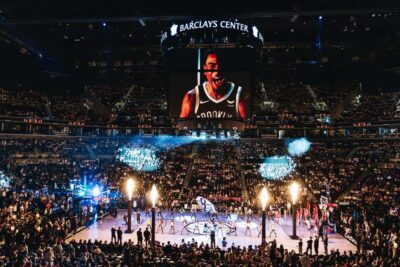
Brooklyn Nets NBA Game Ticket at Barclays Center
Read our review →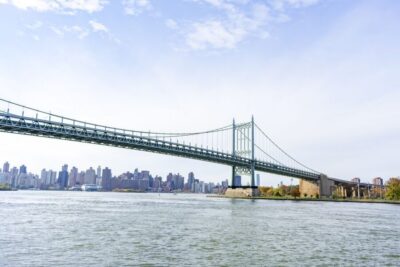
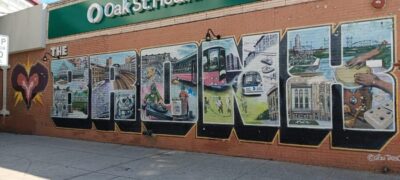
Contrasts of Bronx, Queens, Brooklyn, & Manhattan Tour
Read our review →
All Inclusive Airport Arrival Transfer to NYC/ Brooklyn/Queens
Read our review →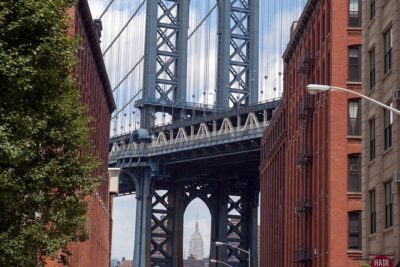
Brooklyn Bridge & DUMBO Neighborhood Tour – from Manhattan to Brooklyn
Read our review →Browse the lists this tour appears in