Reviewed · NEW YORK CITY TOURS
Financial Crisis Tour with a Finance Professional
The 2008 financial crisis can feel like a tangle of acronyms and headlines until you’re standing on Wall Street, where the decisions and institutions behind it took shape. This two-hour walk pairs Lower Manhattan landmarks with explanations from guides who have worked in finance, helping you connect the crisis to the streets around you.
I like two things in particular: you get the story from people with front-line finance experience, and the tour sets the crisis in a wider history of Wall Street, New York, and the American economy. Guides including Emily, Ben, James, and Jared have been praised for making complicated ideas clear and keeping the walk engaging for both finance buffs and beginners.
One point to plan around: the tour is mostly outdoors, and you will not go inside the New York Stock Exchange. Downtown wind can make a winter walk chilly, and one guest wished for a bathroom stop along the way, so dress for the weather and plan ahead.
- A practical setting for the 2008 story: Follow crisis-era institutions and landmarks through the Financial District.
- A guide with industry experience: Expect explanations shaped by people who have worked in finance, not just a list of dates and buildings.
- More than a crash course: The conversation can range from the 2008 meltdown to earlier Wall Street history and the present-day use of buildings.
- A photo stop at the Charging Bull: You have about 15 minutes here, a chance to take the familiar photo and talk about the symbol.
- A compact walking tour: The route lasts about two hours, with a group capped at 20.
- The exchange is an exterior stop: The New York Stock Exchange has been closed to visitors since 2001.
Wall Street, explained where it happened
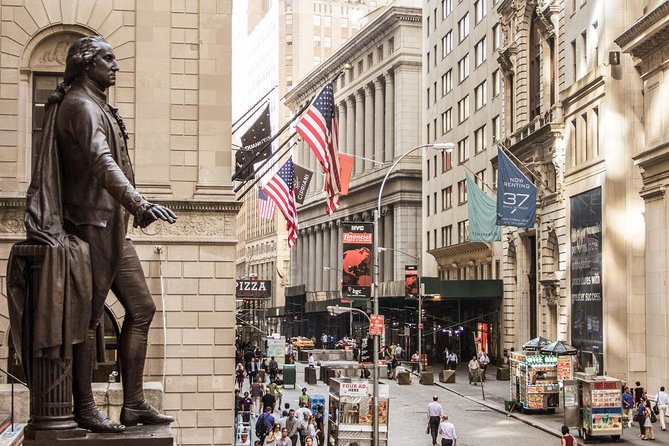
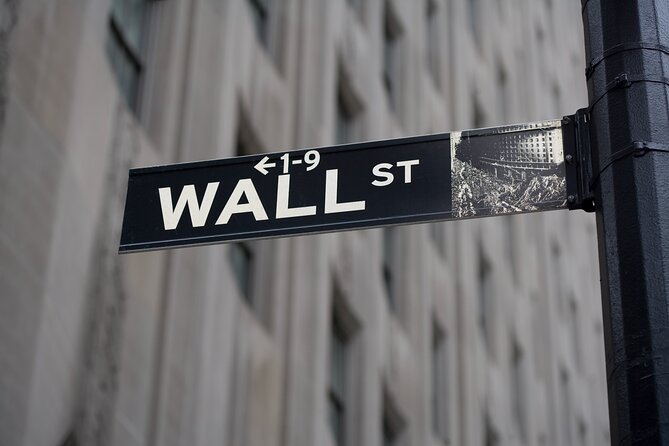
The tour begins at 22 Broad Street, in the heart of the Financial District. From there, you walk through the narrow streets around Wall Street, where the guide ties the names of banks and institutions to the events that drove the 2008 collapse and the recession that followed.
This setting matters. A financial crisis can seem abstract when you encounter it as a headline or a chart. On this walk, the guide can point out buildings associated with companies such as Lehman Brothers and Bear Stearns, then explain how the collapse of major firms affected banks, markets, and people far beyond Lower Manhattan.
The main Wall Street portion takes about an hour. You can expect a mix of landmark interpretation and conversation about what happened inside the financial system: how traders and banks made money, why some institutions failed, and how risky products contributed to a crisis that reached well beyond Wall Street.
The guide’s background is the tour’s key asset. People who have worked in the industry can give context to the daily practices and decisions behind the headlines. Names such as Emily, Ben, James, Jared, and Jon have been associated with the walk, but the specific guide varies. The strongest accounts of the tour describe guides who explain technical ideas in plain English, welcome questions, and use personal experience to make the history stick.
That approach should suit you whether you follow markets closely or only know the crisis from the film The Big Short. The subject can get dense, but guides have been praised for making ideas such as collateralized debt obligations easier to grasp without turning the walk into a finance lecture. Expect stories and explanation, not a formal class or a detailed investment lesson.
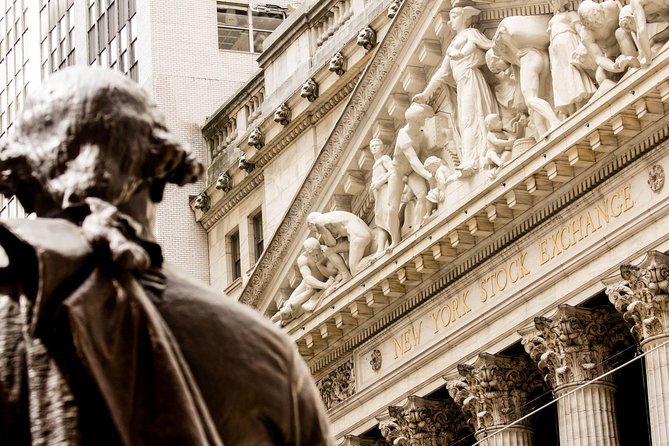
The New York Stock Exchange, from the outside
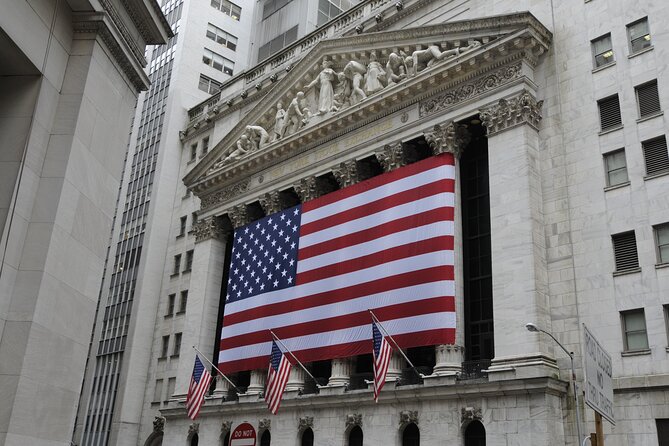
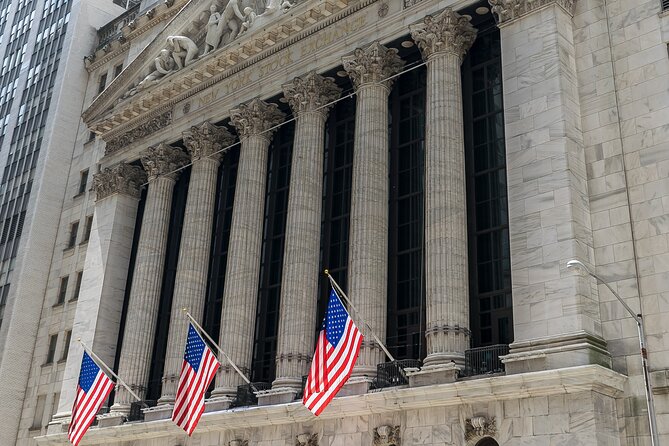
The exchange is a natural point of interest, but it is important to set expectations: you do not go inside. The building has been closed to visitors since 2001, so the tour discusses the institution from outside rather than offering access to its trading floor.
That restriction does not make the stop pointless. The exchange is a useful anchor for understanding how Wall Street grew and how the market’s public image differs from its inner workings. Your guide can connect the façade and surrounding streets to the history of the stock and bond markets, as well as to the crisis-era events covered on the walk.
Still, if you are booking mainly to see the interior of the New York Stock Exchange, this is not the right tour. The value is the guide’s interpretation of the place and its role, not entry through the doors. Keep that distinction in mind, especially if the exchange is the main reason you are considering the experience.
More tours and experiences in New York City:
- NYC: SUMMIT One Vanderbilt Tickets
★ 4.7 · 51,195 reviews - NYC: 9/11 Memorial & Museum Timed-Entry Ticket
★ 4.8 · 31,428 reviews - NYC: Empire State Building Tickets – Observatory & Museum
★ 4.7 · 25,757 reviews
The Charging Bull and the Wall Street image
The route includes a roughly 15-minute stop at the Charging Bull. It is one of the Financial District’s most recognizable symbols, and a convenient moment to take a photo while the guide talks about the bull’s place in the image of American finance.
The bull can draw a crowd, so the stop may feel more like a quick landmark visit than a quiet pause. Treat it as a brief break in the historical walk, not the tour’s main event. The more useful part is the contrast between this bold symbol of market optimism and the much more complicated story of risk, failure, and accountability that the guide is explaining.
Federal Hall and the wider story
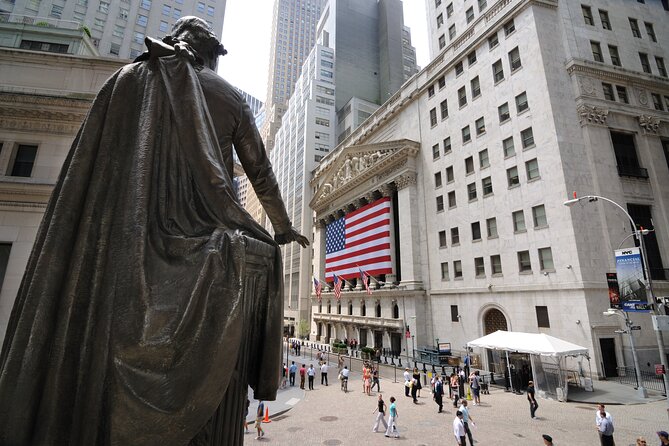
Federal Hall adds a layer of American history to the route. This is where George Washington became president, a reminder that Lower Manhattan’s civic and financial stories have long overlapped. The tour allows about 20 minutes here, giving you a chance to connect the founding period with the later growth of Wall Street.
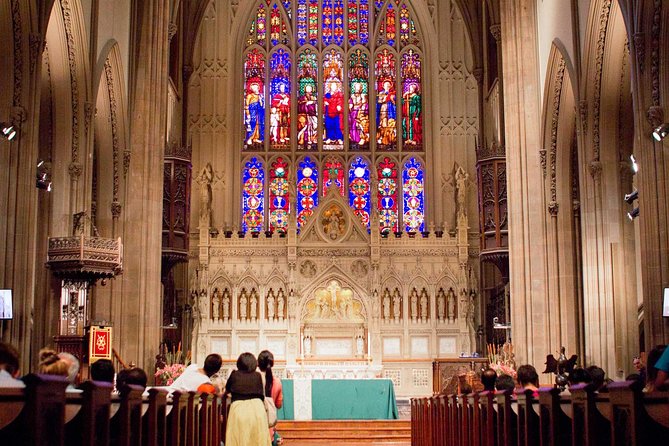
The broader context is one of the walk’s strengths. Some guides cover the history of the stock and bond markets from their early origins through major crashes, while also explaining how buildings are used today. The discussion may touch on Trinity Church, local architecture, property, or the changing tenants of the district, depending on the guide and the questions that come up.
That range makes the tour useful even if you already know the basics of the 2008 crisis. You are not simply being led from one crisis-era office to another. You are also getting an introduction to how the Financial District developed, and why it looks and functions as it does now.
The tour ends near the Federal Reserve Bank, at 33 Liberty Street. That is a sensible place to finish a walk about financial institutions, and it leaves you in Lower Manhattan, close to other major sites. The precise route and time spent at each stop may vary, but the full experience lasts about two hours.
How much the tour is worth at $59
At $59 per person, this is not the cheapest way to see Wall Street. You can walk these streets on your own and view the exteriors without paying an admission fee. What you are buying is the explanation: a guide’s financial experience, the connected story of the crisis, and a structured route through the district.
I think that can be good value if you want to understand what you are looking at. The guide’s ability to make complex subjects accessible is the most frequently praised part of the experience, and it can turn familiar names from the news into a coherent account of how the crisis unfolded. The history also extends beyond 2008, making the walk more useful than a single-event retelling.
Value depends on your interests. If you are keen on finance, markets, or recent American history, two hours with an industry insider is a focused way to learn. If you only want a photo of the bull or expect access to the exchange, the price will feel harder to justify. You can see the major exteriors without a guide, but you will miss the personal context and financial explanations.
The group size is limited to 20, which gives you a better chance to hear the guide and ask questions than you might have on a much larger walk. It is still a group tour, not a private consultation, and the pace needs to work for everyone. Some people have found the presentation can feel hurried, so ask questions when a point needs clarification rather than waiting until the end.
Want a different angle on the city?
- NYC: Empire State Building Observation Deck Tickets
★ 4.7 · 22,072 reviews - New York City: Statue of Liberty & Ellis Island with Ferry
★ 4.6 · 18,683 reviews - New York City: American Museum of Natural History Ticket
★ 4.5 · 15,447 reviews - Statue of Liberty and Ellis Island Tour: All Options
★ 5.0 · 13,571 reviews
Practical tips for a two-hour outdoor walk
The tour is mostly outside, with moderate walking and a chance to enter a few buildings. Wear comfortable shoes and check the weather before you go. In winter, dress warmly: the streets downtown can feel especially cold and windy. It is also sensible to use a restroom before meeting the group, since a bathroom stop is not guaranteed.
The meeting point is 22 Broad Street, and the tour ends near the Federal Reserve at 33 Liberty Street. Check your confirmation for the exact time and meeting instructions. The activity is offered in English, uses a mobile ticket, and is near public transportation. Most people can participate, and service animals are allowed.
Allow the full two hours in your schedule, especially if you have another timed activity afterward. The route is compact, but the guide’s explanations and questions are part of the experience. If the history interests you, you may want extra time afterward to explore the district or continue to nearby sites.
The cancellation terms are straightforward: you can cancel for a full refund up to 24 hours before the start time. Changes or cancellations made less than 24 hours ahead are not accepted for a refund.
Who should book this Wall Street tour?
I would put this tour high on the list for anyone curious about the 2008 crisis, American markets, or the history of Lower Manhattan. It is also a good fit for families with older children or teens who can follow a walking conversation. Guides have been able to hold the attention of mixed-age groups, including visitors with very different levels of interest in finance.
You do not need a finance background. The guide’s job is to translate the mechanics into a story you can follow, and the strongest guides have been described as clear, personable, and open to questions. If you already work in banking or have read widely about the crisis, you may still appreciate the setting and first-hand perspective, though the walk is designed for a general audience rather than specialists.
The tour has a 4.7 rating from 154 reviews, with 95 percent recommending it. There are also a few serious complaints, including concerns about a canceled booking being moved to a different tour and about the description not matching expectations. Confirm your tour time and the exact experience before setting out, and remember that exchange entry is not included.
Book it if you want a guided explanation of Wall Street from someone with financial-industry experience, and you are happy to spend most of two hours outdoors. Skip it if your main goal is entering the Stock Exchange or taking a quick, low-cost look at the landmarks. The best reason to go is not the buildings alone. It is hearing what happened around them, and why those events still matter.
FAQ

How long is the Financial Crisis Tour?
The walking tour lasts about two hours. The Wall Street portion takes about an hour, with additional time at the Charging Bull and Federal Hall.
Where does the tour begin and end?
It begins at 22 Broad Street, New York, NY 10005, and ends near the Federal Reserve Bank at 33 Liberty Street, New York, NY 10045.
Does the tour go inside the New York Stock Exchange?
No. The New York Stock Exchange has been closed to visitors since 2001, so the tour does not include entry.
What is included in the $59 price?
The price includes the guided walking tour of Wall Street and the Financial District, led by a guide with financial-industry experience. Entry to the New York Stock Exchange is not included.
How much walking should I expect?
A moderate amount of walking is involved. The tour is mostly outdoors, with a chance to visit inside a few buildings.
How large is the group?
The maximum group size is 20 people.
Can I cancel for a refund?
Yes. You can cancel at least 24 hours before the start time for a full refund. Cancellations or changes made less than 24 hours before the tour are not accepted.
New reviews from New York City
- 3 Hour Session at Williamsburg’s Adventure Park Area 53★ 3.5 · 6 reviews
- 3-Day Immersive Photography Workshop in New York City★ 5.0 · 5 reviews
- Midtown Manhattan: Times Square & Skyscrapers Walking Tour★ 5.0 · 18 reviews
- 3 Hour NYC Photography Workshop★ 5.0 · 45 reviews
- Central Park Pedicab Guided Tours – 1, 1.5 & 2Hrs★ 5.0 · 24 reviews
- Central Park Private Pedicab Tour (2hrs)★ 5.0 · 37 reviews
- Niagara Falls, Toronto and 1000 Islands, 3 Day Tour from NYC★ 4.5 · 114 reviews
- New York Day Sail to the Statue of Liberty on Schooner America★ 5.0 · 66 reviews
New York City Tours, compared.


Empire State Building Tickets – Observatory & Museum
Read our review →
Empire State Building Observation Deck Tickets
Read our review →

Statue of Liberty and Ellis Island Tour: All Options
Read our review →