Reviewed · NEW YORK CITY TOURS
Financial Crisis Tour
Wall Street is more than a row of imposing buildings: it is the setting for decisions that helped trigger the 2008 global financial crisis. On this two-hour walk, a guide with Wall Street experience explains the crash alongside the history and landmarks of Lower Manhattan.
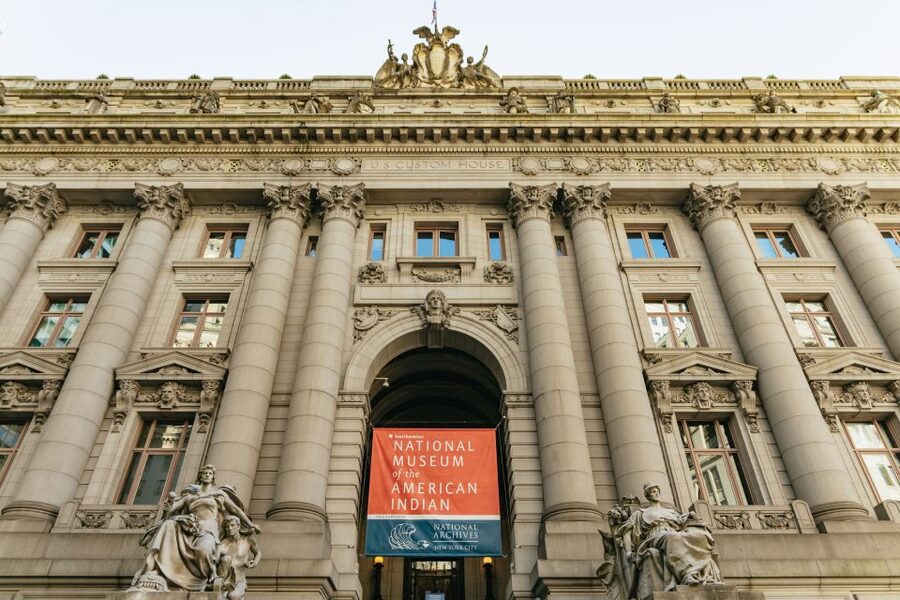
I like that the tour ties financial events to specific places, and that it includes more than crisis talk: you also see Federal Hall, Stone Street, Trinity Church, and the Charging Bull. A guide’s storytelling can make a complicated subject click; past guides such as Jared, James, and Tom have been praised for clear explanations and humor.
The main consideration is that this is an outdoor walking tour, so weather matters, and you cannot go inside the New York Stock Exchange. The subject can also get technical, so it may suit curious teens and adults better than younger children.
- The 2008 crash gets a street-level explanation: Hear about the crisis, its causes, and its aftermath in the district where financial decisions were made.
- The landmarks add context: Stops include the Stock Exchange, Federal Hall, Stone Street, Trinity Church, and Charging Bull.
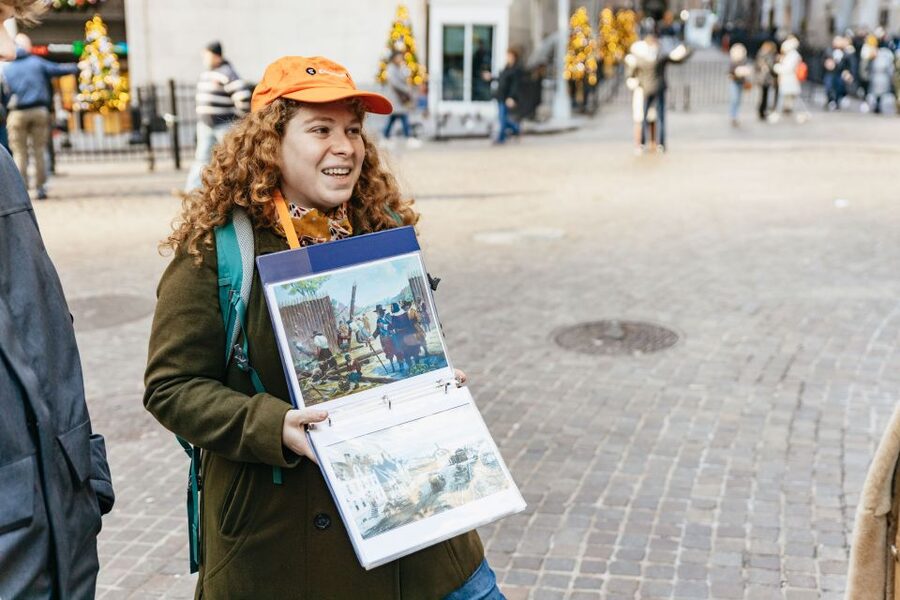
- You meet at 22 Broad Street: Look for your guide in an orange hat, outside Blue Bottle Coffee.
- The tour lasts two hours: At $59 per person, it combines financial history with a guided walk through Lower Manhattan.
- The Stock Exchange is not open to visitors: Expect to see it from outside, not tour its trading floor.
- Come ready for the weather: The tour runs outdoors in all conditions, and downtown can be windy.
Wall Street’s crisis story, told on its own ground
The value of this tour is not only in learning what happened in 2008. It is in connecting the crisis to the institutions and streets around you. The guide brings an insider’s perspective to a subject that can otherwise feel like a chain of unfamiliar terms, company names, and headlines.
Expect to hear about the collapse of major financial institutions, the decisions that helped set the crisis in motion, and the fortunes some traders made during the turmoil. The walk is designed to explain the story in place, while giving you a broader look at the history of Lower Manhattan and the architecture of its financial district.
That pairing is useful. If you have read about the crash but still find the causes hard to connect, a guide can put the pieces into a sequence and explain how the events unfolded. If your interest is more general, the landmarks and neighborhood history give the walk another layer beyond economics.
The guide makes a real difference. Past tours have been led by people named Jared, James, Peter, Tom, and Emily, among others, but you cannot request or count on a particular person. The most useful qualities to look for are a clear storyteller and someone who can make technical material understandable. Accounts of guides who used anecdotes, humor, and questions from the group suggest the format can be lively rather than lecture-like.
Starting at 22 Broad Street
Meet in front of Blue Bottle Coffee at 22 Broad Street, across from 15 Broad Street. This is only a street-side meeting point, not a place to enter. Your guide will be out front wearing an orange hat, so arrive about ten minutes before departure and keep an eye out.
The starting point puts you in the middle of the district before the tour even begins. Broad Street is close to the New York Stock Exchange and Wall Street, so the first few stops quickly establish the setting for the financial story.
The tour is in English and lasts two hours. It is a walking tour, and transportation is not included. Plan your route to and from the meeting point separately, especially if you are fitting the walk into a day with timed plans elsewhere.
More tours and experiences in New York City:
- NYC: SUMMIT One Vanderbilt Tickets
★ 4.7 · 51,195 reviews - NYC: 9/11 Memorial & Museum Timed-Entry Ticket
★ 4.8 · 31,428 reviews - NYC: Empire State Building Tickets – Observatory & Museum
★ 4.7 · 25,757 reviews
The New York Stock Exchange and Wall Street
The New York Stock Exchange is one of the most recognizable buildings in the area and a natural place to begin talking about the institutions that shaped American finance. You can take a photo and see the exterior, but the exchange is closed to visitors. This is a street-level look, not an indoor tour or a chance to watch trading.
That limitation is worth knowing before you book. If your main goal is to enter the Stock Exchange, this walk will not meet it. If you want to understand its place in the district and hear how the wider financial system operates, the outside view is part of a broader route.
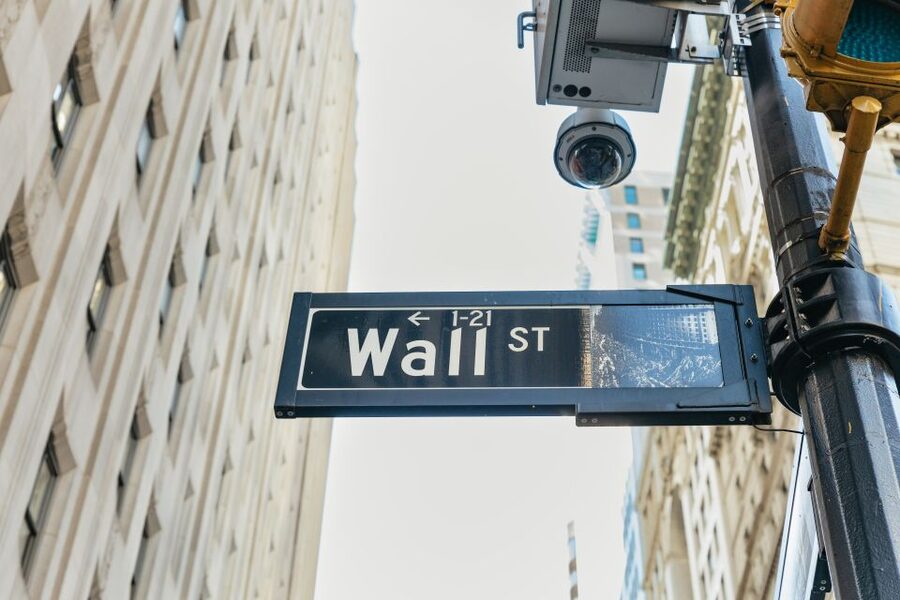
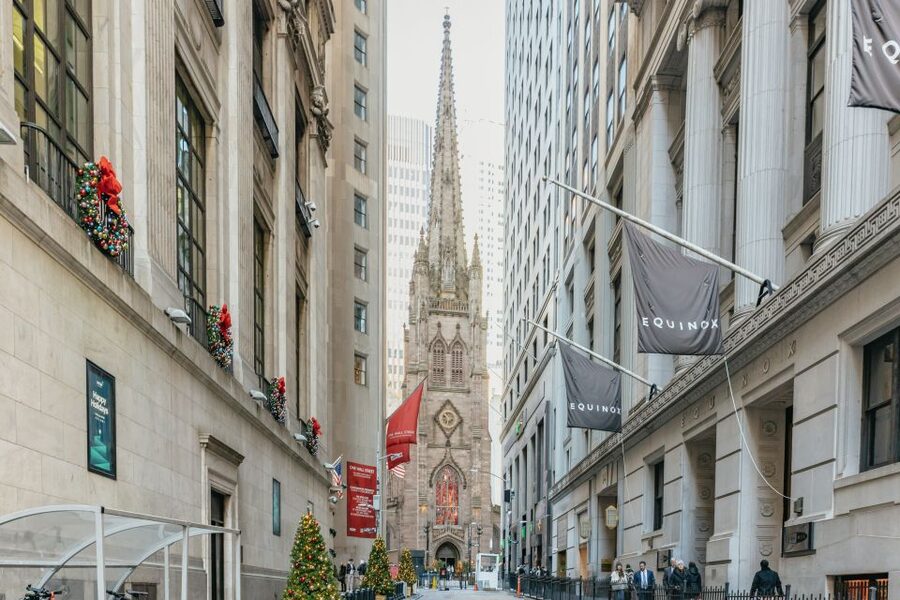
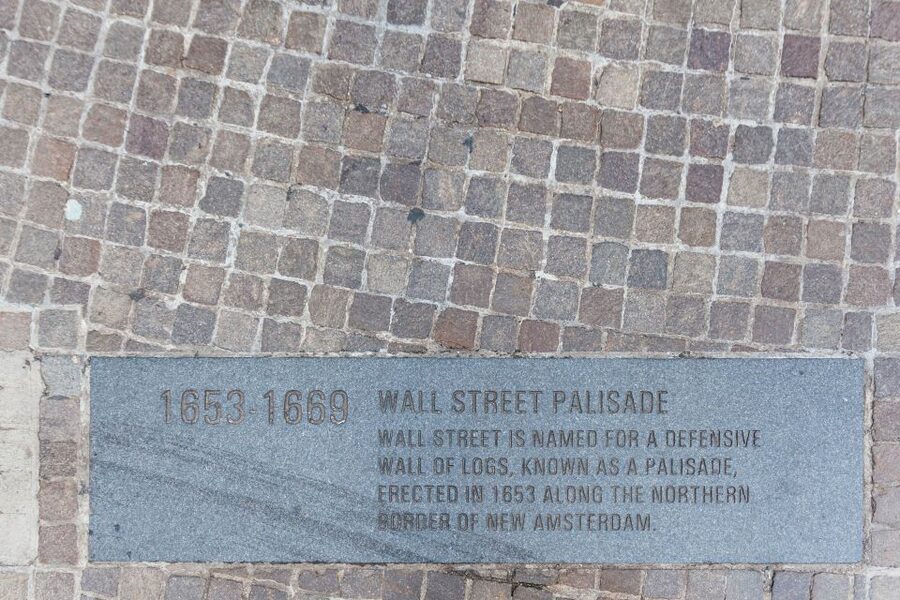
On Wall Street itself, the guide connects the name everyone knows with the people and decisions behind the 2008 crisis. This is where the tour can move from abstract terms to a sense of place. You are walking through the financial district while hearing about the institutions that rose, struggled, or collapsed during the crisis, including Lehman Brothers.
The tour also points out buildings and architectural features that define the area. Pay attention to the contrast between the district’s historic façades and its continuing role in global finance. The walk does not promise access to private offices or trading rooms, but the setting helps make the subject feel less remote.
Federal Hall and the story around the market
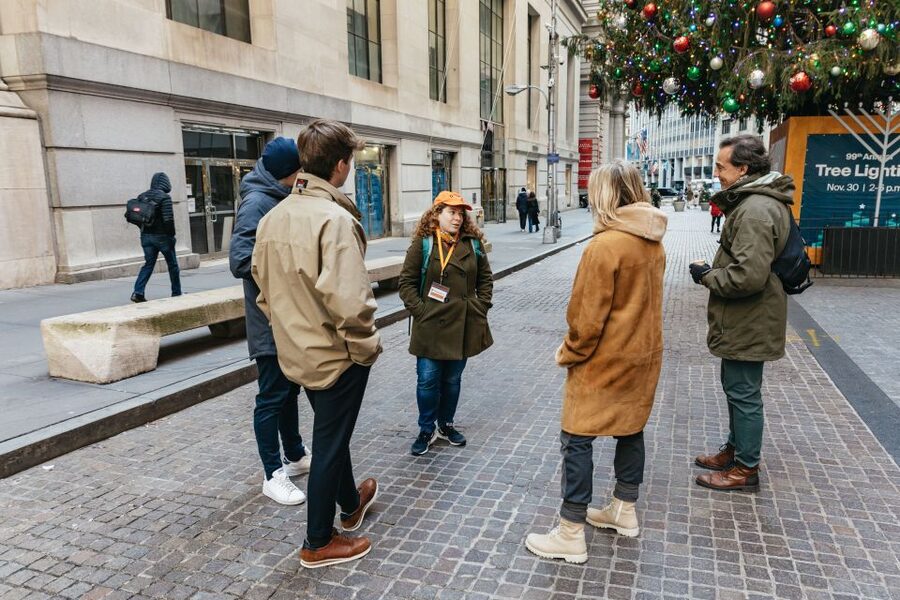
Federal Hall offers a different angle from the exchange. It is a major landmark on the route, with time for a photo and a look at its place in Lower Manhattan. Here, the guide can widen the conversation from financial firms to the longer history of the area.
The tour is strongest when it uses each stop to connect two threads: the history of downtown and the financial events that changed it. You do not need to be an economist to follow the basic story, but the subject can become technical at points. If you like asking questions, use the walk to clarify terms rather than letting them pile up.
Federal Hall is also a reminder that this part of New York has served many purposes over time. The walk is not a full architectural tour, yet the buildings help you read the district as more than a business address.
Stone Street, Trinity Church, and the neighborhood between the headlines
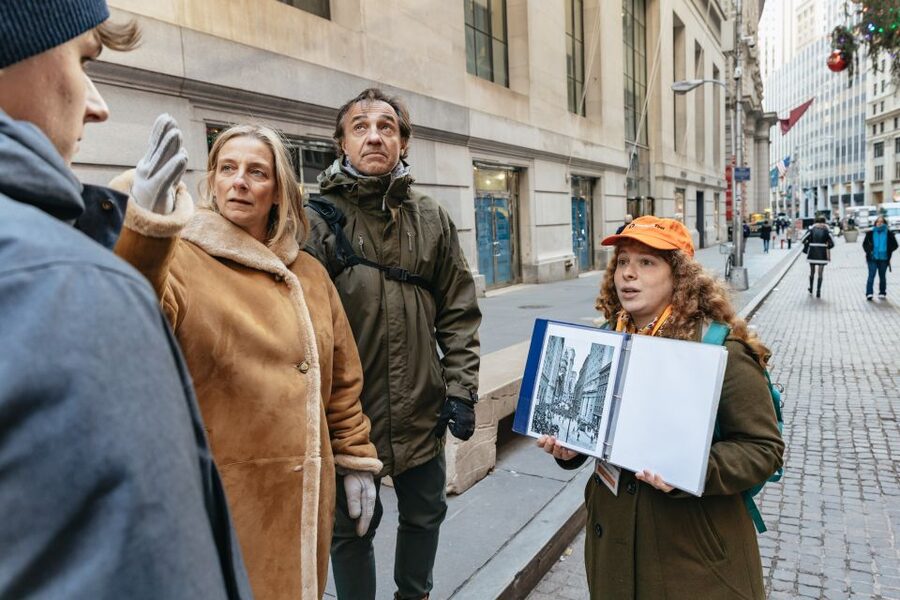
Stone Street Historic District brings a change of pace. Its historic character offers a welcome contrast to the financial institutions and broad avenues nearby. The guide includes a stop here for sightseeing and local history, giving you a chance to see how the district’s older streets fit into the larger story of Lower Manhattan.
Trinity Church adds another landmark to the route. It is a photo stop rather than a promised interior visit, so treat it as an exterior look and a chance to take in the surrounding area. Together, Stone Street and Trinity Church give the tour a broader frame: Wall Street is not just a stage for modern finance, but part of a much older neighborhood.
One stop in the listed route is not identified by name. The guide may provide more context as the walk unfolds, but you should not plan around a specific attraction there. The route’s value lies in the mix of named landmarks, street-level context, and the guide’s explanation.
Want a different angle on the city?
- NYC: Empire State Building Observation Deck Tickets
★ 4.7 · 22,072 reviews - New York City: Statue of Liberty & Ellis Island with Ferry
★ 4.6 · 18,683 reviews - New York City: American Museum of Natural History Ticket
★ 4.5 · 15,447 reviews - Statue of Liberty and Ellis Island Tour: All Options
★ 5.0 · 13,571 reviews
Charging Bull and the crowds
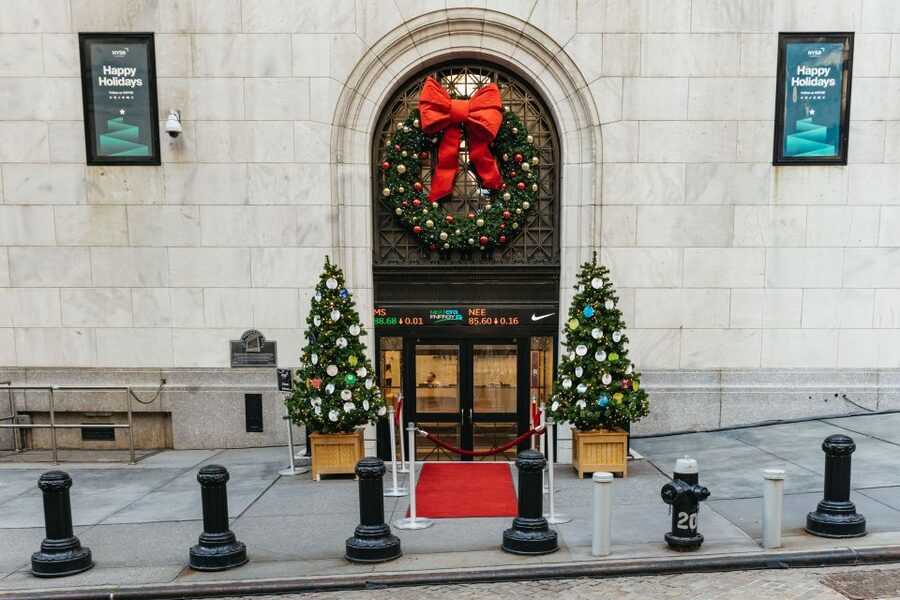
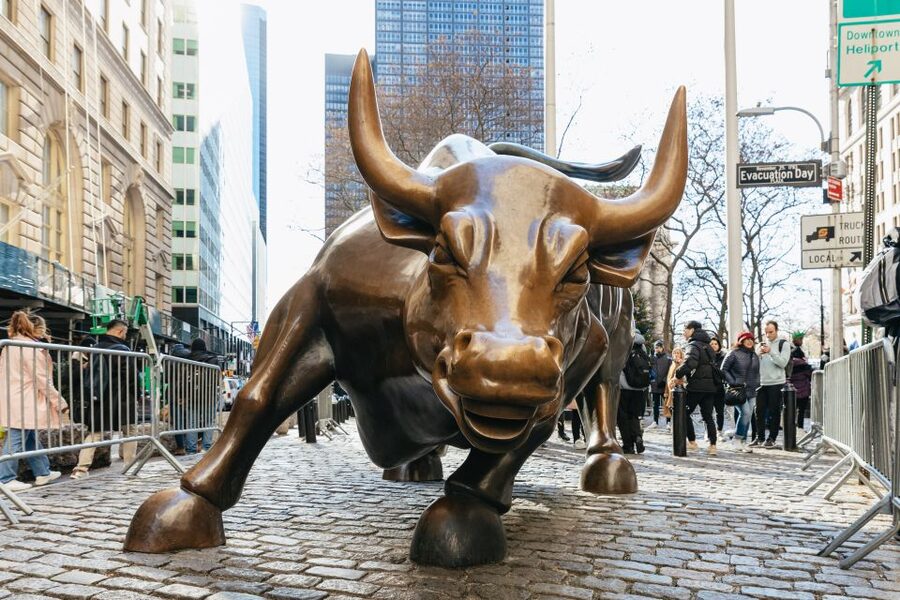
Charging Bull is the most familiar photo stop on the walk. The statue attracts plenty of attention, so do not expect a quiet, private photo moment during a regular tour. One useful tip: if you want a picture with fewer people in the background, visit independently after an early breakfast.
The bull is a good place to pause and consider the public image of Wall Street. The statue is a popular symbol, but the tour’s subject is more complicated than a photo stop: financial risk, institutional failure, and the effect of the 2008 crisis on markets and people. The guide’s account helps put the familiar landmark in perspective.
The guide also points out the site of a much earlier attack in Lower Manhattan, involving a homemade bomb carried by horse and cart. That detail adds another layer to the district’s history and shows how the streets have witnessed events well beyond finance.
The final stop and getting around
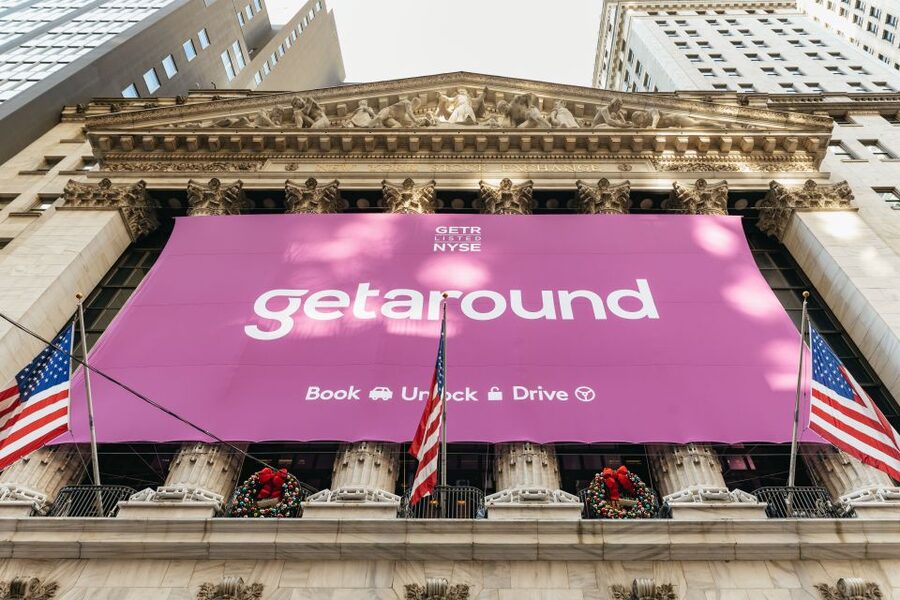
The walk concludes with drop-off locations at the Federal Reserve Bank of New York, at 36 Liberty Street, and at 2 drop-off points. The Federal Reserve stop is a fitting close to a tour about financial institutions, though the information provided does not promise entry into the building.
Since transportation is not included, you will need to handle your own onward travel. Allow a little breathing room after the two-hour walk if you have a reservation or a timed activity. The tour is outdoors and runs in all weather, so comfortable walking shoes and weather-appropriate clothing are sensible. Downtown Manhattan can be particularly windy, even when the rest of the city feels calm.
Is $59 fair value for two hours?
At $59 per person, this is a specialist walking tour rather than a general sightseeing loop. The price makes the most sense if you want a guide to explain the financial crisis and connect it to the places where the story unfolded. You are paying for interpretation and local context, not admission to the Stock Exchange or transportation around the city.
The tour also covers several kinds of history in one outing: the crash, major financial players, Lower Manhattan’s landmarks, and the district’s older streets. If you would otherwise spend time trying to piece the 2008 story together from plaques and online reading, having a guide organize the events can be worthwhile.
The group size is not specified as a fixed limit. Some past walks have been small, including one group of about eight to ten people, but you should not assume every departure will be that size. A small group can make it easier to hear and ask questions; if the group is larger, the outdoor setting and pace may affect how easily you can engage.
The tour has a 4.7 rating based on 68 reviews. Positive comments often center on clear storytelling, strong subject knowledge, and the way guides make the crash easier to understand. One person found the material a little too technical at times, and a parent felt the walk ran long for a tween. Those are useful cautions if you are booking for someone who prefers light sightseeing over detailed discussion.
Who will get the most from this walk?
I would choose this tour if you are interested in markets, business, recent history, or the mechanics of the 2008 crisis. It is also a good fit if you want a more substantial explanation of the Financial District than you would get from simply taking photos and moving on.
You do not need a finance background, but curiosity helps. If you are completely new to the subject, you may want to arrive ready to ask for plain-language explanations when the details become dense. If you already follow financial news, the insider perspective and landmark stops can help you connect familiar names and events to the streets around you.
For families, think about attention span and interest. A tween who is keen on financial markets may enjoy it, while a child expecting a fast-paced attraction could find two hours of walking and discussion too long. The route has photo stops, but its main draw is the explanation, not entertainment built around activities.
Should you book the Financial Crisis Tour?
Book it if you want to understand the 2008 crash in the place where Wall Street’s financial story is visible all around you. The strongest reason to go is the guide: clear, engaging storytelling can make a complicated subject understandable while adding the district’s older history along the way.
Skip it if you mainly want indoor access to the New York Stock Exchange, a ride between sights, or a quick photo tour. For everyone else, the mix of financial history and Lower Manhattan landmarks makes the two hours a practical way to see the district with a sharper sense of what happened here and why it mattered.
FAQ
How long is the Financial Crisis Tour?
The walk lasts two hours.
How much does the tour cost?
The listed price is $59 per person.
Where do I meet the guide?
Meet at 22 Broad Street, in front of Blue Bottle Coffee and across from 15 Broad Street. Do not go inside a building. Your guide will be outside wearing an orange hat.
Is the New York Stock Exchange open during the tour?
No. The New York Stock Exchange is closed to visitors, so you see it from outside.
What language is the tour in?
The live tour guide speaks English.
Does the tour run in bad weather?
Yes. It runs regardless of weather and takes place outdoors. Dress for the conditions, and remember that downtown Manhattan can be particularly windy.
New reviews from New York City
- 3 Hour Session at Williamsburg’s Adventure Park Area 53★ 3.5 · 6 reviews
- 3-Day Immersive Photography Workshop in New York City★ 5.0 · 5 reviews
- Midtown Manhattan: Times Square & Skyscrapers Walking Tour★ 5.0 · 18 reviews
- 3 Hour NYC Photography Workshop★ 5.0 · 45 reviews
- Niagara Falls, Toronto and 1000 Islands, 3 Day Tour from NYC★ 4.5 · 114 reviews
- Central Park Pedicab Guided Tours – 1, 1.5 & 2Hrs★ 5.0 · 24 reviews
- Central Park Private Pedicab Tour (2hrs)★ 5.0 · 37 reviews
- New York Day Sail to the Statue of Liberty on Schooner America★ 5.0 · 66 reviews
New York City Tours, compared.

Empire State Building Tickets – Observatory & Museum
Read our review →
Empire State Building Observation Deck Tickets
Read our review →

Statue of Liberty and Ellis Island Tour: All Options
Read our review →