
Reviewed · WALL STREET TOURS
How Money Was Made Wall Street Walking Tour
Wall Street makes more sense when you know what came before the stock tickers. This two-hour walk links the district’s money-making landmarks to the city’s early trade, immigration, and government, so you get more than a quick photo at the Charging Bull.
I like two things in particular: the compact route fits neatly between other New York plans, and the guides can give the buildings real context. Jess brings a perspective shaped by work as an SEC lawyer, while Maia has been praised for clear speaking, memorable stories, and making room for questions.
The main limitation is access. You see the NYSE, Federal Reserve, Fraunces Tavern, and other sites from outside, so this is a street-level history lesson, not a tour of trading floors or gold vaults. You should also be comfortable walking and standing for about two hours.
Key points to know before you book
- The route connects old and new money: Start at Bowling Green and finish near Trinity Church, passing sites tied to trade, government, and finance.
- Guides shape the experience: Jess’s background as an SEC lawyer can add a modern financial angle; Maia is known for clear delivery and thoughtful answers.
- The $49 price buys interpretation, not admission: The main sights are viewed from the street, and the NYSE is not entered.
- Expect a short but steady walk: The tour lasts about two hours, with a maximum group size of 30.
- There is more here than Wall Street: Bowling Green, Battery Park, the Custom House, and Fraunces Tavern bring in the city’s earlier story.
- The finish is meaningful: Trinity Church is identified as New York City’s oldest congregation and is the burial place of Alexander Hamilton.
From Bowling Green to the story of American finance
The tour begins at 1 Bowling Green, a useful spot for understanding that Lower Manhattan’s financial identity did not appear overnight. This area once served as a center for trade and civic life, and the walk follows that thread through parks, historic buildings, and the modern finance district.
The route ends at Trinity Church, at 89 Broadway. Over roughly two hours, you cover several closely grouped landmarks, with the guide supplying the links that a quick walk on your own might miss. The schedule gives about 35 minutes to Wall Street itself, the longest stop, and shorter blocks to sites such as the Charging Bull and the Federal Reserve.
That balance suits you if you want a focused introduction rather than a full-day history tour. The group can include up to 30 people, so you may not have a private guide’s constant attention. One useful sign of a good fit is the guide’s ability to speak clearly to the whole group. Maia has been singled out for doing just that, without relying on headphones.
More Financial District tours in New York City:
- NYC City Tour: Statue of Liberty, 9/11 Memorial, Wall Street
★ 4.5 · 2,059 reviews - Wall Street Insider Tour with a Finance Professional
★ 4.5 · 660 reviews - Wall Street Insider Tour with a Finance Professional
★ 4.5 · 571 reviews
The Custom House and Bowling Green set the scene
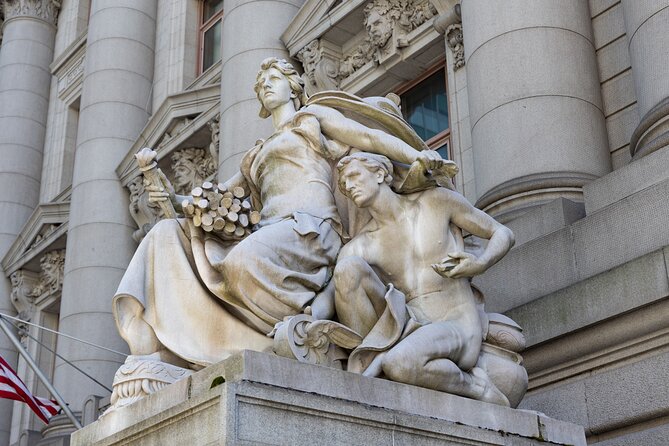
The first stop is the Alexander Hamilton Custom House, which houses the National Museum of the American Indian. The tour visits the exterior, not the museum galleries. Built in 1907, the Beaux-Arts building tells its own story about trade and commerce, while its three floors of art and artifacts are dedicated to Native Americans.
That distinction matters when planning. You can appreciate the architecture and hear about the building’s role in the city, but you should not expect time inside or museum admission as part of the walk. If the collections interest you, consider returning separately; the tour’s ten-minute stop is not designed for a museum visit.
At Bowling Green, the guide has 20 minutes to explain the park’s changing uses. The Dutch called the area the Plain, and it served at different times as a parade ground, meeting place, and cattle market. It is New York City’s oldest park, but the value of the stop is not just its age. It helps you picture the area as a working public space before modern finance claimed the neighborhood’s identity.
The tour includes the Custom House and Bowling Green Park. Those two stops give the route an important grounding: Wall Street’s story begins in a city shaped by commerce and public life, not simply by banks.
Battery Park links trade, defense, and immigration
The walk continues to Battery Park, where you spend about 15 minutes. The park has served recreational, defensive, and immigration-related roles over more than two centuries. That range broadens the tour beyond the business district and shows how the waterfront has been tied to the city’s changing needs.
The Netherland Monument is included here. It gives the guide a chance to connect the area to New York’s Dutch past, although the supplied details do not specify a separate visit length or an extended stop at the monument. Treat it as one piece of the Battery Park story rather than a stand-alone attraction.
Battery Park also gives the tour a change of pace from the tighter streets around Wall Street. Still, this is a walking tour, not a park outing. You have a limited time at each location, and the guide’s role is to explain how the place fits into the larger account of New York’s growth.
The Charging Bull is a symbol, not the whole story
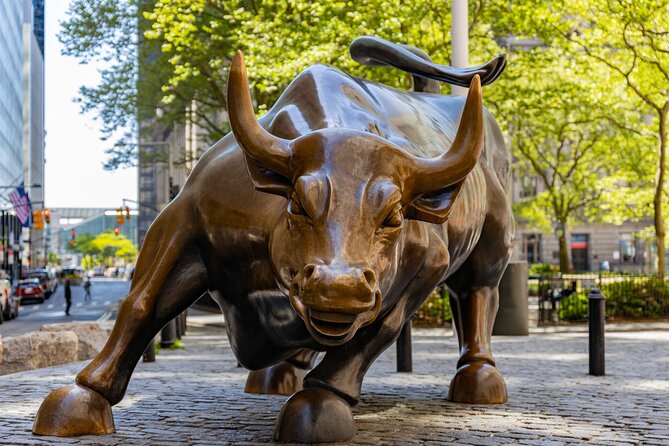
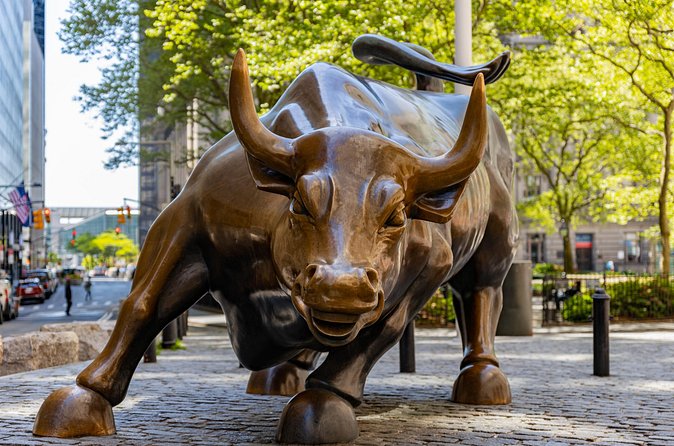
The Charging Bull gets about ten minutes. Its message is easy to read: strength, resilience, and the staying power of Wall Street. The stop offers a familiar visual marker, but the better reason to pause is the chance to hear how the symbol came to represent a financial district with a much longer and more complicated past.
Do not expect the bull alone to explain the workings of American finance. It is an emblem, not a lesson in markets. The guide’s interpretation is what makes the stop useful, especially if you have seen the statue before and want to understand why it has become so closely linked to the neighborhood.
The time is brief, which is sensible. This is one element in a route with several historic sites, not the main event. You can enjoy the landmark without letting the photo opportunity swallow the rest of the tour.
More walking tours in New York City:
- SoHo, Little Italy, and Chinatown Walking Tour in New York
★ 5.0 · 3,153 reviews - Secrets of Grand Central Station Walking Tour New York City
★ 5.0 · 1,796 reviews - Greenwich Village Walking and Food Tasting Tour
★ 5.0 · 1,572 reviews - Artistic, Alternative Greenwich Village Walking Tour
★ 5.0 · 971 reviews
Fraunces Tavern brings the early republic into view

Fraunces Tavern is an exterior stop of about 15 minutes. Its history connects the district to the period when the United States was taking shape: the building served at different points as George Washington’s headquarters, a site for peace negotiations with the British, and a home for federal offices in the Early Republic.
That makes it a useful counterweight to the tour’s modern financial focus. The country’s political story and its economic story developed alongside each other, and this stop helps make that connection concrete. You are not going inside the tavern museum, and admission is not included, so plan another visit if you want to explore the interior.
A guide who leaves room for questions can add value here. Maia has been praised for giving people time to ask and for keeping her voice clear across the full two hours. That kind of pacing is especially helpful when a tour moves between buildings whose significance may not be obvious from the sidewalk.
Wall Street puts the landmarks in one frame
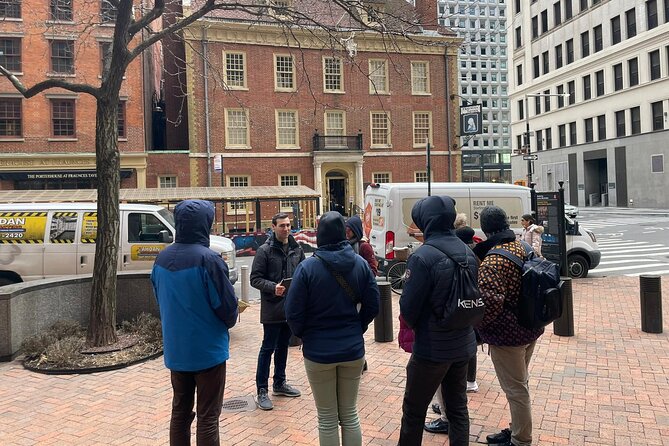
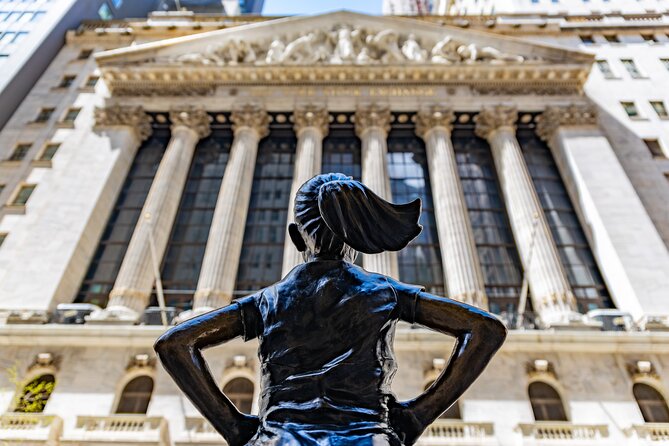
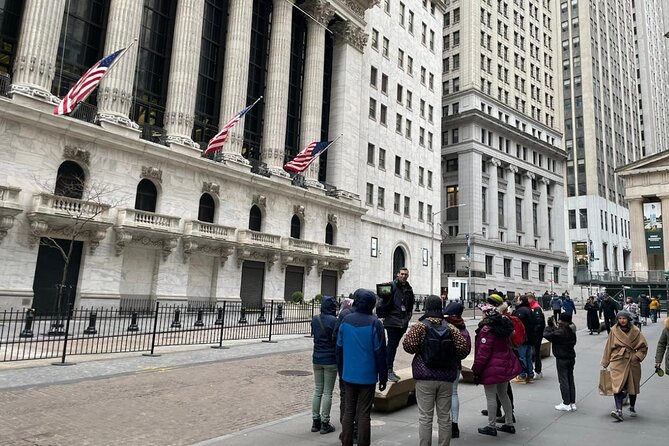
The Wall Street segment takes about 35 minutes and brings together some of the best-known sites: the New York Stock Exchange, Federal Hall, Trinity Church, and the JP Morgan Building. All are viewed from outside. The NYSE is not entered, and the tour does not include access to its trading floor or interior.
This is the heart of the walk for anyone interested in politics and economics. Federal Hall connects the street to the early national government, while the NYSE and JP Morgan Building point toward the institutions and businesses that helped shape the financial district. Trinity Church adds a religious and civic landmark to the mix.
I like that this stop gives you time to look around instead of simply ticking off a string of photo stops. The buildings are close enough to make the area legible on foot, but their meaning can blur together without a guide. Jess’s background as an SEC lawyer is a distinctive advantage if he leads your tour: he can bring a working understanding of financial regulation to a place that is often reduced to a movie set or a bull statue.
That said, no particular guide is guaranteed. Jess and Maia are examples of guides associated with the tour, not a promise of who will lead your departure. The experience will depend in part on your guide’s approach and the questions your group brings.
The Federal Reserve is a powerful sight from the sidewalk
The Federal Reserve Bank of New York gets about ten minutes, and the stop is exterior-only. Beneath the building are highly secured vaults holding the largest reserve of foreign-held gold bullion. You will not go underground or see the vaults, but knowing what lies below gives the building a striking role in the financial story.
This is a good example of the tour’s limits and strengths working together. You see the institution from the outside, rather than gaining special access. The guide can explain why the building matters, but you should not book expecting a vault visit or a behind-the-scenes look at the Fed.
The stop is short, which suits the overall pace. It adds a modern global-finance angle after the earlier references to trade, government, and New York’s growth.
Trinity Church makes a fitting end

The tour ends at Trinity Church, described as the oldest congregation in New York City. It is also the burial place of Alexander Hamilton, a central figure in the development of the country’s financial system. The church’s connection to Hamilton gives the final stop a strong link back to the Custom House at the start.
The endpoint is at 89 Broadway, so you finish in the same broad area as the tour’s Wall Street sights. You can stay nearby afterward or make your own plans to visit the church, but the tour itself does not specify an interior visit. The most useful takeaway is the way Hamilton’s legacy ties early American political choices to the financial system that grew around them.
Is $49 a fair price for two hours?
At $49 per person, this is not the cheapest way to walk around Lower Manhattan. You can see many of the exteriors on your own, and the parks listed are free. The value comes from having a licensed guide organize the route and explain how the sites connect, rather than from included tickets or privileged entry.
That makes the price more worthwhile if you care about politics, economics, or New York history and want a brisk introduction. A guide with relevant experience can turn a row of impressive buildings into a coherent story. Jess’s SEC background is a notable example, while Maia’s clear delivery and willingness to answer questions point to the kind of practical teaching that makes two hours feel well spent.
If you mainly want access to interiors, this is weaker value. The NYSE, Custom House museum, Fraunces Tavern, and Federal Reserve are not entered as part of the tour. You are paying for explanation and a structured walk, not admission.
The tour is offered in English, uses a mobile ticket, and is booked on average 16 days ahead. A maximum of 30 people keeps the group from becoming enormous, though it is still a group walk rather than a private tour. The stated fitness level is moderate, so wear comfortable shoes and be ready to walk and stand for much of the two hours.
You can cancel for a full refund up to 24 hours before the start time. Cancellations or changes inside that window are not accepted, and the tour requires a minimum number of participants. If it is canceled because that minimum is not met, you are offered another date or experience, or a full refund.
Should you book the Wall Street walk?
Book it if you want a compact, guide-led introduction to the forces that shaped Lower Manhattan, especially if finance and politics interest you. Its best feature is the connection between old civic sites and modern financial institutions, supported by guides who can bring different expertise to the subject.
Skip it if your priority is going inside the NYSE, Federal Reserve, or historic buildings, or if you prefer to explore at your own pace. For a two-hour overview that fits a busy New York schedule, $49 is reasonable when you value context more than entry tickets.
FAQ
How long is the How Money Was Made Wall Street Walking Tour?
The tour lasts approximately two hours.
How much does the tour cost?
The listed price is $49 per person.
Where does the tour start?
It starts at 1 Bowling Green, New York, NY 10004.
Where does the tour end?
It ends at Trinity Church, 89 Broadway, New York, NY 10006.
Is the tour offered in English?
Yes. English is the listed tour language.
Does the tour include entry to the New York Stock Exchange?
No. The NYSE is visited from outside, and entry is not included.
Is museum admission included at the Alexander Hamilton Custom House?
No. The stop is an exterior visit, and admission is not included.
What is the maximum group size?
The tour has a maximum of 30 participants.
Are service animals allowed?
Yes. Service animals are allowed.
What is the cancellation policy?
You can cancel at least 24 hours before the tour’s start time for a full refund. Cancellations or changes made less than 24 hours before the start time are not accepted.
New reviews from New York City
- Hudson Valley Craft Brewery Bike Tour★ 5.0 · 23 reviews
- Harlem Heritage Holiday Tour★ 4.5 · 24 reviews
- Harlem Renaissance Multimedia Walking Tour★ 4.5 · 51 reviews
- All-Garden Pass for the New York Botanical Garden★ 4.5 · 59 reviews
- Hard Rock Cafe Yankee Stadium★ 4.5 · 13 reviews
- NYC: Abstract Painting with Palette Knives – Small Group★ 5.0 · 7 reviews
- NYC: Central Park Guided Walking Tour English-Spanish★ 5.0 · 6 reviews
- Niagara Falls Tour from New York City★ 3.9 · 7 reviews
Wall Street Tours, compared.

NYC City Tour: Statue of Liberty, 9/11 Memorial, Wall Street
Read our review →
Wall Street Insider Tour with a Finance Professional
Read our review →
Manhattan Group Tour Including Wall Street and 911 Memorial
Read our review →
Wall Street Tour with 9/11 Memorial and Statue Ferry
Read our review →
Wall Street and Financial District Walking Tour
Read our review →
Lower Manhattan Tour: Wall Street & 9/11 Memorial
Read our review →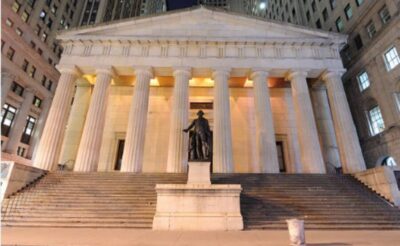
9/11 Memorial and Financial District Walking Tour
Read our review →Browse the lists this tour appears in