
Reviewed · NYC MUSEUM TOURS
New York City: The Bible at the Metropolitan Museum of Art
At the Met, biblical stories sit alongside the art and objects of the ancient worlds that shaped them. This two-hour tour connects Egyptian, Greek, and Roman collections with the Bible, then follows the Bible’s influence into later paintings.
I like the mix of archaeology and art, which gives you more than a parade of religious pictures. I also like that the tour can be non-sectarian, with context for visitors of faith and those simply curious about history.
The main trade-off is time: two hours can introduce the collection, but it cannot cover the Met’s vast holdings in depth. Wear comfortable shoes, bring water, and plan to return to favorite rooms afterward.
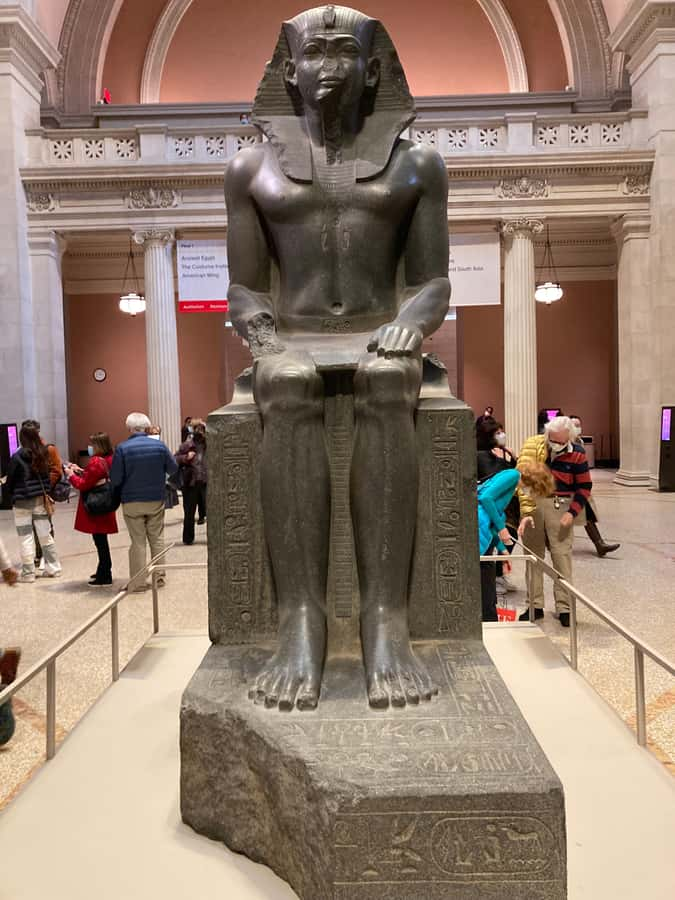
- Start at the Pharaoh statue: Meet in the Met’s Great Hall, at the museum entrance.
- Connect objects to scripture: A brochure links selected artifacts with Bible passages.
- Move across ancient cultures: The tour visits Egyptian, Greek, and Roman sections.
- Follow the Bible into art: See how painters across later centuries pictured biblical subjects.
- Keep exploring afterward: Your ticket is good for the remaining part of the day.
- Expect a personal, flexible pace: Guide Mel Lehman has been praised for answering questions and adjusting breaks.
The Met’s Great Hall sets the scene
The meeting point is the statue of a pharaoh in the Great Hall, a useful landmark inside one of New York’s largest museums. Arrive with enough time to find the entrance and get settled. The tour lasts two hours, and the meeting point is specific, so do not leave locating it until the last minute.
From there, the central idea is clear: the Bible is not treated as a book sealed off from the wider ancient world. Its stories and traditions emerged amid neighboring cultures, and the Met’s Egyptian, Greek, and Roman collections offer objects and visual clues that help put those connections in view.
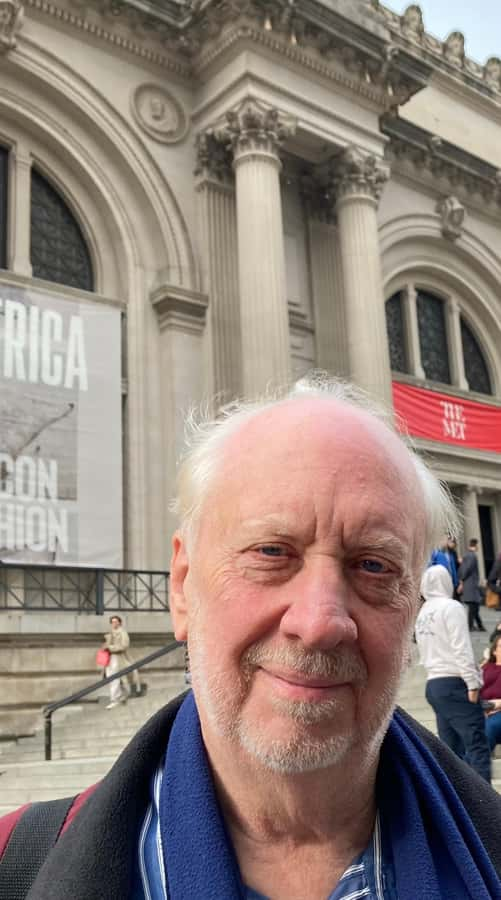
The tour is led in English. Mel Lehman is named as a guide who has led it, and the experience he provides is a major part of its appeal. His approach has been described as warm, humorous, and open to questions. That matters in a museum tour: a good guide can help you notice details that a wall label may not explain, while making room for the questions you bring.
Egyptian objects and the story of Exodus
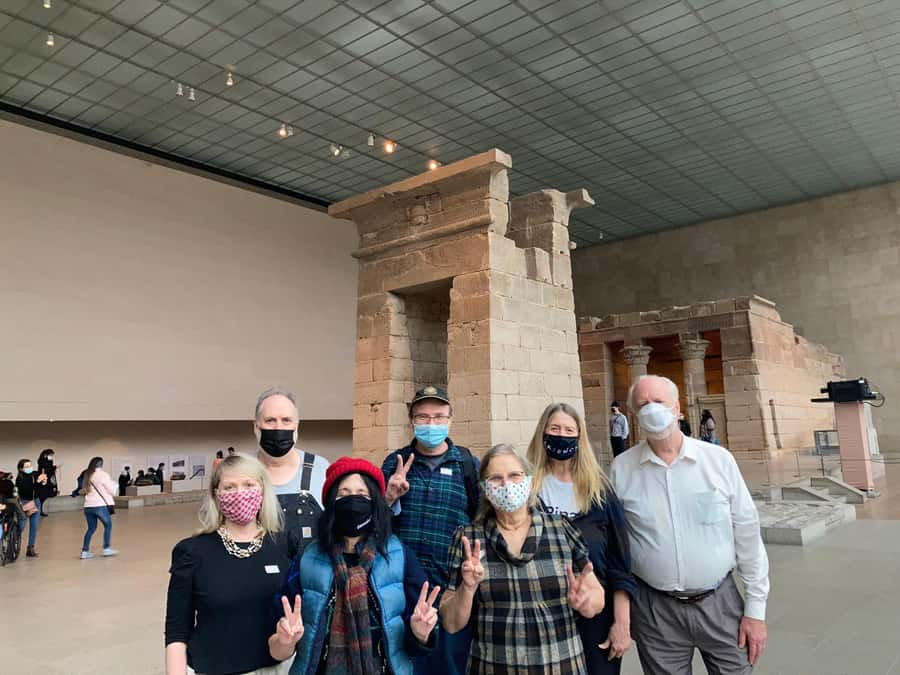
The Egyptian section is a natural early stop. Ancient Egypt has a central place in the biblical story of the Exodus, and the tour uses that connection to frame a larger idea: the story’s concern with human dignity and freedom. You are looking at objects from an actual ancient civilization, not simply illustrations of a sacred text.
That distinction makes the archaeology valuable. An artifact can offer context about the people and cultures that lived in the biblical world, even when it cannot prove every detail of a religious narrative. The tour is presented for people of faith and of no faith, so you can consider the historical and cultural links without being asked to adopt a particular interpretation.
A brochure connecting objects with Bible passages helps carry the conversation from the gallery into the text. It is a practical aid if you want to revisit a particular object later, or follow up on a passage after the tour. The guide can add context beyond the museum labels, while the written references give you something concrete to take away.
More museum visits in New York City:
- NYC: 9/11 Memorial & Museum Timed-Entry Ticket
★ 4.8 · 31,428 reviews - NYC: Empire State Building Tickets – Observatory & Museum
★ 4.7 · 25,757 reviews - New York City: American Museum of Natural History Ticket
★ 4.5 · 15,447 reviews
Greek and Roman galleries widen the picture
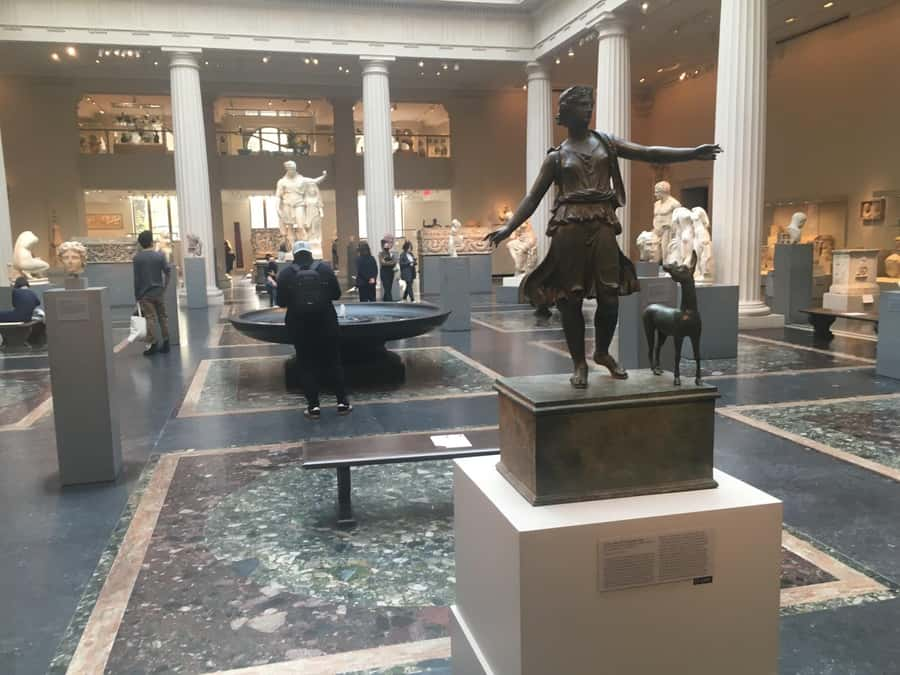
The tour also visits ancient Greek and Roman collections, cultures that play important parts in the Bible’s wider setting. The benefit is not just seeing more old objects. It is understanding that biblical history unfolded in a region shaped by neighboring peoples, ideas, and powers.
Expect the guide to draw links between the objects and the biblical world rather than present every gallery as an isolated stop. That makes the experience more like a guided thread through the museum than a general tour of its ancient collections. If you have a question about a connection, this is a good time to ask it.
There is a limit, of course. Two hours cannot do justice to every part of the Egyptian, Greek, or Roman holdings, and the tour’s focus means you may pass other objects that catch your eye. Think of this as a themed introduction, not a complete tour of the Met. If an artifact or room grabs you, your ticket lets you stay at the museum for the rest of the day and explore further.
Paintings show how biblical stories changed in art
The tour moves beyond archaeology to art inspired by the Bible. Here the subject is not only what a biblical story says, but how artists in later centuries chose to picture it. Those images can reflect the concerns and visual conventions of their own times, giving you another way to think about how the Bible has been understood.
The supplied details do not name particular paintings, so it is best to approach this portion with an open mind rather than arrive expecting a specific masterpiece. The promise is broader: to see work by some of the world’s great painters and consider the Bible’s influence on their art.
This change of pace is one of the tour’s strengths. Ancient objects help establish cultural context; paintings show how later generations kept returning to biblical stories and reshaping them through art. If you are more interested in painting than archaeology, you still get a substantial reason to come. If you are mainly interested in history, the art gives you a different kind of evidence: not proof of events, but a record of how people represented and interpreted them.
A guide who makes room for questions
The guide’s manner can shape the experience as much as the subject. Mel Lehman has been praised for explaining connections between Met objects and biblical passages, answering questions, and adapting the pace. Breaks can be taken as needed, and the tour can be adjusted to suit the group.
That flexibility is especially useful in a museum, where walking, standing, and concentrating for two hours can add up. You are not just listening to a prepared talk; you can ask about a particular object or compare the guide’s explanation with what you see. Visitors have also valued details that are not on the signs, a reminder of why a focused tour can add more than a museum map.
Still, keep expectations measured. The listed duration is two hours, and the tour’s pace and exact selection of objects may vary with the group. If you want to spend a long time at every stop, this may feel brisk. If you appreciate a clear theme and a guide who can make connections, the format should suit you.
More tours and experiences in New York City:
- NYC: SUMMIT One Vanderbilt Tickets
★ 4.7 · 51,195 reviews - NYC: Empire State Building Observation Deck Tickets
★ 4.7 · 22,072 reviews - New York City: Statue of Liberty & Ellis Island with Ferry
★ 4.6 · 18,683 reviews - Statue of Liberty and Ellis Island Tour: All Options
★ 5.0 · 13,571 reviews
What $60 buys you
At $60 per person, this tour costs more than entering the museum on your own, but you are paying for a focused, guided experience as well as admission. The guide connects pieces across several departments, explains their relevance to biblical history and art, and provides a framework that is difficult to get from wandering without a plan.
The value is strongest if you want help interpreting what you see. The brochure linking artifacts to Bible passages is another useful takeaway, and the ticket remains valid for the rest of the day. You can use the guided visit to get oriented, then return to a gallery or explore other parts of the Met at your own pace.
If you already know the museum well, prefer to explore silently, or want a broad overview of the whole Met, the price may be harder to justify. This is a specialized tour, not a general introduction to every collection. Its value depends on whether the biblical connections are the reason you want a guide.
Practical notes for your museum visit
Wear comfortable walking shoes. The tour takes place inside a large museum, and you will be on your feet as you move between collections. Bring a bottle of water if you want one; there are no water fountains. Meals and drinks are not included, nor is transportation to or from the museum.
Photography without flash is allowed, but flash photography is not. A camera is listed as something you can bring, though a phone may be enough if you simply want a few pictures. The activity is wheelchair accessible.
You can reserve now and pay later, and cancellation up to 24 hours in advance is eligible for a full refund. Starting times vary, so check availability when choosing a date. The tour skips the ticket line, but that does not remove the need to arrive at the correct meeting point: the pharaoh statue in the Great Hall.
Who will get the most from this tour
This experience is a good fit if you are curious about the Bible as a text rooted in ancient cultures, interested in religious art, or looking for a more focused way to approach the Met. You do not need to be a person of faith. The tour is explicitly intended for people with faith and without it, and its historical and artistic connections can interest both.
It may also suit you if you have read the Bible and want to see how its stories relate to objects and images in a major museum. The guide’s explanations and passage list can give you useful points to consider after the visit. If you are traveling with someone whose interests differ, the mix of archaeology and painting gives you more than one entry point.
You may want to skip it if your priority is to cover as many Met departments as possible, or if you would rather choose every stop yourself. Two hours is a concentrated introduction to a particular theme. It is not designed to be exhaustive, and that focus is both its advantage and its limit.
Should you book it?
Book this tour if you want a thoughtful, guided link between biblical stories, ancient Egyptian, Greek, and Roman cultures, and later art. At $60, the price makes most sense when you value the guide’s interpretation and plan to use the rest-of-day ticket to keep exploring.
If you are unsure, consider what you want from the Met. For a broad museum visit, go independently. For a clear theme, room for questions, and a guide such as Mel Lehman who can connect objects with Bible passages, this is a practical way to spend two hours.
FAQ
How long is the tour?
The guided tour lasts two hours.
Where does the tour meet?
Meet at the statue of a pharaoh in the Great Hall at the entrance to the Metropolitan Museum of Art.
What parts of the Met does the tour visit?
The tour includes the Egyptian, Greek, and Roman sections, along with art inspired by the Bible.
Is the tour only for people of faith?
No. It is described as non-sectarian and appropriate for people of faith and people of no faith.
Is museum admission included?
Yes. The guided tour includes a ticket that is good for the remaining part of the day after the tour.
Can I take photographs during the tour?
Photography without flash is allowed. Flash photography is not allowed.
New reviews from New York City
- 3 Hour Session at Williamsburg’s Adventure Park Area 53★ 3.5 · 6 reviews
- 3-Day Immersive Photography Workshop in New York City★ 5.0 · 5 reviews
- Midtown Manhattan: Times Square & Skyscrapers Walking Tour★ 5.0 · 18 reviews
- 3 Hour NYC Photography Workshop★ 5.0 · 45 reviews
- Central Park Pedicab Guided Tours – 1, 1.5 & 2Hrs★ 5.0 · 24 reviews
- Central Park Private Pedicab Tour (2hrs)★ 5.0 · 37 reviews
- Niagara Falls, Toronto and 1000 Islands, 3 Day Tour from NYC★ 4.5 · 114 reviews
- New York Day Sail to the Statue of Liberty on Schooner America★ 5.0 · 66 reviews
NYC Museum Tours, compared.

Empire State Building Tickets – Observatory & Museum
Read our review →

9/11 Memorial, Ground Zero Tour with Optional 9/11 Museum Ticket
Read our review →

All-Access 9/11: Ground Zero Tour, Memorial and Museum, One World Observatory
Read our review →
Browse the lists this tour appears in