
Reviewed · NYC WALKING TOURS
NYC: Remnants of Dutch New Amsterdam Guided Walking Tour
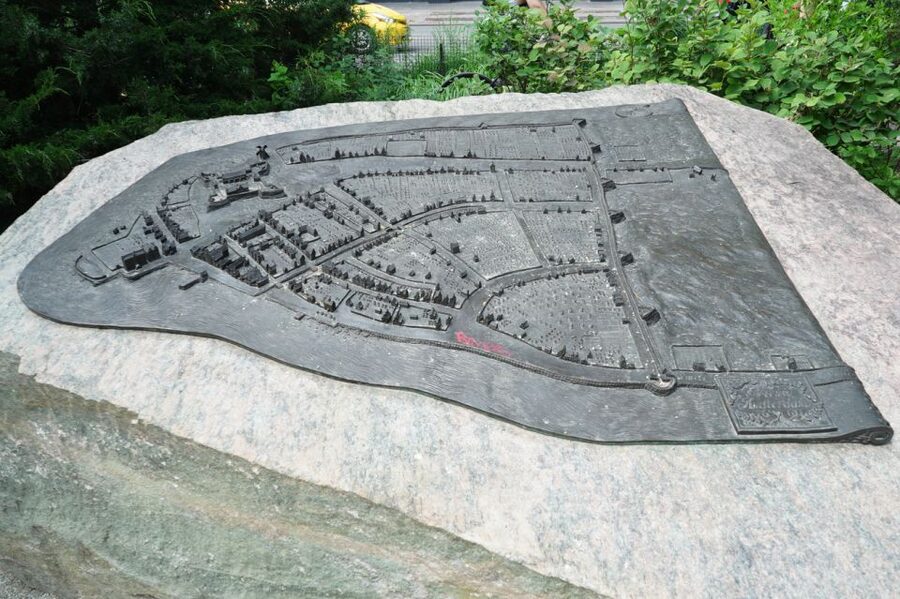
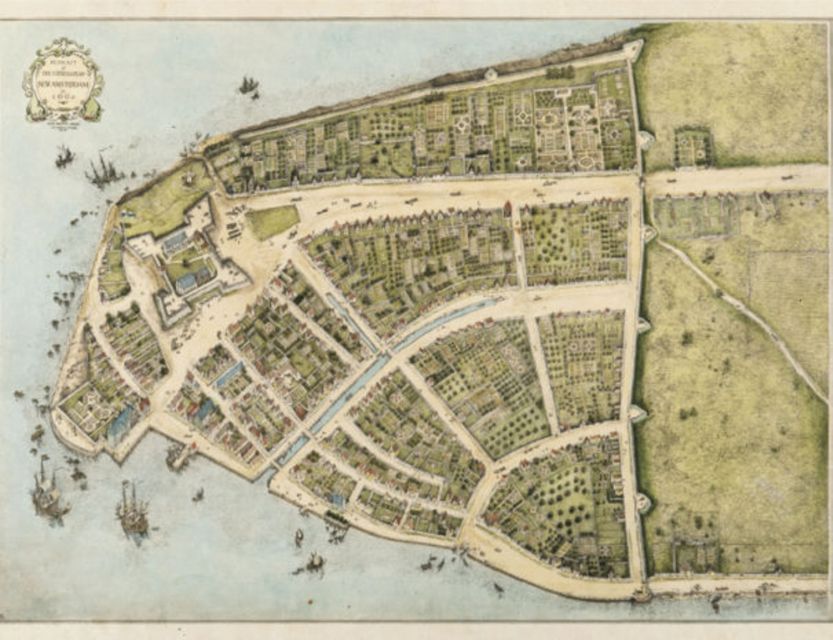
The surprise of this walk is how much early New York is tucked into the modern streetscape. Starting at Bowling Green, you use a map of Manhattan from 1667 to seek out traces of Dutch New Amsterdam, from a tavern that served as the first City Hall to the old battery wall.
I like two things in particular: the map gives you a clear way to picture the city before its present-day grid, and the stops connect familiar places such as Bowling Green to their older purpose. I also like that the tour includes headsets, a practical help when you are walking outdoors and want to catch the guide’s explanations.
One consideration: this is a two-hour outdoor walk, and it goes ahead rain or shine. Wear comfortable shoes and dress for the weather; if you want to spend most of your time inside or need a route with frequent rests, check the pace and access details before booking.
Key points to know before you go
- Bowling Green is both the meeting point and a central historical stop. The tour starts on the steps of the National Museum of the American Indian at 1 Bowling Green.
- A 1667 map helps you read the old street plan. You trace Manhattan’s early streets while walking through lower Manhattan today.
- Look for remnants, not a reconstructed Dutch town. Stops include the first City Hall foundations, the original battery wall, and traces of the fort and windmill.
- The first City Hall had another use. Its foundations mark a building that was also a tavern.
- Headsets are included. You can hear the guide clearly even when you are not standing right beside them.
- The tour costs $39 and lasts two hours. It is wheelchair accessible and operates rain or shine.
Reading Dutch New Amsterdam in today’s streets
New York’s Dutch beginnings can be easy to miss. You are standing among present-day buildings, traffic, and office workers, while the city’s earliest landmarks survive as fragments, foundations, place names, and altered street lines. This tour makes those remains the point of the walk.
The 1667 map is the key. Rather than treating early Manhattan as a story detached from the ground beneath you, the guide uses the map to show how the old streets relate to the streets you see now. That helps turn a list of dates and names into something you can follow on foot. You are not simply told that Dutch New Amsterdam existed; you are shown where its traces fit into the modern city.
The focus is lower Manhattan, south of Wall Street. That compact area makes sense for a two-hour walk: the tour can move between several early sites without asking you to cross a large part of the city. The trade-off is that the experience is concentrated on the southern tip, not a broad survey of New York history.
If you enjoy noticing how a city changes over time, this is the right kind of tour. It asks you to look carefully at a place you might otherwise cross without a second thought. The remains may be modest, but the guide’s job is to explain why they matter and how they connect.
More walking tours in New York City:
- SoHo, Little Italy, and Chinatown Walking Tour in New York
★ 5.0 · 3,153 reviews - Secrets of Grand Central Station Walking Tour New York City
★ 5.0 · 1,796 reviews - Greenwich Village Walking and Food Tasting Tour
★ 5.0 · 1,572 reviews
Bowling Green and the old shoreline
The meeting point is on the steps of the National Museum of the American Indian, at 1 Bowling Green. This is a useful place to begin because Bowling Green is not just a convenient address. The tour specifically explores how it got its name and why the place has mattered in the city’s history.
Expect the guide to connect the familiar public space to earlier uses and stories. The provided tour details do not promise a particular sequence of stops, so think of Bowling Green as the starting point for a broader walk through this part of Manhattan, rather than a long visit to one attraction.
The walk also follows the area’s original coastline. That adds a helpful layer to the map exercise: Manhattan’s edges and routes have changed, and the ground plan you see today is not the same as the one early New Yorkers knew. Walking the old shoreline gives you a way to think about the city’s relationship with the water, without needing a separate museum exhibit to set the scene.
This is a good place to ask questions. Names and landmarks often outlast the uses that gave them meaning, and Bowling Green is one of the tour’s clearest chances to connect a present-day location with its earlier role. If you like learning the story behind familiar corners, you will get more from this stop than from a quick photo and onward stroll.
Finding the first City Hall and its tavern past
One of the tour’s most unusual stops is the foundation of New York City’s first City Hall. The building also served as a tavern, a detail that makes the site easier to picture as part of a working town rather than a formal government address alone.
The foundations are the remains, not a standing early municipal building. That distinction matters: you are looking for evidence of what stood here, while the guide supplies the context that the stones cannot. This is where the small discoveries can carry more weight than a grand façade. A foundation can show you a location, but the explanation gives it a place in the city’s story.
For history-minded visitors, this stop is also a reminder that early civic life was practical. The same building could serve public and social purposes. You do not need specialist knowledge to appreciate the combination; the guide’s interpretation should help you understand why this site belongs on a walk about New Amsterdam.
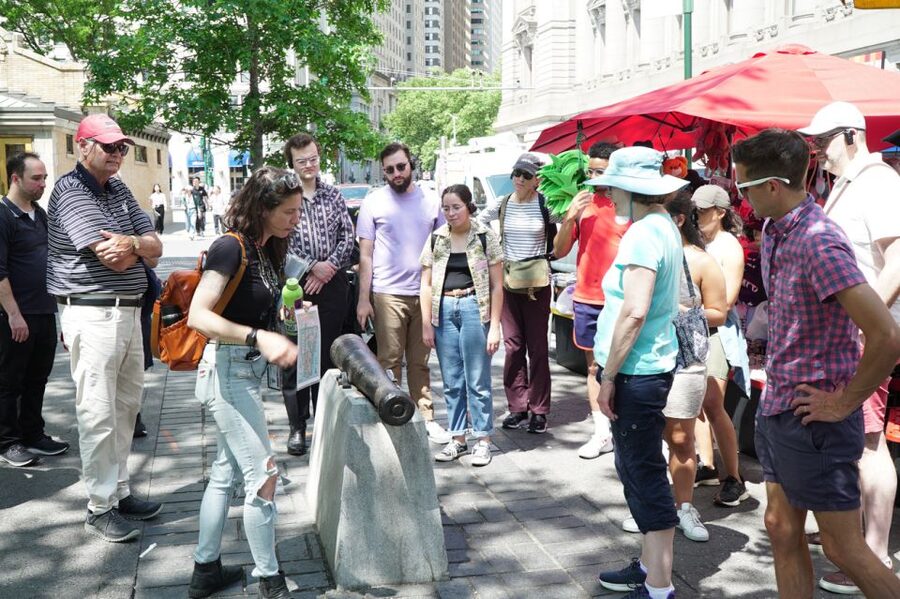
The tour also calls attention to a long-forgotten oyster-pasty cannon. The name alone is memorable, but the useful point is that the walk includes unusual relics alongside better-known sites. These smaller details can make the early city feel less like a collection of official dates and more like a place where people lived, ate, worked, and gathered.
The fort, windmill, and original battery
The walk looks for traces of the original Dutch fort, windmill, and battery. These are not presented as a fully preserved complex, so set your expectations accordingly. You are exploring remains and locations embedded in modern lower Manhattan, not entering a recreated settlement.
That makes the guide and the 1667 map especially important. The map helps you picture the old arrangement, while the guide connects those early defensive and working structures to the places around you. You can use the walk to understand where the fort and windmill belonged in the early town and how the battery formed part of its edge.
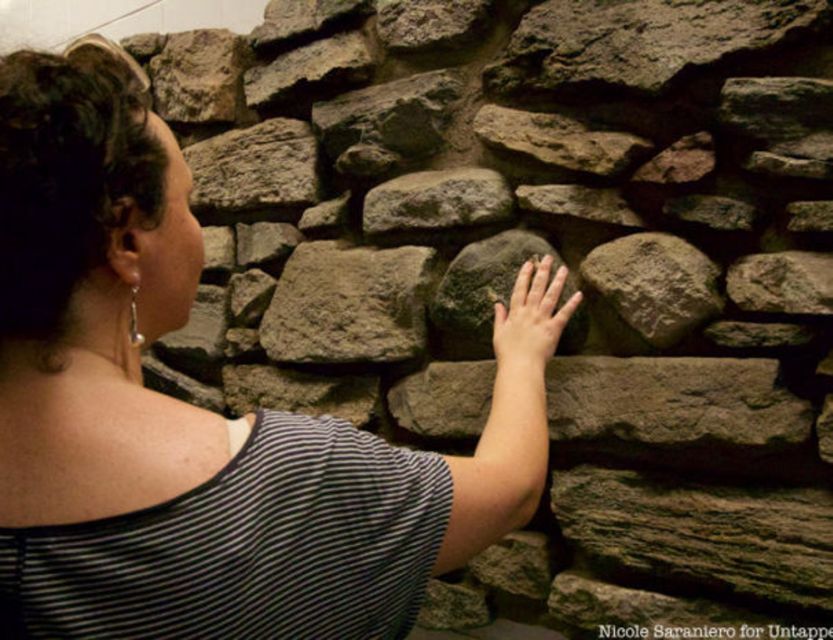
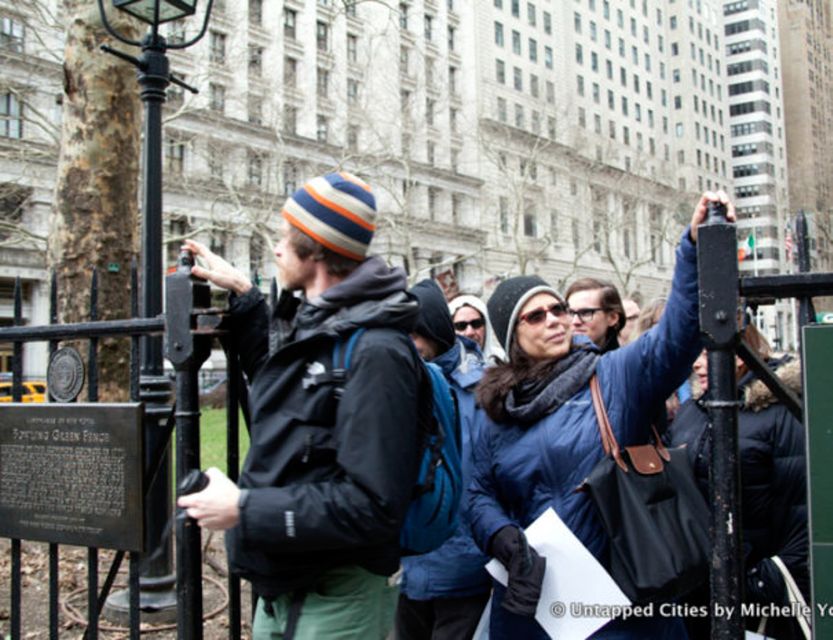
The original battery wall is among the specific remnants included. It gives the tour a tangible focus, and the experience is described as a chance to physically touch history. Take that as an invitation to pay attention to the surviving material, while following the guide’s directions about what can be touched.
There is a particular pleasure in seeing how a modern city holds on to scraps of its first plan. The traces may not be obvious at a glance, which is why this walk suits people who like a guide to point out what they would otherwise pass by. If you prefer dramatic ruins or large intact historic buildings, these stops may feel subtle. If you enjoy historical sleuthing, subtle is part of the appeal.
More guided tours in New York City:
- New York in One Day Guided Sightseeing Tour
★ 5.0 · 13,166 reviews - Central Park Pedicab Guided Tours
★ 5.0 · 7,108 reviews - From NYC: Guided Day Trip to Washington DC by Van or Bus
★ 4.7 · 3,418 reviews - NYC: Statue of Liberty and Ellis Island Guided Tour
★ 4.6 · 2,765 reviews
What the guide and headsets add
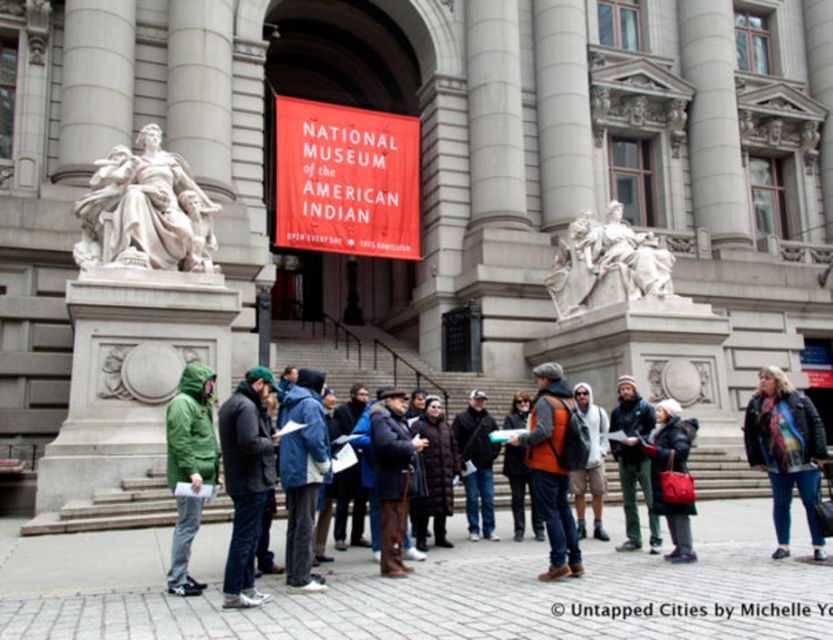
The tour is led by a local New Yorker from Untapped New York and takes place in English. Guides have included Richard and Mandy. Richard was noted for giving a clear explanation and keeping a comfortable pace, while Mandy was singled out positively as a guide. Those details offer a useful sense of the experience: the guide’s storytelling and pacing are central, not an optional extra.
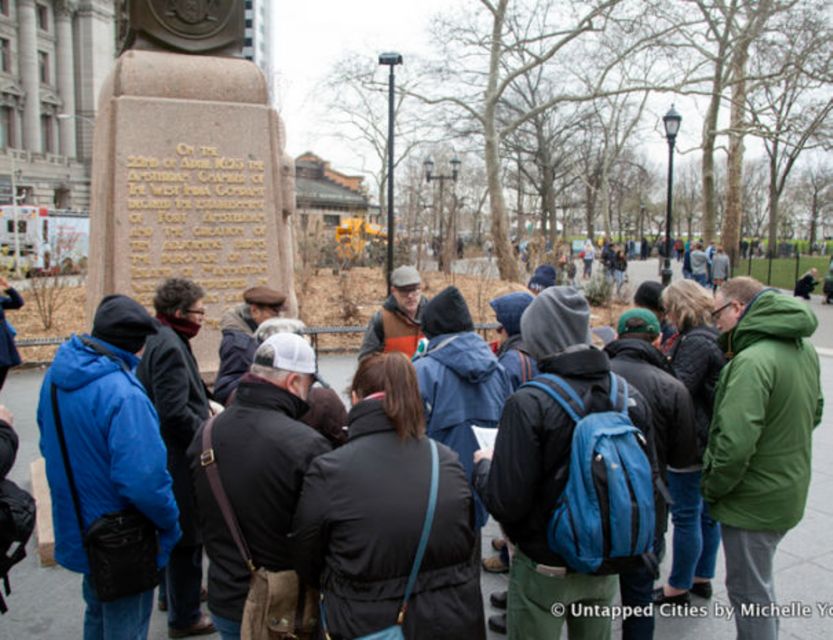
Headsets are included so you can hear the guide clearly, even from a little distance. That can make a real difference on an outdoor walk, where the group may stretch out between stops and the city adds its own noise. You can focus on looking at the site instead of crowding close to the guide to catch each sentence.
A small-group format is part of the experience, though no exact group size is specified. That means you should not assume a private or very small party. Still, the headset setup helps keep the explanation audible as the group moves.
The reported pacing was described as comfortable, which is encouraging for a tour that covers several sites in two hours. Your own experience will depend on the group and conditions, but the format is intended to let you look, listen, and move between stops without turning the outing into a race.
Is $39 a fair price for two hours?
At $39 per person, this tour’s value lies mainly in the interpretation. You can walk through lower Manhattan on your own, but the 1667 map, the guide’s explanations, and the linked stops give the walk a specific purpose. You are paying for a guided way to connect the old shoreline, Bowling Green, and the Dutch-era remains into one story.
The included headset is a practical bonus, not a luxury feature. It supports the central part of the experience: being able to hear the guide while standing at or walking between sites. The tour also bundles several subjects that are easy to overlook when exploring independently, including the first City Hall foundations, the battery wall, and the fort and windmill traces.
The price may feel less compelling if you want entry to an interior attraction or a long visit at each site. This is an outdoor walking tour, and the historic remains are encountered along the route. Think of the fee as paying for context and access to a well-organized historical walk, rather than admission to a collection of preserved buildings.
For someone already planning to explore lower Manhattan, it can be a useful way to give two hours of that visit a clear focus. If you are less interested in early New York or prefer to see history through substantial buildings and exhibits, you may get more from another activity.
Practical details for a smooth walk

Plan on being outdoors for two hours. Comfortable shoes matter, and weather-appropriate clothing is essential because the tour runs rain or shine. There is no need to bring a tripod, which is not allowed.
The tour is wheelchair accessible. If access needs are important to your plans, you can still contact the provider ahead of time to confirm any details that matter for your particular day, since the route’s specific surfaces and facilities are not described here.
Arrive at the stated meeting point: the steps of the National Museum of the American Indian, 1 Bowling Green, New York, NY 10004. Check the available start times when choosing a date. The guide speaks English, and headsets are included.
Booking terms offer some flexibility: you can reserve now and pay later, and cancel up to 24 hours in advance for a full refund. That can be useful if your New York plans are still taking shape.
Who should book this New Amsterdam walk?

I would put this tour high on the list for anyone curious about how Manhattan began, especially if you like city walks that make familiar streets feel newly legible. It is a good fit for history fans, repeat visitors looking for a fresh angle on lower Manhattan, and people who want a guided activity that does not take up half a day.
It is also a practical choice if you enjoy learning through place rather than spending the whole visit indoors. The map, physical remnants, and Bowling Green story give the walk several different ways into the subject. The guide’s explanations matter most, so listen closely and do not be shy about asking how a site fits into the older street plan.
I would think twice if you want a tour with grand, intact Dutch-era architecture, since the focus here is on remains and traces. And if rain would spoil your day, remember that the walk goes ahead in wet weather. For curious walkers prepared for the elements, though, the tour offers a rewarding look at the city beneath the city.
FAQ
How long is the tour?
The guided walk lasts two hours.
How much does the tour cost?
The listed price is $39 per person.
Where does the tour start?
It starts on the steps of the National Museum of the American Indian at 1 Bowling Green, New York, NY 10004.
What language is the tour in?
The live tour guide speaks English.
Is the tour wheelchair accessible?
Yes, the tour is listed as wheelchair accessible.
Does the tour run in bad weather?
Yes. It takes place rain or shine, so wear weather-appropriate clothing.
What should I bring?
Wear comfortable shoes and bring clothing suited to the weather.
Are headsets provided?
Yes. Headsets are included so you can hear the guide clearly, even from a distance.
What historical sites and stories does the tour cover?
The walk includes traces of the original Dutch fort, windmill, and battery, the first City Hall foundations, the old shoreline, and the story of Bowling Green’s name.
Can I cancel and get a refund?
You can cancel up to 24 hours in advance for a full refund.
New reviews from New York City
- 3 Hour Session at Williamsburg’s Adventure Park Area 53★ 3.5 · 6 reviews
- 3-Day Immersive Photography Workshop in New York City★ 5.0 · 5 reviews
- Midtown Manhattan: Times Square & Skyscrapers Walking Tour★ 5.0 · 18 reviews
- 3 Hour NYC Photography Workshop★ 5.0 · 45 reviews
- Central Park Pedicab Guided Tours – 1, 1.5 & 2Hrs★ 5.0 · 24 reviews
- Central Park Private Pedicab Tour (2hrs)★ 5.0 · 37 reviews
- Niagara Falls, Toronto and 1000 Islands, 3 Day Tour from NYC★ 4.5 · 114 reviews
- 2-Hour Small Group Central Park Bike Tour★ 4.0 · 22 reviews
NYC Walking Tours, compared.

SoHo, Little Italy, and Chinatown Walking Tour in New York
Read our review →
Secrets of Grand Central Station Walking Tour New York City
Read our review →
Greenwich Village Walking and Food Tasting Tour
Read our review →
Artistic, Alternative Greenwich Village Walking Tour
Read our review →
True Crime NYC: Mafia Walk w/Ret. NYPD Detective and Local Food
Read our review →


Browse the lists this tour appears in