
Reviewed · CHINATOWN AND LITTLE ITALY TOURS
New York: Mafia and Gangster History Tour in Little Italy
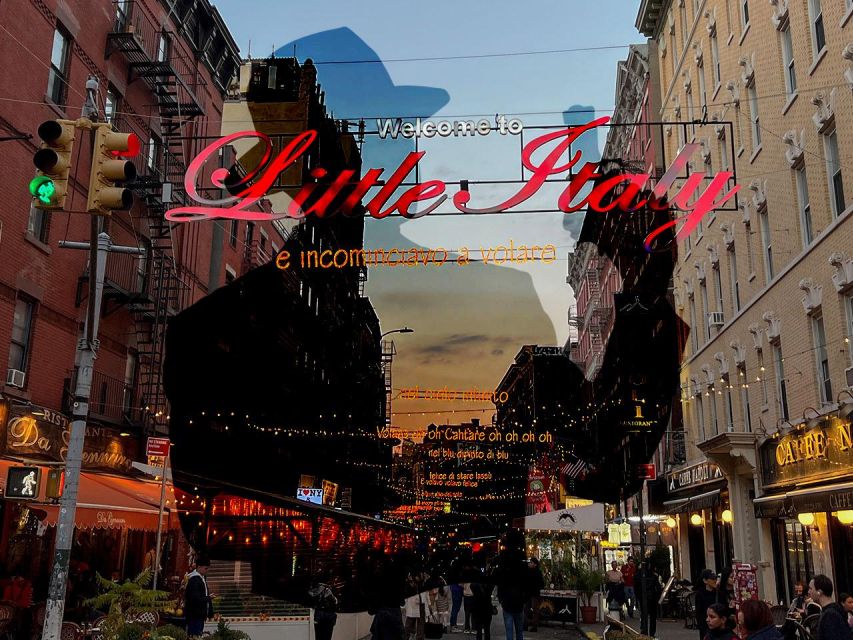
Little Italy’s mob story is more than a string of famous names. This two-hour walk links the neighborhood’s early gang conflicts to Prohibition, Lucky Luciano’s reshaping of organized crime and John Gotti’s rise and fall, with stops at places tied to real events.
I like two things in particular: the clear historical thread, which connects gangsters with the police officers who tried to stop them, and the small group size of no more than 10. Guides such as Tom have used photos and newspaper articles to help make the old stories easier to picture.
One consideration: this is an outdoor walking tour, not a museum visit. You cover about a mile, often stopping to listen on the street, so wear comfortable shoes and be ready for the weather. The tour is not suitable for people with mobility impairments.
Little Italy’s mob story, told on foot
At $40 per person, the tour gives you two hours of guided history in a compact part of Manhattan. It covers about one mile, so the value is less about distance than about having a guide connect the buildings and street corners to people and events you might otherwise pass without noticing.
The story begins with early Black Hand gangs and the fights for control of the liquor trade during Prohibition. From there, it turns to Joe Masseria, known as Joe The Boss, and the rise of Lucky Luciano, whose creation of the Commission of Five Families changed how organized crime was run.
That historical sequence matters. Instead of treating each gangster as a separate celebrity, the guide can show how one era grew out of the last, and how policing and corruption fit into the same story. The tour also brings in Lieutenant Petrosino, an early crime fighter, and Frank Serpico, who risked his life to expose police corruption.
That broader frame is one reason this walk can work even if you are not a devoted fan of mob films. You get a story about New York’s criminal past, but also about the people and institutions that tried to confront it.
Meeting at Spring and Mulberry
The tour starts at 44 Spring Street, on the sidewalk at the corner of Spring and Mulberry Streets, next to DaSalvio Playground. Look for a guide in a white cap, and arrive 10 minutes early. The walk starts promptly, and you cannot join once it has set off.
The small-group limit of 10 is a practical advantage. You are less likely to be straining to hear over a large crowd, and it is easier to ask a question or see the guide’s photos. Tom is a name that comes up often in connection with the tour, and past participants describe him as friendly, prepared and keen to explain the subject. He has brought a thick binder of photographs, a useful aid when a present-day building looks little like its older version.
A small group does not mean a private tour. If other people book, you will share the walk with them. But the group cap should keep the experience more personal than a large city tour.
More Chinatown and Little Italy walks in New York City:
- SoHo, Little Italy, and Chinatown Walking Tour in New York
★ 5.0 · 3,153 reviews - NYC: Chinatown & Little Italy Food Tour with 7 Flavorful Tastings
★ 5.0 · 2,733 reviews - Original NYC Guided Food Tour of Chinatown and Little Italy
★ 5.0 · 2,194 reviews
From Black Hand gangs to Lucky Luciano
The first stretch through Little Italy lays out the early chapters: Black Hand gangs, conflict over the liquor trade during Prohibition, and the rise of Joe Masseria. The tour’s strength is its chronology. You can follow how scattered gangs and neighborhood rivalries gave way to larger, more organized crime networks.
The focus then shifts to Lucky Luciano. The tour explains how he transformed organized crime through the Commission of Five Families, and covers his unlikely deal with the government during World War Two. These are the kinds of details that give the walk more substance than a list of notorious names. You hear how power was organized, and how the mob’s relationship with public authorities could shift.
You are walking through a real neighborhood, not a purpose-built attraction. Some stops will be about the history tied to a location rather than a dramatic scene unfolding in front of you. That is worth keeping in mind: the guide’s explanation and visual materials do much of the work, while the street itself provides the setting.
The Ravenite Social Club and John Gotti
A key stop is the Ravenite Social Club, associated with John Gotti and the Gambino crime family. The guide traces Gotti’s rise and fall and explains why this address became part of the story of the Dapper Don.
The stop is scheduled for about 15 minutes, enough time to hear the background and take in the site without turning the walk into a long pause. If you come expecting a dramatic attraction or an interior visit, adjust that expectation. This is a historical location viewed as part of a walking tour, not a staged recreation.
The value is in connecting the name Gotti to a specific place and period. With a guide’s photographs and account, you can compare the street as it appears now with the role it played in the mob story. That makes the stop more useful than simply being shown an address.
Petrosino Square and the police response
At Lt. Petrosino Square, the tour turns toward law enforcement and the people who worked against organized crime. Lieutenant Petrosino is presented as an early crime fighter, while Frank Serpico’s story brings the discussion forward to police corruption and the risks involved in exposing it.
This shift gives the tour needed balance. A mob-history walk could easily become a parade of charismatic criminals. Including the police effort, and the problem of corruption within the police, makes the picture less simple and more revealing.
The square stop lasts about 10 minutes. Expect a short talk rather than a long visit to a separate attraction. The guide’s job is to tie the place to the wider story, and this is one of the stops where good pacing and clear explanations matter most.
More history tours in New York City:
- New York City: American Museum of Natural History Ticket
★ 4.5 · 15,447 reviews - NYC: Starship Landmark 90 Minute Sightseeing Cruise
★ 4.6 · 3,666 reviews - Starship Landmark 90 Minute Sightseeing Cruise
★ 4.5 · 2,073 reviews - American Museum of Natural History Admission Ticket
★ 4.0 · 1,931 reviews
The Police Building and the wider story
The Police Building is another stop on the route, with about 10 minutes set aside for the guide to explain its place in the tour. Together with Petrosino Square and Serpico’s story, it helps show that organized crime history is also a story about institutions, policing and accountability.
The tour description also promises context about the mob’s earlier roots and more recent activity. That range can help you understand organized crime as something that changed over time, rather than a closed chapter limited to the Prohibition era. The exact emphasis depends on the guide’s presentation, so ask questions if you want more detail on a particular period.
For anyone already familiar with the film version of the mob, this section can be especially useful. It helps separate actual locations and historical events from the stories that movies and television have built around them.
Umberto’s Clam House and the final stops
The walk includes Umberto’s Clam House, where Crazy Joey Gallo was gunned down. The tour also covers the death of Sally Bugs Briguglio, another mobster whose fate is part of the route’s darker closing chapters.
These are sobering stops, and the guide’s account matters more than any visual spectacle. The locations are part of the neighborhood’s ordinary present-day streetscape. The contrast between everyday surroundings and the violence associated with them is part of what makes the history feel close.
The scheduled stop at Umberto’s is about 10 minutes. The itinerary then returns to 44 Spring Street, completing the loop. Locations from The Godfather and The Sopranos may also come into the discussion, adding a screen-history layer for fans. Treat those as extra context rather than the main event: the tour’s strongest material is the real history and the people connected to these places.
How the guide shapes the experience
The guide is central to this tour. A street corner cannot tell you who gathered there or how a crime network changed; the explanation supplies the context. Tom and Thomas are names associated with warmly delivered tours, and participants have singled out his use of photographs and newspaper articles as a helpful way to make past buildings and events more concrete.
The style is lively and conversational, with humor reported as part of the presentation. That can make difficult history easier to follow without turning it into a lecture. Still, if you prefer a slower pace, keep in mind that one person specifically wished the guide had spoken more slowly. If you have trouble following a fast speaker, ask politely for a little more time or repetition.
The walk is in English. You can ask questions, and the group cap should make that easier than on a large tour, though the guide still needs to keep the route moving within two hours.
Is $40 good value?
At $40, this is a reasonable price if you want a guide-led account rather than a self-guided walk with a list of addresses. You get two hours, a one-mile route, a small group and a story that moves across criminal history, policing and pop culture. The guide’s preparation, especially visual material such as old photos and newspaper clippings, can add real value.
It is less compelling if you mainly want to see interiors, visit a museum or spend a long time at each site. The stops are brief, and much of the experience is listening outdoors. You are paying for interpretation and historical connections, not admission to attractions or a meal.
The activity includes the walking tour and guide. The price is listed at $40 per person, though you should check the booking page for the available start times. You can reserve without paying immediately, and cancellation up to 24 hours before the tour is eligible for a full refund.
Weather, footwear and who should go
Wear comfortable shoes. The route is short, but you will be on your feet and stopping along the way. Bring clothing suited to the forecast: the tour may be cancelled for bad weather or too few bookings, with a full refund in that case.
This is best for people curious about New York history, organized crime, law enforcement or the way movies draw on real places. You do not need to know the mob story in advance. In fact, the guided timeline may be most useful if names such as Masseria, Luciano and Gotti blur together for you.
It can also suit a mixed-interest group. One guide’s enthusiastic approach has been described as engaging even for people who were not especially interested in mafia history. But if you dislike standing outdoors, need step-free access, or want a quiet visit to historic buildings, choose another activity. This tour is not suitable for people with mobility impairments.
Should you book the Little Italy mob tour?
Book it if you want a compact, well-guided way to connect Little Italy’s streets with the history of gangs, organized crime and police efforts to counter it. The strongest reasons are the chronological storytelling, small group and guide materials that can help bring vanished scenes into view.
Skip it if you expect interiors, extensive site visits or a comfortable indoor experience. At two hours and one mile, it is an accessible commitment for most people who are comfortable walking, but the experience depends on listening outdoors. For $40, I think it is a good choice for a curious New York visitor who wants more than movie references, and who is willing to let the guide supply the story behind the street.
Key points
- A one-mile route links Little Italy’s mob history from early Black Hand gangs and Prohibition to Luciano and Gotti.
- The Ravenite Social Club anchors the section on John Gotti and the Gambino crime family.
- Umberto’s Clam House is tied to the killing of Crazy Joey Gallo.
- Police stories add balance, including Lieutenant Petrosino and Frank Serpico.
- Guides such as Tom use visual aids, including photographs and newspaper articles.
- Groups are limited to 10, but the outdoor walk is not suitable for people with mobility impairments.
FAQ
How long is the tour?
The tour lasts two hours and covers about one mile, or 1.5 kilometers.
Where does the tour meet?
Meet on the sidewalk at the corner of Spring and Mulberry Streets, next to DaSalvio Playground at 44 Spring Street. Look for the guide in a white cap.
How early should I arrive?
Arrive 10 minutes before the start time. The tour begins promptly, and you cannot join after it has started.
What language is the tour in?
The live tour guide speaks English.
How many people can join?
The small group is limited to 10 participants.
What should I bring?
Wear comfortable shoes. The tour takes place on foot outdoors.
Can the tour be cancelled?
Yes. It may be cancelled because of inclement weather or too few bookings. If that happens, you receive a full refund. You can also cancel up to 24 hours in advance for a full refund.
New reviews from New York City
- 3 Hour Session at Williamsburg’s Adventure Park Area 53★ 3.5 · 6 reviews
- 3-Day Immersive Photography Workshop in New York City★ 5.0 · 5 reviews
- Midtown Manhattan: Times Square & Skyscrapers Walking Tour★ 5.0 · 18 reviews
- 3 Hour NYC Photography Workshop★ 5.0 · 45 reviews
- Central Park Pedicab Guided Tours – 1, 1.5 & 2Hrs★ 5.0 · 24 reviews
- Central Park Private Pedicab Tour (2hrs)★ 5.0 · 37 reviews
- Niagara Falls, Toronto and 1000 Islands, 3 Day Tour from NYC★ 4.5 · 114 reviews
- 2-Hour Small Group Central Park Bike Tour★ 4.0 · 22 reviews
Chinatown and Little Italy Tours, compared.

SoHo, Little Italy, and Chinatown Walking Tour in New York
Read our review →
Chinatown & Little Italy Food Tour with 7 Flavorful Tastings
Read our review →
Original NYC Guided Food Tour of Chinatown and Little Italy
Read our review →
SoHo, Little Italy, and Chinatown 2-Hour Guided Walk
Read our review →
3 Neighborhoods Tour: Soho, Chinatown & Little Italy
Read our review →
Browse the lists this tour appears in